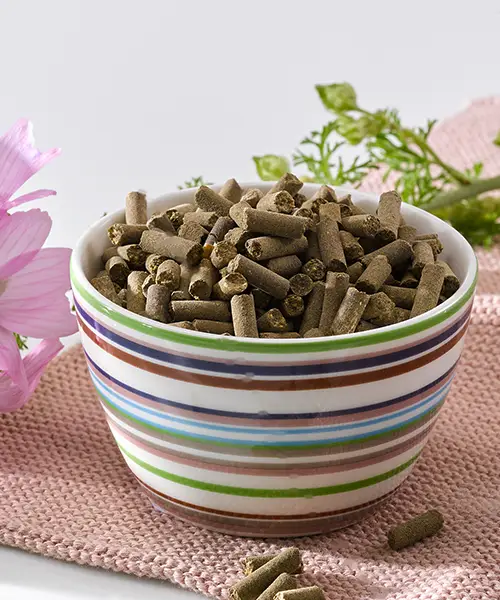
Discover what peppermint leaves do for digestion and the stomach, the proper dosage for horses, and how to prepare soothing peppermint tea.
Science & Equine Nutrition: How We Read Studies – and Why It Matters
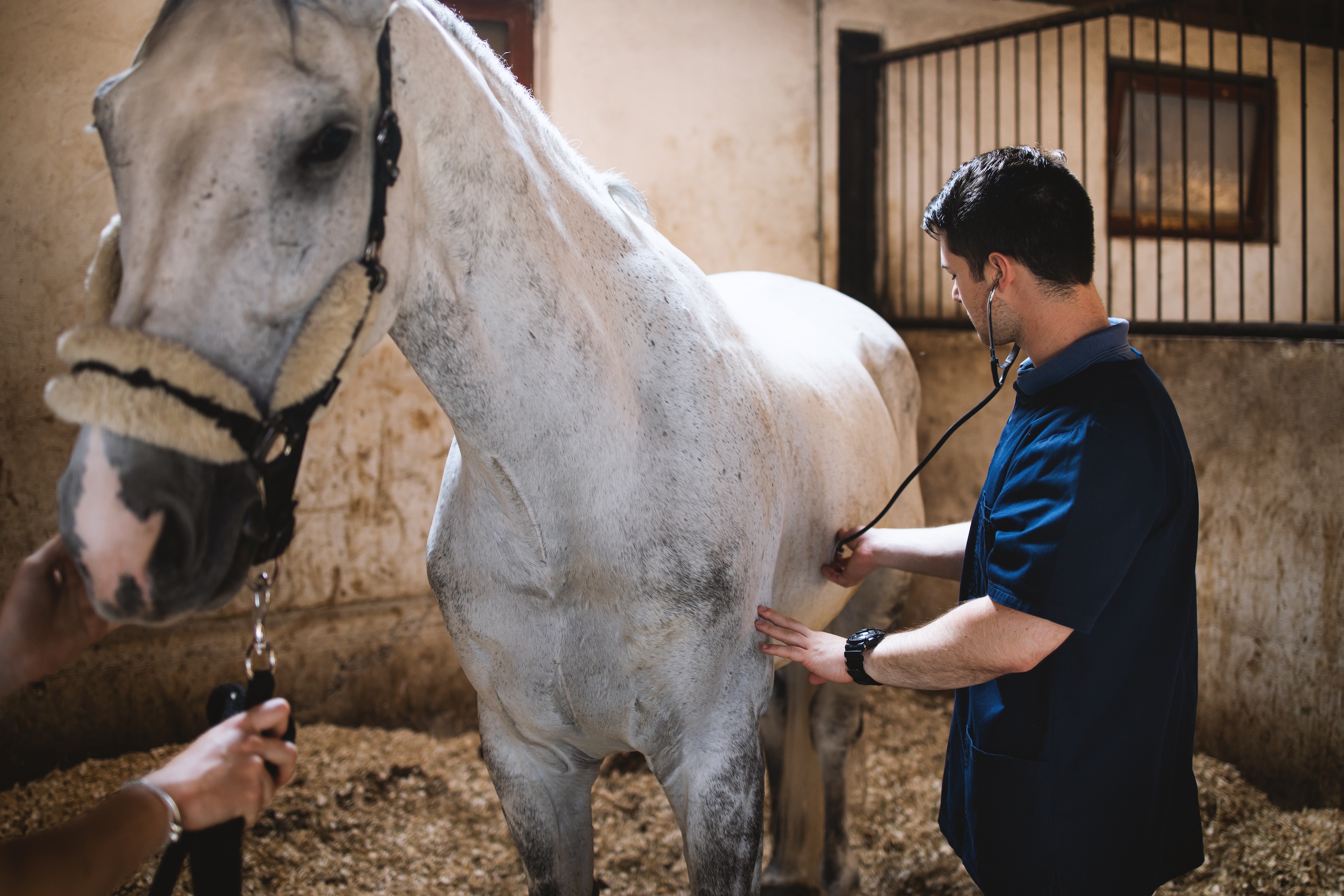
© Adobe Stock / omul014
This article was translated using AI.
There is a considerable amount of scientific research on equine nutrition. Anyone looking into it more deeply, however, quickly encounters a number of methodological limitations that many of these studies share. They do not render the studies worthless. But they do mean that an individual result can rarely be more than an indicator in a certain direction—and sometimes not even that.
Most feeding trials work with very few animals. Four, six, or eight horses are not uncommon. With such small groups, pronounced effects can certainly be demonstrated. In contrast, small or moderate differences that can have an impact over months in everyday life are easily lost statistically. A “non-significant” difference does not mean that two diets are equivalent. It only means that the trial could not reliably demonstrate this difference.
To obtain sufficient data despite having few animals, a cross-over design is frequently chosen: Each horse goes through all dietary treatments consecutively, separated by a “washout period” of usually two to four weeks during which the horse is fed as it was before the trial. This is methodologically elegant, but it assumes that the organism completely resets to its baseline state after each trial phase. Whether this actually applies to the microbiome, mucous membranes, or metabolism is something we often do not know. It simply has never been investigated. Changes initiated in the first phase can therefore carry over into the next.
Then there is the duration. Many trials span two to three weeks; a study lasting four months is already considered a long-term investigation. Under real-world conditions, however, a horse usually eats its feed for years. What remains unremarkable after 14 days may no longer be so after two years.
The experimental animals themselves also rarely reflect the horse encountered in everyday practice. Most studies examine healthy, as uniform as possible horses kept in stalls at universities or research facilities, under standardized conditions with fixed feeding times. In German-speaking countries, Warmbloods dominate research stables; in the US, Quarter Horses are more common. The real-world conditions in which a Freiberger lives with an Icelandic horse and a PRE in an open stable—navigating herd hierarchy, training by the owner, weather, and an individual medical history—virtually do not feature in these studies. Especially horses with chronic digestive issues, which are the main concern in daily practice, are generally excluded from feeding trials from the outset.
Fistulated horses are a particular case in point. To obtain samples directly from the cecum or colon, a permanent surgical opening is created in the intestinal wall. The horses must usually be housed individually in stalls to prevent injury or infection. For certain research questions, this is the only way to obtain direct measurements. However, the procedure causes pain and stress for the horse, and it interferes directly with the very organ being studied. There is evidence that the passage of digesta is altered in fistulated animals. Findings from such trials can therefore only be transferred to healthy, non-fistulated horses with caution.
Finally, many studies do not measure what is actually of interest, but rather something more easily accessible: feces instead of intestinal contents, chewing cycles instead of jaw movement, muscle activity instead of particle reduction, contractions on ultrasound instead of direction of transit. Furthermore, feeds are often described so vaguely in the “Materials and Methods” section that it remains unclear what the horses actually ate. This applies particularly to “haylage”, but also to “hay” or “pellets” without detailed specifications on nutritional values or crude fiber structure.
These limitations apply to virtually all equine nutrition studies—both those whose results support our observations and those that do not. If two studies diametrically contradict each other, this is no reason to dismiss one of them. It is rather an indication that a variable no one controlled for during the trials is influencing the outcome.
We must be equally honest when dealing with clinical and practical observations. When a practitioner changes a diet, usually more than one factor changes simultaneously. Chronic complaints often fluctuate even without treatment. And in daily practice, it is primarily the horses with issues that end up seeking help, not those doing perfectly well on their diet. However, an observation that recurs over years and across many practitioners must still be taken seriously. It does not yet prove a mechanism, but it raises questions that deserve a scientific answer. It is precisely these questions that we strive to pursue and develop answers for horse owners.
Anyone who constantly invokes “science” should be aware that this science has significant weaknesses, blind spots, and gaps.
You might also find this interesting: Our article series on forage, fiber length, and insights from science & practice:
A note on our content. Sanoanimal’s content (articles, podcasts, videos, webinars, etc.) is based partly on scientific studies and partly on more than 20 years of practical experience within the Sanoanimal therapist network. For many relationships, methods and feeding practices involving horses, independent scientific studies do not exist or are not yet available; the corresponding statements reflect knowledge gained through experience. Our aim is to combine current scientific knowledge with the practical experience of our network. Our content makes no promises of healing or effectiveness; it does not replace examination, diagnosis or treatment by a veterinarian or trained therapist. Please do not put any of it into practice without professional guidance. Learn more: Editorial principles and disclaimer