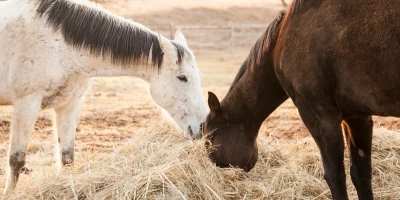
Feeding studies vs. practice: Why measurement errors and short study durations are deceptive. Overview of all findings on the various forms of roughage.
Hay, Grass, Haylage, Chopped Fibre and Cobs: Roughage in Horses in Practice and Science
© Adobe Stock / mckornik
This article was translated using AI.
This article is the second part of a multi-part technical series on roughage feeding in horses. While Part 1: "Roughage & Fiber Length in Horses: How the Form of Roughage Influences Digestion" highlighted the physiological mechanisms from the chewing mechanism and saliva production to intestinal peristalsis, this part is dedicated to the concrete assessment of individual roughage forms in practice and research.
Roughage Forms
Long Grass and Hay: The Reference
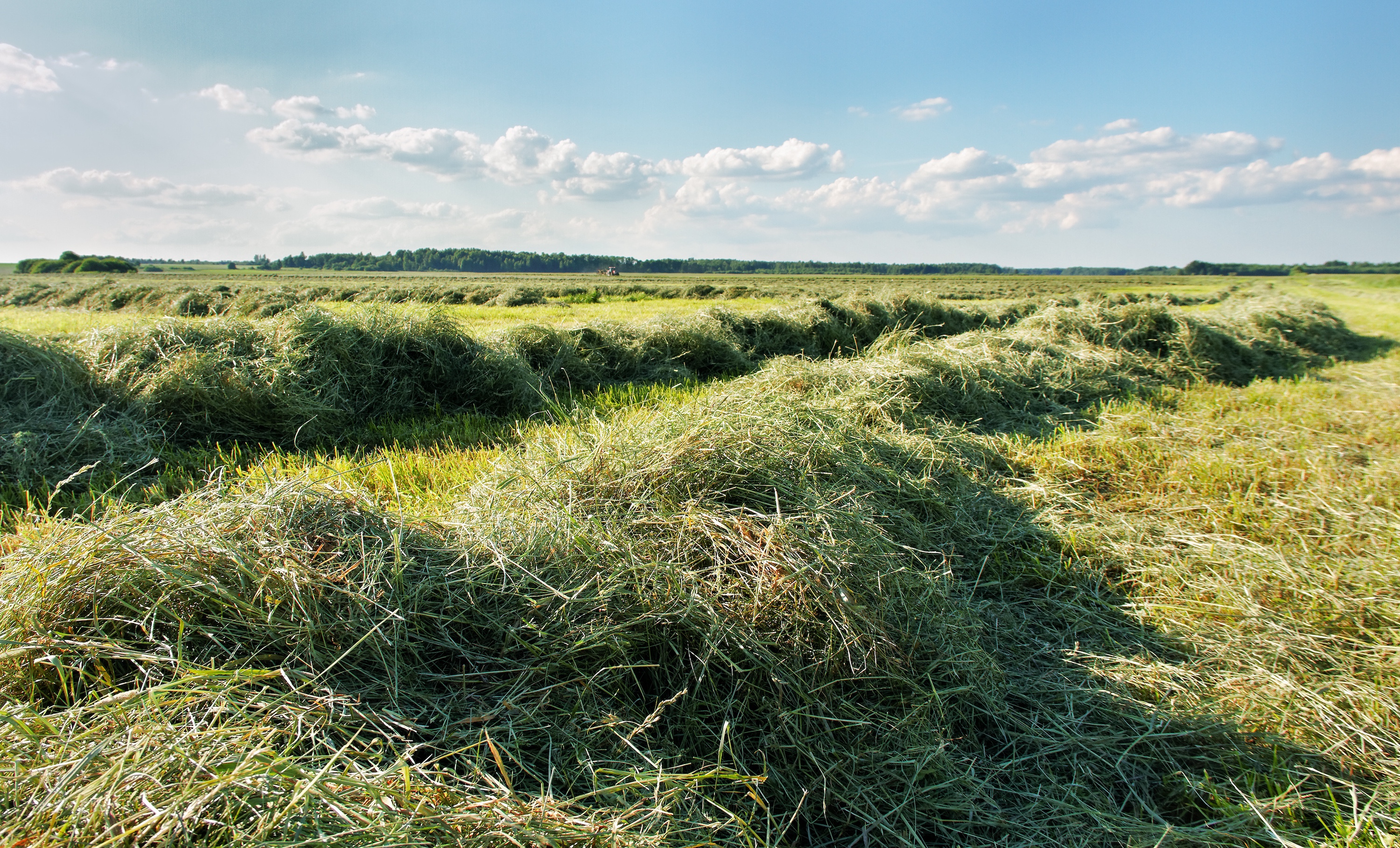
Before we look at processed forms of roughage, we need a benchmark. Long-stemmed grass and hay are the two feedstuffs against which all others must be measured because they come closest to what the horse's chewing apparatus is designed for.
 © Adobe Stock / Ludmila Smite
What We See in Practice
What is immediately striking is what we do not see here. Horses that exclusively receive long-stemmed hay of appropriate quality along with grazing on well-managed pastures appear significantly less often in consultations with chronic free fecal water, constant bloating, or other therapy-resistant digestive problems. And for horses presented with such issues, switching to horse-appropriate hay is often the point at which digestion finally stabilizes.
This is no guarantee. Even good hay can cause problems if it is hygienically contaminated, cut at the wrong time, too high in sugar or protein, or simply too limited in quantity. We also observe that horses react differently to hay of different origins, and that a change in batch is sometimes enough to trigger or eliminate complaints. Long hay is therefore not a self-runner. But it is the form of feeding with which the fewest problems occur and the one to return to for sustainable success when problems exist.
What Science Says About It
For chewing, long-stemmed hay is the most mechanically demanding of the common feedstuffs, and we actually have direct measurements here. In the study by Bonin and colleagues, the mandible moved further in all three spatial directions when eating hay than when eating pellets, with a lateral excursion sufficient for complete contact of the opposing rows of molars. Long hay thus forces the pronounced grinding movement described in the previous chapter. In addition, there is the chewing work itself, with about 3000 to 3500 chewing strokes per kilogram according to Meyer and colleagues, and the correspondingly high amount of saliva of around 3 to 3.5 liters per kilogram.
Tall grass is the natural initial state, but ironically, the comparison between grass and hay is scientifically poorly supported. Weinert and colleagues compared eight mares with free pasture access to ad libitum orchard grass hay. On pasture, the horses spent an average of about 14.8 hours daily with eating activity, compared to just under twelve hours with hay feeding. The chewing rate calculated by the sensor system was higher on pasture at about 83.9 movements per minute than with hay at 68.5.
However, it cannot be concluded from this that grass is chewed more intensively. The system used registers jaw movements via a pressure sensor in the noseband and could not reliably distinguish between the pulling of the grass with the incisors and the subsequent chewing during validation. "Nibbling" on a grazed pasture can therefore measure a large number of jaw movements without the horse making real chewing movements, as it does when eating hay.
Good agreement with visual observation only existed for the sum of both types of movement. When grazing, however, the horse must first detach the plant material with its lips and incisors, which requires many small movements on a short sward. With hay, it takes in larger quantities of already detached material at once. More registered jaw movements per minute therefore do not automatically mean more grinding movements.
In addition, in this study, not only the preservation varied. The pasture consisted of a mixture of various grasses, the comparison hay was pure orchard grass hay, and both differed significantly in dry matter, protein, NDF, and carbohydrates. The experiment therefore reliably shows that feeding behavior differed between these two specific feeding situations. What proportion of this is due to the water content, plant length, sward height, plant species, or nutrient composition cannot be determined because it was not investigated.
How much sward height alone changes feeding behavior is shown by Edouard and colleagues. They offered horses grass stands of comparable quality at heights of approximately 6, 11, and 18 centimeters. On the short stand, the horses took about 42 bites per minute, on the high stand only about 30, with about three times the dry matter per bite. The number of chewing processes per gram of dry matter intake was higher on the short grass. A chewing stroke count without specifying the sward height is therefore difficult to interpret. And no one has yet measured how the mandible moves with short versus long grass.
Even Hay Is Not Just Hay
Crucial for practice is that "long-stemmed" does not guarantee a fixed chewing performance. The previously mentioned study with eight horses, in which fine-stemmed Bermuda grass hay led to significantly fewer chewing strokes per kilogram than alfalfa, meadow grass, or orchard grass hay, clearly demonstrates this. Plant species, stage of maturity, leaf-to-stem ratio, stem thickness, and lignification significantly change mechanical properties.
This coincides with the practical observation that horses react differently to different hay batches and puts into perspective the idea that "as long as it's late-cut" hay is automatically the solution. Because how much work the chewing apparatus must perform depends on the specific hay.
Feeding Pauses Also Change the Reference Feed
Another point concerns not the feed, but the situation in which it is offered. Glunk and colleagues showed in eight horses with three, six, nine, or 24 hours of pasture access that the intake rate was higher the more the access was restricted in time. The horses thus compensated for the restriction, at least partially, by eating faster.
Whether they chewed less thoroughly was not measured. If more dry matter passes through the mouth per minute, however, only a few options remain: chewing faster, taking in more material per chewing cycle, shorter chewing cycles, or less oral processing before swallowing. Bochnia and colleagues found with pellets that a higher intake rate can be accompanied by lower chewing intensity. Hart and colleagues, on the other hand, found changed feeding times with hay in slow feeders without a corresponding change in chewing strokes per kilogram.
For us, this means: Even with identical hay, chewing performance is not a fixed value. It depends on how long the horse had nothing beforehand, whether it expects feed that will disappear again soon, and whether it can eat in peace or is regularly chased away from the rack. This is also relevant because processed roughage forms are particularly frequently fed in practice to those horses whose feed is rationed.
What Remains Unresolved
A clean comparison between grass and hay would have to feed the same plant stand once fresh and once as hay, with standardized stem length and three-dimensional recording of jaw movement. This experiment does not exist. Likewise, we do not know what the swallowed bolus actually looks like with long hay, how much the particles are ground and shredded, and how this differs between different types of hay. Thus, we are lacking exactly the reference value against which all other feed forms should be measured.
What we can say for sure: Long-stemmed hay forces the largest lateral grinding movement measured to date, it requires the most chewing work per kilogram, and produces the largest amount of saliva. How much of this remains with short grass, fine-stemmed hay, or a high intake rate is open.
Chopped Fibre: When Exactly the Crucial Study Is Missing
What We See in Practice
Chopped fibres are the point where many discussions ignite. Therapists have observed for years that horses with chronic free fecal water, recurring bloating, conspicuously acidic or fermented manure, and digestion that is difficult to stabilize have an above-average frequency of chopped fibre in their ration, whether pure or as a component of a muesli. And that some of these horses only respond to therapy when the chopped fibre is consistently omitted and replaced with long-stemmed hay.
It is important to note what this observation does not say. It does not say that every horse with chopped fibre in its ration will develop digestive problems. Many horses apparently tolerate them without issue, and they naturally do not appear in consultations. It also does not say that the chopped fibre is the sole cause. When changing feed, one usually changes more than one factor. What it does say is: In a subset of horses with persistent digestive problems, these problems reproducibly disappear when chopped fibre is omitted and reliably return when it is fed again. This is a pattern that deserves an explanation.
What Chopped Fibre Actually Is
A primary problem is the inconsistency of the products. Under names like "chopped fibre", "chaff", or "structural feed", plant material is sold that has been technically shortened to a few centimeters before feeding. Alfalfa, straw, hay (monoculture grass or species-rich), or mixtures thereof serve as the starting material. Depending on the product, oil or molasses are often added as dust binders, as well as grain components or other ingredients. Thus, the products differ not only in particle length but also in plant species, lignification, hardness, nutrient content, and taste.
This inconsistency extends into the literature. Many comparisons between chopped fibre and hay change several variables simultaneously, which complicates their interpretation. Often enough, "chaff" is mentioned as a term without specifying exactly which plant it comes from, what the precise fibre lengths and structures are, or what else might have been added to the chops. This makes the results difficult to interpret and reduces comparability between studies.
What Was Measured
The most frequently cited evidence for intensive chewing work with chopped fibre comes from Vervuert and colleagues. In four horses, a mixture of chopped straw and alfalfa generated high activity of the chewing muscle, while at the same time having shorter chewing cycles of about 0.22 compared to about 0.31 seconds with hay. However, as described in the basics chapter, an EMG measures muscle activity, not the movement of the mandible. Whether the rows of teeth slide over each other as far with chopped fibre as with long hay, or whether the already short material is compressed with a stronger vertical component instead of being ground, cannot be answered with this.
A methodologically clean counter-experiment was provided by Müller. Ten horses received long-stemmed or cut haylage from the same plant material in a cross-over. The differences were smaller than expected: feeding time per kilogram of dry matter and fecal particle distribution were similar; the chewing speed with cut material was slightly higher, while the number of chewing strokes per kilogram was lower. The differences between individual horses were greater than the differences between the types of feed. This study is valuable because it controls the plant stand. It still does not answer our question: cut haylage is not the same as a dry, hard commercial chopped fibre mixture, and again, neither jaw movement nor the swallowed bolus were investigated.
What Critics Argue and What Is True About It
The most common counter-argument is that chopped fibre is scientifically proven to be chewing-intensive. This finding actually exists, but it concerns a different comparison. In the review article by Harris and colleagues, authored by, among others, researchers in feed research, it is stated that adding about 30 percent chopped roughage to pellets doubled the intake time of the concentrated feed. Thus, concentrate with and without chopped fibre was compared, not chopped fibre with hay.
The same review article notes elsewhere that chopped alfalfa is eaten about twice as fast as long-stemmed hay. And that chopping very late-cut hay to 3.5 centimeters did not shorten the intake time in eight horses, which shows that the effect also depends on the parent plant and not just on whether it was chopped or not.
This allows the debate to be refined. Alfalfa chops in concentrate slow down the intake of the concentrate. This is proven. However, it does not follow that chopped fibre is equivalent to long hay. The available data suggest that they are eaten faster. Part of the dispute on social media likely stems from the fact that both sides are talking about different comparisons.
The Hypothesis and What It Lacks
The core question remains: Is short chopped fibre chewed differently than long hay, and as a result, do differently structured fibres arrive in the large intestine?
Physically, the reasoning is obvious. To grind a long fibre, the horse must hold it between the molars while the teeth slide over each other with pressure. To achieve this, a roughage wrap is formed from hay or bitten-off, long-stemmed grass, which is then held between the molars by the cheeks and tongue. Short particles cannot be wrapped and are therefore harder to fix between the molars, and a wide-ranging lateral grinding movement would likely push them off the chewing surface. It is therefore conceivable that chopped fibre is crushed rather than ground, with short, powerful chewing cycles as measured by Vervuert. Crushed fibres would be broken open, but less ground and shredded than ground ones.
This would mean that the horse could swallow poorly reduced fibres, with a different surface, a different fracture pattern, and thus possibly a different accessibility for the fibre-degrading microorganisms. As we saw in the previous chapter, it can be derived from Drogoul's findings that the type of reduction apparently can be more important for microbial degradation than pure particle size.
Every single building block in this chain is physiologically plausible, and for the first block—the dependence of jaw movement on feed structure—there is a direct measurement with Bonin. For chopped fibre itself, there is none. To this day, no three-dimensional jaw study on chopped fibre and no investigation of the swallowed bolus exists. The hypothesis is thus neither proven nor refuted. It is unexamined. To say that it is not scientifically proven is correct. But not because it has been refuted—but because no one has investigated it yet.
A Second Possible Path: The Stomach
Independent of chewing, there are indications that coarse chops can mechanically irritate the gastric mucosa. Vondran and colleagues compared grass hay, alfalfa pellets, and coarse alfalfa chops in weaned foals. After weaning, lesions at the pylorus were significantly more severe in the chopped group. However, 84.3 percent of the foals already had stomach lesions before weaning, and weaning itself is a massive stressor. The study does not represent a healthy adult horse.
A second study by the same working group therefore took six older geldings in a cross-over. After twelve days of alfalfa chops, the median score in the antrum rose from 0 to 2. The main comparison was just above the significance threshold at p = 0.07; after the wash-out phase, the score fell to 0.5, which was significant at p = 0.04.
Six horses and a p-value of 0.07 do not justify the statement that chopped fibre causes stomach ulcers. However, they also do not justify the statement that chopped fibre has no effect on the stomach. It is a directional finding in a very small sample, exactly the kind of result from which a larger study should emerge. Conversely, alfalfa is considered mucosal-protective in other studies, which is justified by its high calcium and protein content.
Here, too, the data are heterogeneous and do not allow a final judgment in either direction. For practice, this results in the hypothesis that coarse, hard particles can have a mechanically irritating effect on already sensitive or pre-damaged mucosa. Pain during eating, in turn, changes chewing behavior, which closes the circle to our initial question.
Practical tip: In horses with known stomach problems, feeding OKAPI GasterCare forte has proven successful in supporting the gastric mucosa.
A Few Chops in Muesli Do Not Make a Roughage
A special case is muesli with a structural component. They are often advertised with the argument that the fibre content ensures sufficient chewing work. As described above, chopped fibres actually slow down the intake of concentrate, which is an advantage over pure pellet feed. However, a muesli with a chopped fibre component does not achieve the chewing work and saliva volume of long hay, and the comparison that would prove this does not exist.
Regardless, the starch content of such a feed remains. It is much better documented that larger amounts of starch change the environment and microbial composition in the large intestine than everything we know about fibre structure. A study of nineteen young horses, in which several intestinal sections were directly examined after 129 days of high-starch versus high-fibre feeding, found a lower microbial diversity in the cecum, pelvic flexure, and right dorsal colon under the high-starch ration. Here, too, two complete feeding systems were compared, not a single ingredient. The direction is, however, well-supported.
For practice, this means: A chopped fibre component does not turn a starch-containing muesli into roughage, and it does not cancel out the effect of the starch.
What Remains Unresolved
For chopped fibre, exactly the investigation that we would most urgently need for the practice in the horse stable is missing: a direct comparison of the three-dimensional jaw movement and particle distribution in the swallowed bolus between long hay and chopped fibre from the same starting material. As long as this experiment is missing, the statement "scientifically untenable" is just as unsupported as the opposite. What we have is a reproducible practical observation, a directly measured connection between feed structure and jaw movement in other feed forms, indications of a possible stomach irritation from chops, and a large research gap right in between.
Soaked and Steamed Hay: A Striking Research Gap
© Adobe Stock / Grubärin
What We See in Practice
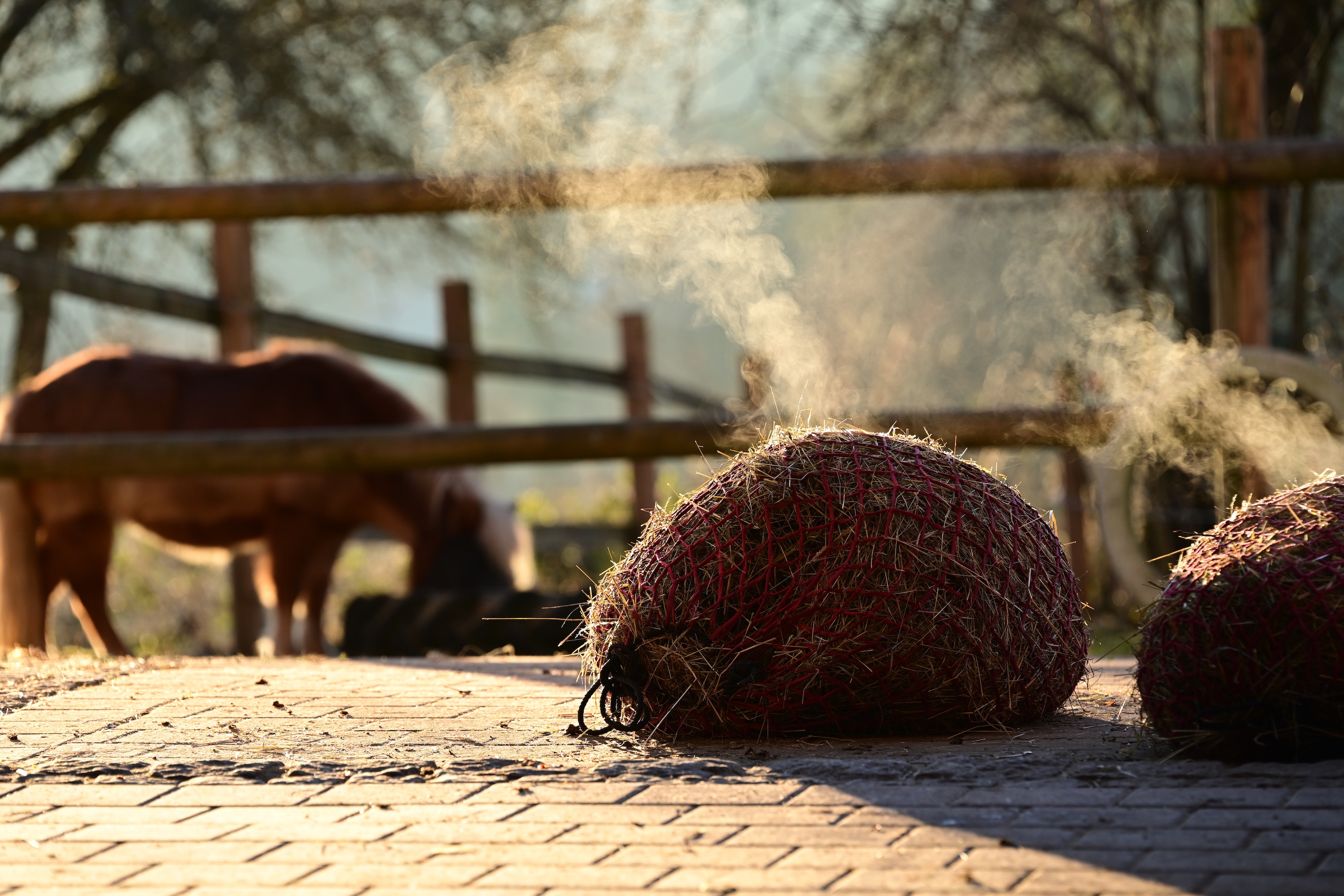
Soaking and steaming are used for good reasons: for dust reduction in respiratory patients, for lowering sugar content in EMS horses, for improving hygienic quality. From a therapeutic perspective, however, it is noticeable that a subset of these horses develops digestive problems in parallel or cannot get rid of existing problems, even though the ration otherwise fits. It is also striking that many horses ingest soaked or steamed hay faster than the same hay dry.
Here, too, the observation is not unambiguous. Horses that receive soaked hay are often already sick horses: they have respiratory problems, metabolic diseases, or are under feed restriction. It is therefore quite possible that we are seeing an effect of the underlying disease or the feeding management and not of the soaking. What we repeatedly observe, however, is an improvement when suitable dry hay is fed instead, without anything else changing.
The Hypothesis
The physical consideration is simple. During soaking and steaming, dry plant structures are hydrated. The material becomes softer and more elastic and reaches the mouth already with a significant proportion of water.
Two assumptions arise from this. Firstly, a softer, moist feed could mechanically take on the properties of fresh plant material rather than those of dry hay, which could change the chewing movement. Secondly, the horse must contribute less saliva to form a bolus capable of being swallowed. Since saliva production is exclusively linked to the chewing movement, a feed that already enters the mouth wet could be swallowed with less chewing work. Less chewing work would mean less reduction and less saliva per kilogram of dry matter.
Both are plausible. Neither has been investigated.
What Was Measured and Why It Is Not Enough
There is a study that seems to answer our question exactly. Glatter and colleagues examined six horses in a cross-over with native, 15-minute soaked, and 60-minute steamed meadow hay (not further defined).
Unfortunately, the publication is inherently contradictory. In the abstract, 3537 chewing strokes per kilogram of dry matter are assigned to the steamed and 2521 to the soaked hay. In the results section and in Table 5, the opposite is consistently stated: 3537 for the soaked and 2521 for the steamed hay, compared to 2622 for the native hay. The discussion also treats the soaked hay as particularly chewing-intensive. The central assignment is thus swapped between the abstract and the main text.
A publication with an error exactly in its main result cannot be solid evidence for the question of whether soaking increases or decreases chewing work. Additionally, there were only six horses, one measurement during a limited test meal, and the authors' observation that "the soaked hay was accepted less well." Slower eating could therefore have been at least partially a taste effect and does not necessarily have to be based on required chewing work. We mention the study for the sake of completeness but do not derive a direction from it because the study simply does not provide it.
Other studies show that moisture can accelerate intake. Earing and colleagues examined six horses with two alfalfa-orchard grass hay varieties of different hygienic quality. For the low-mold hay, the dry matter eaten in two hours rose from 0.64 to 2.02 kilograms after steaming; for the more contaminated hay, nothing changed. Since the horses could choose between treated and untreated hay, this is more of an acceptance test than an investigation of chewing physiology.
An investigation of twelve Konik horses published in 2026 makes the picture even more colorful: hay that was only moistened was very well accepted, while hay that was actually soaked was significantly worse. Here, too, any measurement of jaw movement is missing. However, the study shows that "moistened", "soaked", and "steamed" do not physiologically belong in the same pot and that taste and hygienic quality significantly influence intake.
What Is Often Overlooked
Two aspects rarely appear in the discussion but are significant for practice.
For one, long soaking changes the hygienic quality, and not only for the better. At warm temperatures and with long soaking times, bacteria multiply considerably in the soaking water. For our question, this means: part of the observed digestive problems could also be due to the germ load and not to the changed fibre structure.
Secondly, soaked and steamed hay is almost never fed ad libitum in practice. It is portioned because the preparation requires effort and because the horses are often rationed anyway. Thus, the effects we have already described come together: those who are fed portioned after a break eat faster.
What Remains Unresolved
Whether soaked or steamed hay is actually processed with a more grass-like jaw movement, whether the fibres are less ground as a result, and whether the horse produces less saliva per kilogram of dry matter has apparently never been directly investigated. Measurements of lateral jaw excursion, investigations of the swallowed particles, and reliable data on the amount of saliva for dry versus moist hay are missing.
The existing data are therefore not "against" the practical observation. They are simply insufficient and heterogeneous. The only thing that is certain is that intake behavior and acceptance depend heavily on the starting hay, the type of treatment, and the duration of treatment. The crucial experiment is missing.
Listening tip: In the Sanoanimal Podcast #43 – Watering or Steaming Hay (Heu wässern oder bedampfen), Dr. Christina Fritz speaks in detail about this topic.
Haylage and Silage: The Biggest Problem Starts with the Name
What We See in Practice
With haylage, the observation is particularly clear. Horses with chronic free fecal water, bloating, fermenting or sour-smelling manure, or recurring colic have an above-average frequency of haylage in their ration, and the switch to good hay is for a significant proportion of these horses the point at which digestion stabilizes. In addition, we also frequently see metabolic abnormalities with long-term haylage feeding.
At the same time, haylage is the feed form where practical observation and the state of research are particularly difficult to reconcile. This is primarily due to a linguistic problem.
What Was Actually Fed in the Studies
Hardly any term is used as vaguely in horse studies as "haylage". A roughage wrapped in film with 85 or 90 percent dry matter is physiologically something completely different from a significantly moister, lactic-acid-fermented feed. Both appear in the literature under the same name.
For a meaningful interpretation, at least dry matter, pH value, lactic acid, acetic acid, and preferably the entire fermentation profile would have to be specified. If these specifications are missing, we do not know what the horse has eaten. The "haylage" frequently used in the chewing literature from the works around Brüssow and Vervuert, for example, was at around 89 percent dry matter and thus practically in the range of dry hay. Without a documented pH value and without fermentation acids, it is hardly suitable as a model for a typical moist, fermented haylage.
Practice knows the same problem. Much of what is sold as haylage has never undergone a proper lactic acid fermentation. This is not a harmless inaccuracy: with too high dry matter, the sugar content and compaction are often not enough for stable fermentation, so neither a low pH value is established nor a preserving acid effect occurs. Which microorganisms develop in such a bale instead is open. Schenck and Müller found significantly higher counts of enterobacteria and lactic acid bacteria in haylage harvested late in the year after preservation than in that harvested earlier. With haylage, the hygienic quality is thus at least as variable as with hay, only harder to assess because nothing can be seen on the closed bale. Since wrapping in plastic creates a warm, moist environment in the bale, one can assume that the germ counts take on significant proportions during storage if the fermentation was incomplete.
What Was Measured
The methodologically most valuable experiment comes from Müller and colleagues. They produced hay with 81.5 percent, haylage with 54.8 percent, and silage with 34.3 percent dry matter from the same grass stand and fed them to four fistulated horses in a cross-over for 21 days each, with sampling from the right ventral colon and from the feces. The approach is strong because plant stand and crop do not change simultaneously with the preservation method.
The result initially speaks against our observation. Microbial and chemical composition in the right ventral colon and in the feces were largely similar between the three forms of preservation, as was the fermentation kinetics in the colon. The only noteworthy exception concerned the streptococci counts, and these were higher with hay feeding than with haylage and silage. This is a real result, and it belongs in this discussion.
However, what the study cannot show is that haylage leaves the horse's intestine unchanged in the long term. It is not designed for that. Four horses are a very small sample, the animals were fistulated, the feeding duration was three weeks, and a single intestinal section as well as the feces were sampled. The microbial composition was predominantly assessed using culture-based methods, so the germ groups that were searched for were counted. Modern sequencing or metabolome data do not exist. Chewing behavior was also not recorded. A statement about horses that receive haylage for years, about other intestinal sections, or about haylages of different compositions cannot be derived from it.
The most interesting finding comes from Miyaji and colleagues with long timothy hay and timothy grass silage. The silage produced more chewing strokes per gram of dry matter, 5.3 compared to 4.6. Nevertheless, in the silage group, 51 percent of the investigated fecal fraction consisted of large particles, compared to only 29 percent with hay. At the same time, the mean residence time for both the liquid and solid phases was shorter under silage, while the apparent digestibility of dry matter and fibre did not differ significantly.
This is one of the most insightful findings of the entire topic. More chewing work, coarser particles in the feces, faster passage. Why this is so was not investigated. A different fracture behavior of the moist, elastic fibre, a different movement geometry when chewing, or an effect of the faster passage itself are possible.
The results from Müller and Miyaji do not necessarily contradict each other. They measure different levels. No "haylage is gut-neutral" can be derived from Müller and no "haylage is poorly chewed" from Miyaji.
Why Haylage Has a Special Position
Compared to dry hay, several things change simultaneously with haylage: moisture and elasticity of the fibre, the presence of fermentation acids and microbial metabolic products, the microbial colonization of the feed itself, possible changes in the plant structure through the fermentation process, as well as acceptance and intake speed.
For digestion, this means: even if it could be shown that haylage is chewed differently, that would only be one of several possible pathways of action. A feed that already supplies the intestine with large quantities of lactic acid bacteria and fermentation acids possibly acts on the microbial balance independently of its fibre structure. These paths can only be separated if they are examined individually. This has not yet happened.
What Remains Unresolved
For haylage, an experiment is missing that feeds the same plant batch once as hay and once as fully characterized, actually fermented haylage and thereby does not just count chewing strokes but measures the entire chain: jaw movement, swallowed bolus, particle distribution in various sections of the large intestine, and modern microbiome analysis. Until then, it can be said: preservation changes chewing behavior, particle structure, and passage; it additionally supplies the intestine with acids and germs, and which combination thereof becomes clinically relevant in sensitive horses is unresolved.
For practice, one point remains regardless of all physiology: with a bale sold as haylage, without analysis, one knows neither whether a clean fermentation has taken place nor what else has developed inside.
Hay Cobs and Pellets: When the Machine Pre-Chews
Hay cobs occupy a special position in this series. Unlike with chops, the plant material here was not just shortened but ground and then pressed into pellets under pressure and heat. The horse thus receives a feed in which mechanical reduction has already been largely anticipated technically.
What We See in Practice
The picture here is more differentiated than with chops or haylage. Hay cobs are a useful feed for many horses, for example for seniors with bad teeth or as a supplement for tight roughage supply, and we see many horses that cope well with them, especially when fed soaked.
It is noticeable, however, that the product apparently matters. In consultations, it repeatedly shows that horses with digestive problems react to hay cobs from a specific manufacturer and tolerate another product without issue. A change of manufacturer is the decisive step for some horses. The pellet diameter seems to play a role: pellets with a diameter of about 6 to 8 millimeters usually work well; thicker pellets more frequently cause problems. Similar applies to the hardness of the pellets, which in turn depends on the composition. Products with a high alfalfa or grass content, with molasses or binders, behave differently than pure, very firmly pressed grass cobs.
Another difference is the type of feeding. Hay cobs can be given dry or soaked, and both are physiologically two different feedstuffs. Soaked cobs disintegrate into a mush that the horse hardly needs to chew anymore. Dry pellets, on the other hand, it must bite and grind, whereby it has varying amounts of work depending on hardness and diameter. For chewing performance, this is a significant difference, and for passage and fermentation in the large intestine as well, presumably.
What Was Measured
For the chewing movement, we have a direct measurement with Bonin and colleagues: pellets were chewed with a higher chewing frequency but significantly smaller lateral excursion of the mandible than hay, and the lateral movement was not sufficient for the same complete contact of the molar rows. With pellets, the deviation from the grinding pattern is thus no longer a practical observation of dental practitioners and a hypothesis established therefrom, but a finding. This also indirectly supports our consideration of chops: the horse adapts its chewing movement to the particle size, and the smaller the material enters the mouth, the more it is crushed rather than ground.
That the physical properties of a pellet change feeding behavior is shown by Bochnia and colleagues. They compared two pelletized compound feeds that differed exclusively in their physical properties and found differences in chewing behavior. Thus, the basic assumption behind the practical observation is supported: not every pellet is the same. Which property has which effect—i.e., diameter, hardness, binder, or degree of grinding—cannot be derived from this, however. And in that case, compound feeds were investigated, not hay cobs.
Most insightful for digestion is the experiment by Drogoul and colleagues, which we already know. Ponies received the same mixture of alfalfa and orchard grass hay either chopped or ground to 1.5 millimeters and pelletized. Fine grinding did not lead to faster passage but to an extended residence time of the particle and liquid phases, especially in the colon. At the same time, the rate and extent of microbial degradation of dry matter and NDF were reduced in four fistulated ponies. The overall digestibility of the fibre, on the other hand, hardly differed, presumably because the longer residence time compensated for the slower degradation.
This experiment refutes the obvious idea that a more finely ground feed is automatically easier for the intestine to digest. For practice, it is significant because exactly this idea often stands behind the recommendation to switch to hay cobs for digestive problems.
The finding by Starrett and colleagues points in the same direction, that a pure pellet diet led to more large fecal particles and lower fibre digestibility in twenty horses than a hay-based ration. Since the rations differed not only in structure, pelleting cannot be named as the sole cause. The direction is, however, the same: technical pre-reduction does not guarantee that finer material leaves the intestine in the end.
And Silva and colleagues found in four horses that hay ground to 5 and 3 millimeters extended the transit time of the solid phase by about three hours, while the mean residence time did not differ. In the colon, the particles were smallest with the finely ground hay, as expected.
The Degree of Milling as an Overlooked Variable
From these findings, a consideration arises that hardly appears in the discussion about hay cobs. Practice pays attention to the diameter and hardness of the finished pellet. Physiologically, however, how finely the material was ground before pressing should be at least as important. Exactly this variable was changed by Drogoul, and exactly there the most distinct effects on degradation rate and residence time were shown.
The degree of milling is very different between manufacturers but is not declared. It is linked to hardness, because finely ground material can be pressed more firmly, and indirectly also to the diameter. If the practical observation about manufacturer differences can be explained physiologically, then possibly less via the diameter than via the degree of milling and the resulting structure of the fibre. This is a hypothesis, but one that could be tested with reasonable effort.
Dry or Soaked
For soaked hay cobs, what we described in the chapter on soaked hay is added. A feed that already reaches the mouth as mush requires hardly any chewing work and correspondingly little saliva. With hay cobs, this effect is even more pronounced than with soaked hay, because here not only water is added, but the structure is already dissolved anyway.
For horses that can no longer grind due to their teeth, exactly that is the purpose. For a horse with intact teeth, however, it means that a significant portion of the ration bypasses chewing work and salivation. Direct measurements of chewing behavior or saliva production for soaked hay cobs compared to dry pellets or hay do not exist.
What Remains Unresolved
The experiment missing here is the same as for chops, only with more variants: the same batch of hay long, chopped, as well as ground to different degrees of fineness and pressed into pellets of different diameters and hardness, each fed dry and soaked, with measurement of jaw movement, the swallowed bolus, passage, and fermentation. Until then, it remains: that processing roughage into pellets changes the chewing movement is measured. That finer does not automatically mean more digestible is also measured. Which product property is responsible for the differences observed in practice is open.
For feeding practice, this means: when hay cobs are used, a low sugar content, the absence of molasses and binders, and a small fibre length are decisive. For these reasons, the use of OKAPI Heucobs Sugar Light has proven effective.
Straw: Structure Alone Is Not a Quality Characteristic
Straw belongs in this series because it shows that a long fibre is not automatically a highly digestible fibre. It is, so to speak, the antipode to chopped fibre: mechanically demanding but microbially hard to access.
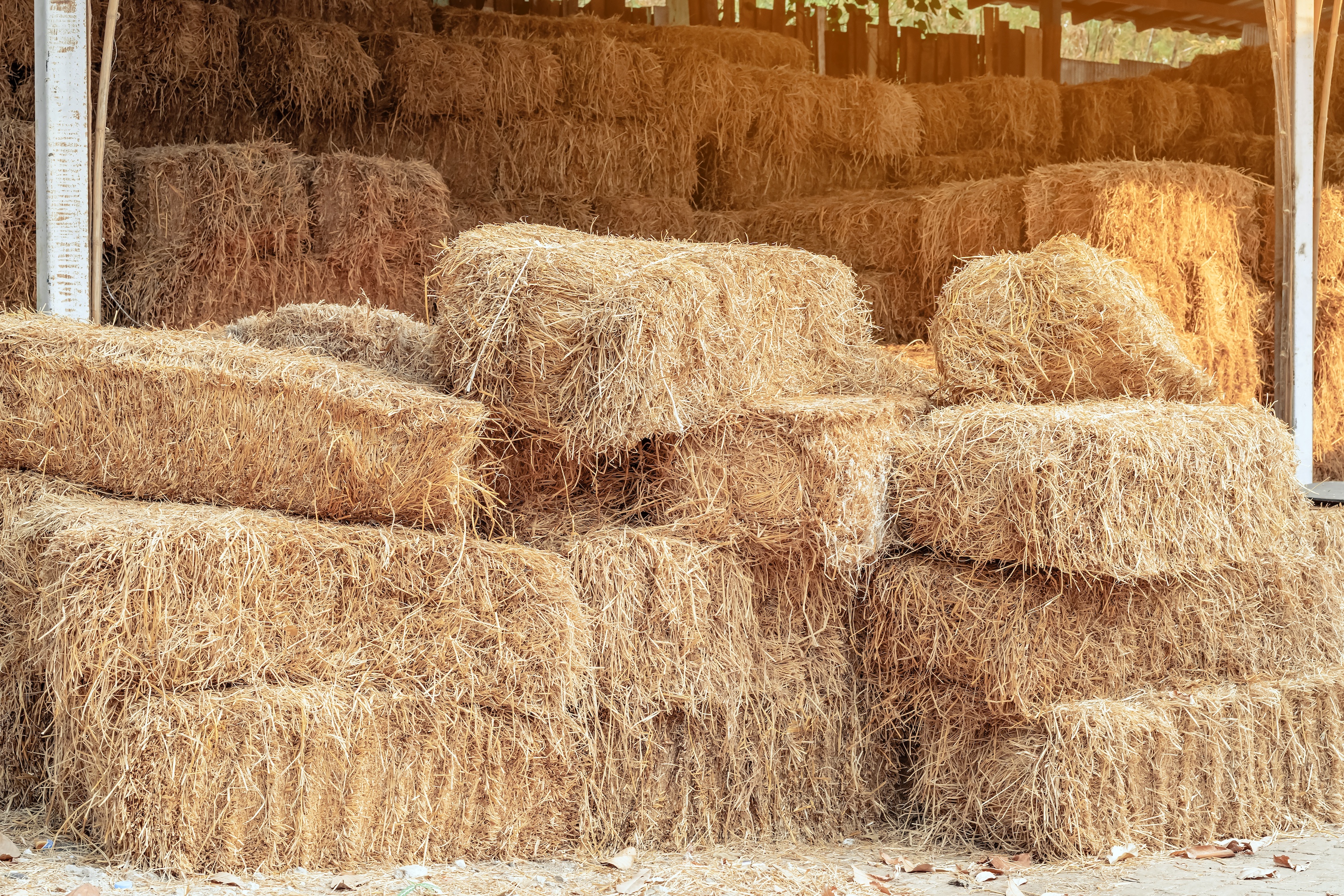
© Adobe Stock / JinnaritT
What We See in Practice
Straw is primarily used as enrichment and structural feed for easy keepers and as bedding that is eaten as well. In limited quantities and in good hygienic quality, we usually see no problems with this. It becomes conspicuous when straw replaces hay in larger quantities, especially in horses whose hay ration is already tightly calculated and who consume it accordingly hastily or in very large quantities. Then we frequently see impaction colic and horses with conspicuously coarse fibres in the feces.
What Was Measured
That straw is poorly degradable microbially is well documented. Martuzzi and colleagues compared various roughages in six horses: straw had the lowest measured dry matter digestibility at about 44.6 percent and was associated with larger fecal particles, while a ryegrass-clover mixture was at about 74.4 percent.
This is important for the assessment of coarse fecal fibres. They arise not only from deficient chewing but also from the fact that highly lignified material is hardly attacked by microorganisms and therefore reappears in recognizable form as coarse fibre. Large fibres in the feces of a horse that eats a lot of straw therefore say something different than large fibres in the feces of a horse that exclusively receives hay.
For chewing behavior, the data situation is thin. A small cross-over study with eight horses compared a ration of 50 percent oat straw and 50 percent haylage with pure haylage. The straw mixture was taken in more slowly over time; the chewing strokes counted during short observation windows, on the other hand, did not differ reliably. However, little can be said about the processing of a whole day's ration from five minutes of chewing stroke counting. There should also be differences between the types of straw, as oat, wheat, barley, and rye straw differ in stem thickness, hardness, and lignification. This has not been investigated for chewing behavior.
Regarding the stomach, there are conflicting findings. In the Danish risk factor study by Luthersson and colleagues, straw as the sole or predominant roughage was associated with an increased ulcer risk. The authors suspected as the cause mechanical irritation, a changed layering of the stomach contents, or a lower buffering capacity due to the low calcium and protein content of straw. In the study by Jansson and colleagues, on the other hand, stomach findings did not worsen when half of the ration was replaced by wheat straw over three weeks, with a longer feeding time and a more favorable metabolic profile. It should be noted that there, it was not compared against hay but against a ration of pure haylage, and that the horses only ate the straw after the haylage was used up.
A point that is almost always missing in this discussion is hygienic quality. Straw is a by-product of the grain harvest that is not grown as feed and is often not stored accordingly. Investigations of straw lots from horse stables have found significant contents of microorganisms, mycotoxins, and lipopolysaccharides; Jansson and colleagues point out themselves that little is known about their long-term effect on the digestive tract. In their study, the straw was tested beforehand for hygienic quality and found to be without complaint. In practice, this practically never happens. Part of the contradiction between the two studies could therefore simply lie in the fact that two very different straw qualities were fed there.
In addition, in practice, straw is usually not fed as a ration but lies as bedding in the stall. No one knows what is consumed from it, and it is typically eaten when the hay is used up. Thus, straw intake falls exactly into the phases in which the horse is hungry and eats hastily—in exactly the situation in which we suspect a changed chewing performance anyway. For a horse with a tight hay ration, straw is therefore not simply an additional structural feed, but the feed of the feeding pause.
Why Straw Illuminates Our Question from the Other Side
For our guiding question, straw is instructive for a specific reason. It is a feed that demands chewing work rather than reducing it, and yet large particles appear in the feces and digestibility is low. This shows that there is no simple equation between chewing performance and fibre digestion. What the microorganisms in the large intestine can do with a fibre depends not only on how much it was reduced but also on how lignified it is and how accessible its cell walls are.
For the assessment of fecal water, bloating, and coarse fecal fibres, a practical consequence follows: one must always know which roughage the horse receives in which form and in what quantity before drawing conclusions from the feces.
What Remains Unresolved
For straw, too, measurements of jaw movement and the swallowed bolus are missing. It would also be interesting to know how different straw varieties differ and how the chewing behavior changes when straw is offered instead of hay during rationed feeding, i.e., in exactly the situation where we see problems in practice.
The final third part of this technical series, Part 3: "Feeding Studies in Horses: Why Practical Observations Often Prove Right Regarding Roughage", follows with a critical classification of the study situation as well as the methodological explanation for why feeding trials and stable reality often diverge.
Sources
- Argenzio, R. A., Lowe, J. E., Pickard, D. W., & Stevens, C. E. (1974). Digesta passage and water exchange in the equine large intestine. American Journal of Physiology-Legacy Content, 226(5), 1035-1042.
- Austbø, D., & Volden, H. (2006). Influence of passage model and caecal cannulation on estimated passage kinetics of roughage and concentrate in the gastrointestinal tract of horses. Livestock Science, 100(1), 33-43.
- Björnhag, G., Sperber, I., & Holtenius, K. (1984). A separation mechanism in the large intestine of equines. Canadian Journal of Animal Science, 64 (Suppl.), 89-90.
- Bochnia, M., Goetz, F., Wensch-Dorendorf, M., Koelln, M., & Zeyner, A. (2019). Chewing patterns in horses during the intake of variable quantities of two pelleted compound feeds differing in their physical characteristics only. Research in Veterinary Science, 125, 189-194.
- Bonin, S. J., Clayton, H. M., Lanovaz, J. L., & Johnston, T. (2007). Comparison of mandibular motion in horses chewing hay and pellets. Equine Veterinary Journal, 39(3), 258-262.
- Brüssow, N. (2006). Effekte verschiedener Futtermittel und Bearbeitungsformen auf die Futteraufnahmedauer, die Kaufrequenz und die Kauintensität beim Pferd. Dissertation, Tierärztliche Hochschule Hannover.
- Clauss, M. et al. (2008). An isthmus at the caecocolical junction is an anatomical feature of domestic and wild equids. European Journal of Wildlife Research, 54(2), 347-351.
- Drogoul, C., Poncet, C., & Tisserand, J. L. (2000). Feeding ground and pelleted hay rather than chopped hay to ponies: 1. Consequences for in vivo digestibility and rate of passage of digesta. Animal Feed Science and Technology, 87(1-2), 117-130.
- Drogoul, C., Tisserand, J. L., & Poncet, C. (2000). Feeding ground and pelleted hay rather than chopped hay to ponies: 2. Consequences on fibre degradation in the cecum and the colon. Animal Feed Science and Technology, 87(1-2), 131-145.
- Earing, J. E., Hathaway, M. R., Sheaffer, C. C., Hetchler, B. P., Jacobson, L. D., Paulson, J. C., & Martinson, K. L. (2013). Effect of hay steaming on forage nutritive values and dry matter intake by horses. Journal of Animal Science, 91(12), 5813-5820.
- Edouard, N., Fleurance, G., Dumont, B., Baumont, R., & Duncan, P. (2009). Does sward height affect feeding patch choice and voluntary intake in horses? Applied Animal Behaviour Science, 119(3-4), 219-228.
- Ellis, A. D. et al. (2015). Effect of forage presentation on feed intake behaviour in stabled horses. Applied Animal Behaviour Science, 165, 88-94.
- Ellis, A. D., Thomas, S., Arkell, K., & Harris, P. (2005). Adding chopped straw to concentrate feed: The effect of inclusion rate and particle length on intake behaviour of horses. Pferdeheilkunde, 21, 35-37.
- Frape, D. (2004). Equine Nutrition and Feeding (3. Aufl.). Blackwell Publishing, Oxford.
- Geor, R. J., Harris, P. A., & Coenen, M. (Hrsg.) (2013). Equine Applied and Clinical Nutrition. Saunders Elsevier, Edinburgh.
- Glatter, M., Bochnia, M., Wensch-Dorendorf, M., Greef, J. M., & Zeyner, A. (2021). Feed intake parameters of horses fed soaked or steamed hay and hygienic quality of hay stored following treatment. Animals, 11(9), 2729.
- Glunk, M. E. C., Pratt-Phillips, P. S. E., & Siciliano, P. P. D. (2013). Effect of restricted pasture access on pasture dry matter intake rate, dietary energy intake, and fecal pH in horses. Journal of Equine Veterinary Science, 33(6), 421-426.
- Harris, P. A., Ellis, A. D., Fradinho, M. J., Jansson, A., Julliand, V., Luthersson, N., Santos, A. S., & Vervuert, I. (2017). Review: Feeding conserved forage to horses: Recent advances and recommendations. Animal, 11(6), 958-967.
- Hart, R., Bailey, A., Farmer, J., & Duberstein, K. (2024). Chewing analysis of horses consuming bermudagrass hay in different styles of slow feeders as compared to loose hay. Journal of Equine Veterinary Science, 140, 105133.
- Hillyer, M. G., Taylor, F. G. R., Proudman, C. J., Edwards, G. B., Smith, J. E., & French, N. P. (2002). Case control study to identify risk factors for simple colonic obstruction and distension colic in horses. Equine Veterinary Journal, 34(5), 455-463.
- Hummel, J., Scheurich, F., Ortmann, S., Crompton, L. A., Gerken, M., & Clauss, M. (2018). Comparative selective retention of particle size classes in the gastrointestinal tract of ponies and goats. Journal of Animal Physiology and Animal Nutrition, 102(2), 429-439.
- Jansson, A., Harris, P., Larsdotter Davey, S., Luthersson, N., Ragnarsson, S., & Ringmark, S. (2021). Straw as an alternative to grass forage in horses: Effects on post-prandial metabolic profile, energy intake, behaviour and gastric ulceration. Animals, 11(8), 2197.
- Lindroth, K. M., Dicksved, J., Vervuert, I., & Müller, C. E. (2022). Chemical composition and physical characteristics of faeces in horses with and without free faecal liquid – two case-control studies. BMC Veterinary Research, 18(1), 2.
- Lindroth, K. M., Lindberg, J. E., Johansen, A., & Müller, C. E. (2021). Feeding and management of horses with and without free faecal liquid: A case-control study. Animals, 11(9), 2552.
- Long, J. F., Hutton, R., Abrams, A., Duberstein, J. A., & Duberstein, K. J. (2026). Mastication characterization of horses fed bermudagrass hay in a two-part field study. Journal of Equine Veterinary Science, 106068.
- Luthersson, N., Nielsen, K. H., Harris, P., & Parkin, T. D. H. (2009). Risk factors associated with equine gastric ulceration syndrome (EGUS) in 201 horses in Denmark. Equine Veterinary Journal, 41(7), 625-630.
- Martuzzi, F., Danese, T., Simoni, M., Valle, E., & Righi, F. (2024). Faecal particle size distribution in relation to forage type and digestibility in horses: Preliminary results. Italian Journal of Animal Science, 23(1), 1146-1152.
- Meyer, H. V., Ahlswede, L., & Reinhardt, H. J. (1975). Untersuchungen über Fressdauer, Kaufrequenz und Futterzerkleinerung beim Pferd. Deutsche Tierärztliche Wochenschrift, 82, 54-58.
- Meyer, H., Coenen, M., & Vervuert, I. (2014). Pferdefütterung (6. Aufl.). Enke, Stuttgart.
- Miyaji, M., Ueda, K., Hata, H., & Kondo, S. (2011). Effects of quality and physical form of hay on mean retention time of digesta and total tract digestibility in horses. Animal feed science and technology, 165(1-2), 61-67.
- Miyaji, M., Ueda, K., Yamada, F., Kobayashi, Y., Hata, H., Nakatsuji, H., & Kondo, S. (2004). Chewing activity, particle size distribution of feces and total tract mean retention time of digesta in horses fed timothy hay or silage. Animal Science Journal, 75(4).
- Moore–Colyer, M. J., & Longland, A. (2004). Exploiting dietary fibre in equid diets. BSAP Occasional Publication, 32, 113-128.
- Moore-Colyer, M., Longland, A., Harris, P., Zeef, L., & Crosthwaite, S. (2020). Mapping the bacterial ecology on the phyllosphere of dry and post soaked grass hay for horses. PLoS One, 15(1), e0227151.
- Mostert, N. L., Williams, K., & Witherow, B. A. (2024). A preliminary study on feeding straw to horses and its effects on equine chewing and consumption rates. International Journal of Equine Science, 3(2), 115-122.
- Muhonen, S., Julliand, V., Lindberg, J. E., Bertilsson, J., & Jansson, A. (2009). Effects on the equine colon ecosystem of grass silage and haylage diets after an abrupt change from hay. Journal of Animal Science, 87(7), 2291-2298.
- Müller, C. E. (2009). Long-stemmed vs. cut haylage in bales – Effects on fermentation, aerobic storage stability, equine eating behaviour and characteristics of equine faeces. Animal Feed Science and Technology, 152(3-4), 307-321.
- Müller, C. E. (2018). Silage and haylage for horses. Grass and Forage Science, 73(4), 815-827.
- Müller, C. E., & Udén, P. (2007). Preference of horses for grass conserved as hay, haylage or silage. Animal Feed Science and Technology, 132(1-2), 66-78.
- Müller, C. E., von Rosen, D., & Udén, P. (2008). Effect of forage conservation method on microbial flora and fermentation pattern in forage and in equine colon and faeces. Livestock Science, 119(1-3), 116-128.
- Müller, P. C. E. (2014). Microbial composition before and after conservation of grass-dominated haylage harvested early, middle, and late in the season. Journal of Equine Veterinary Science, 34(5), 593-601.
- Raspa, F., Chessa, S., Bergero, D., Sacchi, P., Ferrocino, I., Cocolin, L., et al., & Valle, E. (2024). Microbiota characterization throughout the digestive tract of horses fed a high-fiber vs. a high-starch diet. Frontiers in Veterinary Science, 11, 1386135.
- Ringmark, S., Connysson, M., Segerkvist, K. A., & Müller, C. E. (2026). Harvested Forages for Horses From a Feeding Perspective—A Systematic Literature Review. Grass and Forage Science, 81(3), e70068.
- Schwarm, A., Clauss, M., Ortmann, S., & Jensen, R. B. (2022). No size-dependent net particle retention in the hindgut of horses. Journal of Animal Physiology and Animal Nutrition, 106(6), 1356-1363.
- Sellers, A. F., & Lowe, J. E. (1986). Review of large intestinal motility and mechanisms of impaction in the horse. Equine Veterinary Journal, 18(4), 261-263.
- Sellers, A. F., Lowe, J. E., & Brondum, J. (1979). Motor events in equine large colon. American Journal of Physiology-Endocrinology and Metabolism, 237(5), E457.
- Sellers, A. F., Lowe, J. E., Drost, C. J., Rendano, V. T., Georgi, J. R., & Roberts, M. C. (1982). Retropulsion-propulsion in equine large colon. American Journal of Veterinary Research, 43(3), 390-396.
- Sellers, A. F., Lowe, J. E., Rendano, V. T., & Drost, C. J. (1982). The reservoir function of the equine cecum and ventral large colon. Cornell Veterinarian, 72(3), 233-241.
- Silva, V. P., Almeida, F. Q., Pimentel, R. R. M., Godoi, F. N., Santos, T. M., & Pires, M. S. (2014). Passage kinetics of digesta in horses fed with coastcross hay ground to different degrees. Ciência e Agrotecnologia, 38(5), 506-514.
- Sperber, I., Björnhag, G., & Holtenius, K. (1992). A separation mechanism and fluid flow in the large intestine of the equine. Pferdeheilkunde, 1st European Conference on Equine Nutrition, 29-32.
- Starrett, A., Arnold, C. E., Burr, A., Sarturi, J. O., Leatherwood, J. L., Pilla, R., et al., & Chaffin, M. K. (2026). Diet composition influences equine large intestinal motility as measured by transcutaneous ultrasound. American Journal of Veterinary Research, 87(5).
- Starrett, A., Sarturi, J. O., Leatherwood, J. L., Chaffin, M. K., Mukhopadhyay, S., Pilla, R., & Arnold, C. E. (2026). The effects of diet on the physical characteristics of feces and fiber digestibility in healthy horses. Journal of Animal Science, 104, skag255.
- Tkaczyk, E., Gazda, I. E., Humięcka, M., Łuszczyński, J., Basińska, K., Kaczmarek, B., ... & Janczarek, I. (2026). Do Polish Konik Horses Find Soaked Hay to Be Palatable?. Animals, 16(11), 1663.
- Van Weyenberg, S., Sales, J., & Janssens, G. P. J. (2006). Passage rate of digesta through the equine gastrointestinal tract: A review. Livestock Science, 99(1), 3-12.
- Vervuert, I., Brüssow, N., Bochnia, M., Cuddeford, D., & Coenen, M. (2013). Electromyographic evaluation of masseter muscle activity in horses fed (i) different types of roughage and (ii) maize after different hay allocations. Journal of Animal Physiology and Animal Nutrition, 97(3), 515-521.
- Vervuert, I., Brüssow, N., Bochnia, M., Hollands, T., Cuddeford, D., & Coenen, M. (2010). Electromyographic evaluation of masseter muscle activity in horses fed different types of roughage. In: The impact of nutrition on the health and welfare of horses (S. 75-77). Wageningen Academic.
- Vondran, S., Venner, M., & Vervuert, I. (2016). Effects of two alfalfa preparations with different particle sizes on the gastric mucosa in weanlings: Alfalfa chaff versus alfalfa pellets. BMC Veterinary Research, 12(1), 110.
- Vondran, S., Venner, M., Coenen, M., & Vervuert, I. (2017). Effects of alfalfa chaff on the gastric mucosa in adult horses. Pferdeheilkunde, 33(1), 66-71.
- Weinert, J. R., Werner, J., & Williams, C. A. (2020). Validation and implementation of an automated chew sensor-based remote monitoring device as tool for equine grazing research. Journal of Equine Veterinary Science, 88, 102971.
- Wichert, B., Nater, S., Wittenbrink, M. M., Wolf, P., Meyer, K., & Wanner, M. (2008). Judgement of hygienic quality of roughage in horse stables in Switzerland. Journal of Animal Physiology and Animal Nutrition, 92(4), 432-437.