Echinacea for horses in profile: Active compounds, practical applications, and crucial advice regarding dosage, course duration & contraindications.
Herbal Advice: Echinacea (Coneflower)
© Adobe Stock / kazakovmaksim
This article was translated using AI.
Herb Profile:
|
Common name |
Coneflower (Purple coneflower, Narrow-leaved purple coneflower, Pale purple coneflower, Hedgehog coneflower) |
|
Botanical name |
Echinacea purpurea (Purple coneflower), Echinacea angustifolia (Narrow-leaved purple coneflower), Echinacea pallida (Pale purple coneflower) |
|
Traditional use |
One of the most important medicinal plants among Indigenous North Americans: used externally for wounds, burns, boils, insect bites, and snakebites; the chewed root was used for toothaches and sore throats; internally for coughs, colds, and infections. Adopted by European settlers and established as a medicinal plant in Europe during the 20th century. Today, it is primarily used to strengthen immune defenses against colds and recurrent respiratory and urinary tract infections, and externally for poorly healing wounds. In horses, it is traditionally used to support the immune system during periods of increased susceptibility to infection, such as during coat change, barn changes, competition season, and the cold winter months. |
|
Scientifically proven effect(s) |
Alkamides (alkylamides, especially isobutylamides), caffeic acid derivatives (cichoric acid in E. purpurea, echinacoside in E. angustifolia and E. pallida), polysaccharides (including arabinogalactans), glycoproteins, flavonoids, essential oil, polyacetylenes |
|
Contraindications |
Do not use in cases of allergy to plants of the daisy family (Asteraceae). Do not use in autoimmune diseases, progressive systemic diseases, or concurrently with immunosuppressive drugs such as cortisone. In allergic conditions such as sweet itch or equine asthma, use only after veterinary consultation. Insufficient data are available for pregnant and lactating mares. Do not feed continuously for longer than eight weeks without a break. |
|
When is it harvested? |
The aerial parts during flowering from July to September; the roots of perennial plants in autumn. |
|
Which plant parts are used? |
For E. purpurea, the flowering aerial parts and the root; for E. angustifolia and E. pallida, the root. |
|
How is it prepared? |
Mix dried, rubbed herb or ground root into the feed, or brew as a tea (pour hot water over it, steep for 10 minutes) and add to the feed. Also available for horses as pellets, extracts, or tinctures. |
|
Trivia |
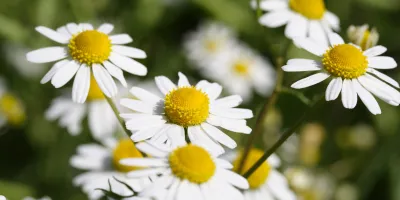
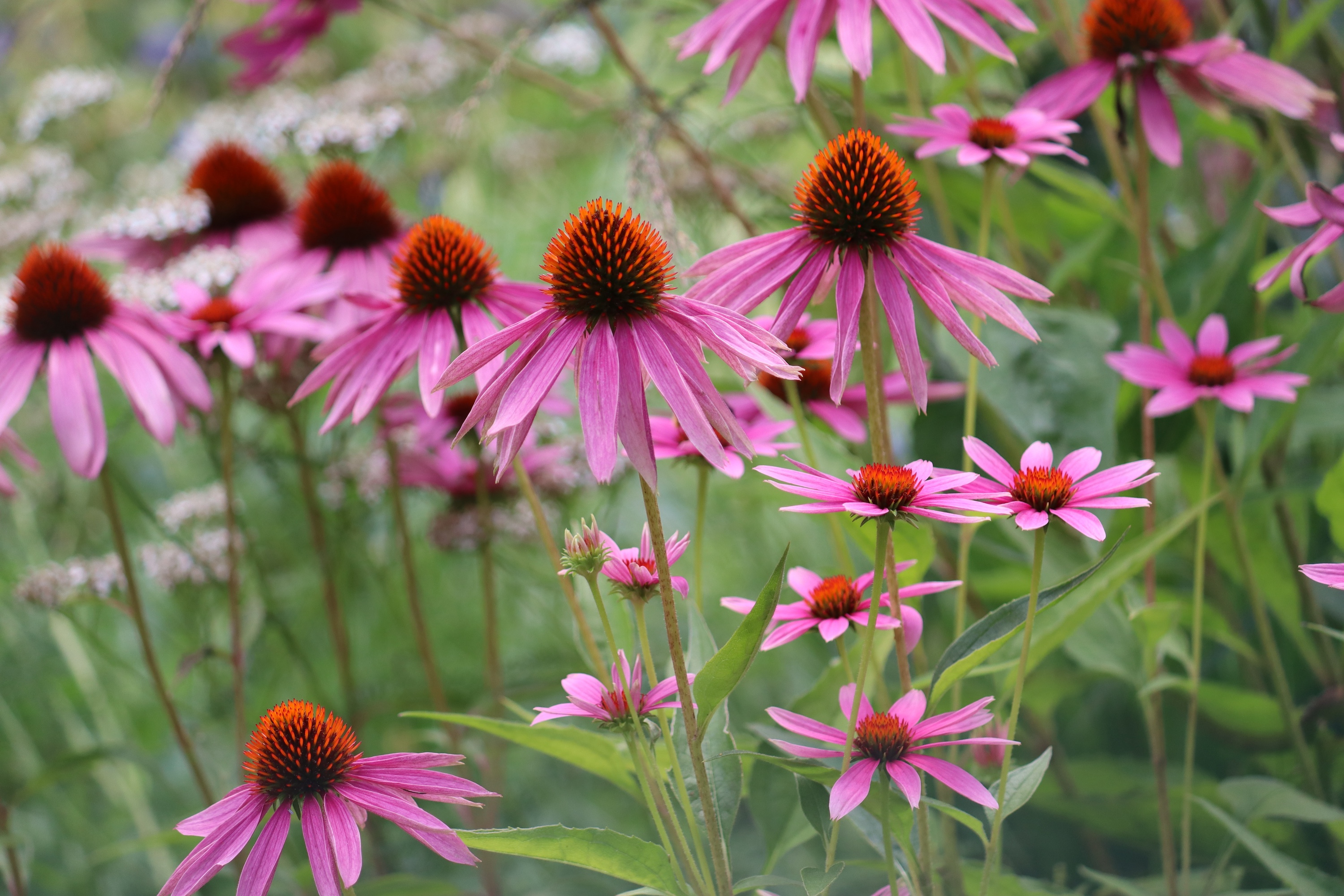
The name Echinacea is derived from the Greek “echinos” (hedgehog), referring to the spiny, cone-shaped central disk of the flower. |
Herbal Advice:
Echinacea, also known as coneflower, is one of the best-known medicinal herbs for immune defense and has become an established component in equine nutrition. This vibrant purple prairie flower is native to North America, where Indigenous peoples used it as an all-round remedy for wounds and infections. Today, echinacea for horses is primarily fed when the immune system requires support during demanding phases. This makes it one of the most vital herbs for horses during times of increased infection susceptibility and throughout the cold season.
Its efficacy relies on the synergy of several active compound groups: alkamides, caffeic acid derivatives such as cichoric acid, and polysaccharides. Together, they stimulate the immune system's phagocytes, which engulf and neutralize pathogens. Alkamides also bind to CB2 receptors on immune cells and can help regulate excessive inflammatory reactions. Echinacea does not merely act as an immune stimulant, but rather exerts a balancing effect, which is why it is classified as immunomodulating. Our dedicated article explains how the equine immune system works in fundamental detail.
Can echinacea genuinely support a horse's immune system? The clinical evidence is nuanced. In a placebo-controlled trial, eight horses received a standardized echinacea extract over 42 days, which subsequently increased their white blood cells' capacity to ingest pathogens. Conversely, a Munich study involving 37 horses fed dried coneflower herb for five weeks found no measurable differences in the immune status of healthy animals, though it did confirm excellent tolerability. In human medicine as well, systematic reviews point toward a preventive rather than a curative benefit. Echinacea is therefore no cure-all, but it can provide sensible support to a horse's natural defenses during demanding periods. High quality is essential, as the species, plant part, and processing methods directly dictate active ingredient levels.
The foundation of a resilient immune system is always a species-appropriate equine diet. A significant portion of immune cells is located in the gut, making a forage-based feeding regimen and a balanced microbiome essential, as discussed in our guide to digestion and the immune system. This should be paired with a balanced supply of minerals and trace elements via a premium mineral feed, alongside minimizing stress. Further strategies to strengthen your horse's immune system complement echinacea effectively.
When should echinacea be fed? Typical scenarios include periods when the immune system faces elevated stress: the coat change in spring and autumn, cold and wet weather with an increased risk of respiratory infections, barn relocations, transport, and competitions where horses intermingle, as well as convalescence following illness. Ideally, administration should begin well ahead of the anticipated stress. If a horse is already showing signs of fever, nasal discharge, or a cough, prompt veterinary examination is always the first priority.
Senior horses, whose natural immunity declines with age, and horses with metabolic disorders displaying Cushing's symptoms can benefit substantially, as they are often more infection-prone. Horses with recurrent respiratory challenges, competition horses, and newcomers to a yard are also ideal candidates. Echinacea is not suitable for horses with autoimmune conditions or those receiving corticosteroid treatment. For horses with allergies such as sweet itch or allergic asthma, it should only be fed following consultation with a veterinarian or qualified practitioner, as immune stimulation is not always advisable in these individuals.
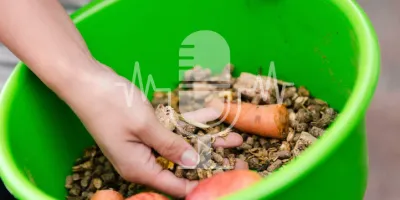
Feeding echinacea to horses is straightforward. For a standard horse weighing around 500 kg, 10 to 15 g of dried, rubbed coneflower herb or 5 to 10 g of ground root per day has proven effective; ponies receive approximately half this amount. The herb or root can simply be mixed into the daily feed, or brewed as a tea and poured over the ration. When using extracts or tinctures, refer to the manufacturer's feeding recommendations.
A course lasting four to six weeks has proven most effective. Echinacea should not be administered continuously for more than eight weeks, followed by a feeding pause of at least two to four weeks. Many horse owners schedule two courses per year, timed to coincide with the spring and autumn molting periods. If a horse experiences frequent infections, it is advisable to investigate the underlying causes with a veterinarian or a Sanoanimal therapist.
Side effects with echinacea are rare. In both equine studies, coneflower demonstrated excellent tolerance. However, horses with a known allergy to Asteraceae plants must not receive it, and there is currently insufficient safety data available for pregnant and lactating mares.
Echinacea can be combined effectively with other medicinal plants for horses. Paired with vitamin-C-rich rose hips, it forms a classic immune blend, while thyme provides complementary support for the respiratory tract during the cold season. A well-balanced herbal formulation is available in OKAPI Immuno Herbs.
A practical tip: You can easily check the quality of coneflower herb or root yourself. Simply chew a small piece: if it produces a distinct tingling sensation and slight numbness on the tongue, the alkamide content is high. Dried herbs should be stored airtight in a cool, dark, and dry place and used within twelve months.
References:
-
Fritz, C.: Kräuter, die Pferde fit machen. Sanoanimal Verlag 2024
-
O'Neill, W., McKee, S. and Clarke, A.F. “Immunological and haematinic consequences of feeding a standardised Echinacea (Echinacea angustifolia) extract to healthy horses.” Equine Veterinary Journal 34.3 (2002): 222-227. https://beva.onlinelibrary.wiley.com/doi/abs/10.2746/042516402776186001
-
Mertens, Kerstin. “Einfluss einer Echinaceafütterung auf die Gesundheit und den Immunstatus von Pferden.” Dissertation, Ludwig-Maximilians-Universität München (2006). https://edoc.ub.uni-muenchen.de/5663/
-
Morea, A., Rusu, V. and Ona, A.D. “Study on the use of Echinacea spp. in equine nutrition.” Hop and Medicinal Plants 33.1-2 (2025): 74-81. https://journals.usamvcluj.ro/index.php/hamei/article/view/15268
-
Karsch-Völk, Marlies, et al. “Echinacea for preventing and treating the common cold.” Cochrane Database of Systematic Reviews 2 (2014): CD000530. https://pmc.ncbi.nlm.nih.gov/articles/PMC4068831/
-
Shah, Sachin A., et al. “Evaluation of echinacea for the prevention and treatment of the common cold: a meta-analysis.” The Lancet Infectious Diseases 7.7 (2007): 473-480. https://pmc.ncbi.nlm.nih.gov/articles/PMC7106401/
-
Barnes, Joanne, et al. “Echinacea species (Echinacea angustifolia (DC.) Hell., Echinacea pallida (Nutt.) Nutt., Echinacea purpurea (L.) Moench): a review of their chemistry, pharmacology and clinical properties.” Journal of Pharmacy and Pharmacology 57.8 (2005): 929-954. https://academic.oup.com/jpp/article-abstract/57/8/929/6147494
-
Manayi, A., Vazirian, M. and Saeidnia, S. “Echinacea purpurea: Pharmacology, phytochemistry and analysis methods.” Pharmacognosy Reviews 9.17 (2015): 63-72. https://pmc.ncbi.nlm.nih.gov/articles/PMC4441164/
-
Raduner, Stefan, et al. “Alkylamides from Echinacea are a new class of cannabinomimetics: Cannabinoid type 2 receptor-dependent and -independent immunomodulatory effects.” Journal of Biological Chemistry 281.20 (2006): 14192-14206. https://www.jbc.org/article/S0021-9258(20)78063-4/fulltext