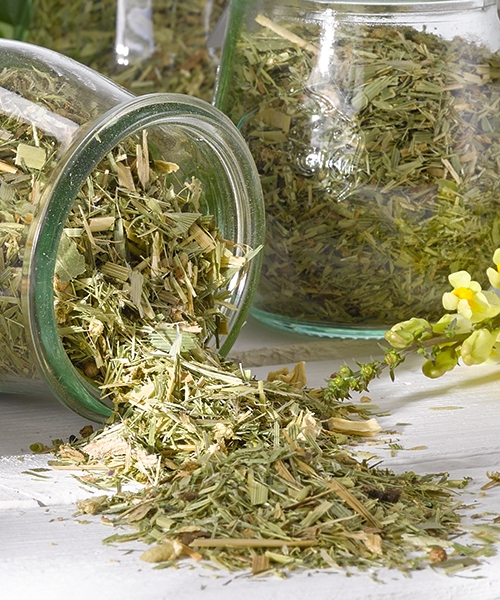

Not just sugar & starch: A high-protein diet can also increase laminitis risk in horses with EMS, insulin resistance & Cushing's!
Laminitis Caused by Dietary Protein: Why Switching Horses from Sugar and Starch to Protein Can Cause Issues
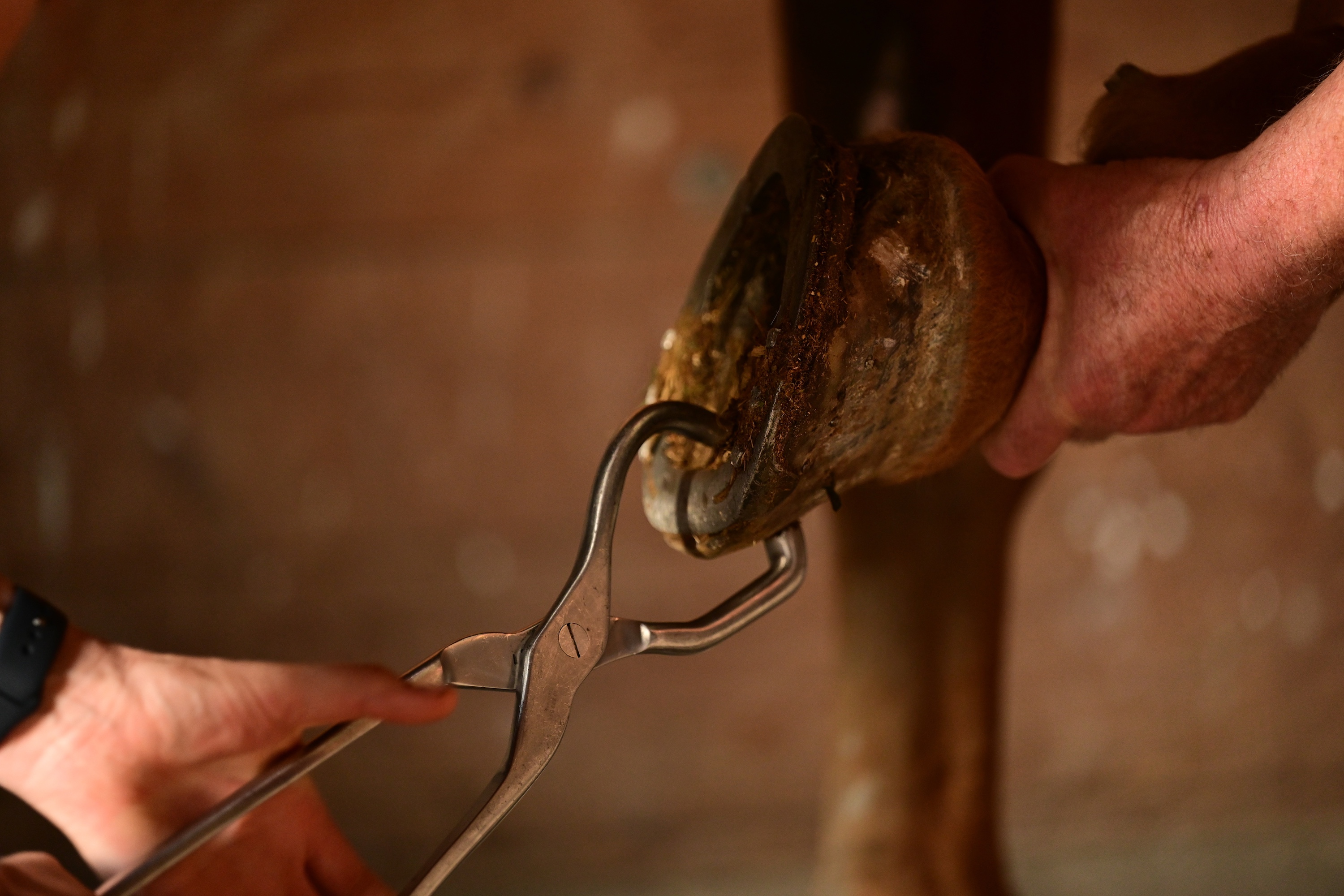
© Adobe Stock / Grubärin
This article was translated using AI.
Key Takeaways
- More and more horses are being switched from sugar- and starch-rich diets to high-protein feeds – yet still experience, or perhaps even because of this, another episode of laminitis.
- The reason: Insulin release is not only triggered by sugar. Protein and its building blocks, amino acids, can also stimulate insulin secretion.
- In metabolically healthy horses, this is harmless and well-regulated. In horses with insulin dysregulation (EMS, Cushing's, corticosteroid treatment), the exact same high-protein meal can trigger a massive insulin spike.
- One study found an approximately ninefold stronger insulin response to a high-protein meal in EMS horses compared to healthy horses.
- For metabolic patients, it is therefore not just the sugar and starch content that matters, but also the protein – whereas in healthy horses, protein is by no means the enemy.
An Observation from the Stable
It is a well-intentioned reflex: A horse has EMS, insulin resistance, or Cushing's, so sugar and starch are banished from the feed bowl. Out with grain, out with molasses, out with high-starch mueslis. And because the horse still needs to eat something, the diet is switched to high-protein products instead – protein-rich pellets, high-dose mineral supplements packed with amino acids, "muscle-building" formulas.
And then the unexpected happens: The horse develops another bout of laminitis. Even though everything was supposedly done right and sugar was strictly cut out. In feed consultations, we see this pattern more and more frequently, and at first glance, it seems completely paradoxical. The explanation lies in a misunderstanding of what actually calls insulin into action.
|
Advertisement: If the horse already has a history of laminitis or shows other metabolic abnormalities, a competent therapist should be consulted following veterinary diagnosis to optimize the diet and detect risk factors early. In many cases, the use of OKAPI HoofCool forte has proven beneficial. |
Insulin Does Not Only Respond to Sugar
In the horse world, an oversimplified equation has taken root: high sugar = high insulin. This is true, but incomplete. Insulin is not merely the body's response to sugar (originating either directly from feed or from the enzymatic breakdown of starch in the small intestine); it is generally the signal: "Nutrients have arrived, distribute them" – and these nutrients include protein.
Protein is broken down in the small intestine into its building blocks, amino acids. A portion of these amino acids directly stimulates the pancreas to release insulin. Certain amino acids such as arginine, lysine, and leucine are particularly potent. They act partly directly on insulin-producing cells and partly via gut hormones called incretins, which further trigger insulin secretion. In humans, this has been thoroughly studied for decades: A high-protein meal drives up insulin levels, even without any noteworthy amount of sugar.
In a metabolically healthy organism, this is not an issue, but standard physiology. The insulin response remains moderate, does its job, and recedes. It only becomes a problem where insulin regulation is already disrupted.
What Equine Studies Reveal
This phenomenon has now also been measured in horses. In a study, healthy horses and horses with EMS were fed a meal exceptionally high in protein. The result was clear: While insulin levels rose even in healthy horses, the insulin response to the exact same meal was approximately nine times stronger in EMS horses (Loos et al. 2019). The horse with metabolic dysfunction overshoots drastically, whereas the healthy horse copes with the protein load without issue.
The findings become even more striking when an additional factor enters the equation. In a more recent study, horses were additionally administered cortisone – the stress hormone that is chronically elevated in horses with Cushing's disease. Under cortisone, insulin levels following a high-protein meal rose so sharply that almost all horses reached values above 200 micro-units per liter – a range clearly associated with an increased risk of laminitis (Palmer et al. 2025). This completes the picture: Because a sharp insulin peak can be a critical trigger for endocrinopathic laminitis, a protein-rich meal can indeed trigger laminitis in a horse with compromised insulin regulation – entirely independent of sugar and starch. We have summarized all basic causes and mechanisms occurring within the hoof in our Laminitis Factsheet.
Not every study observed this effect to the same magnitude, and precise figures vary. However, the general direction is undisputed – and it specifically concerns the insulin-dysregulated horse, not the healthy one.
Why Spring Grass Has Always Been Under Suspicion
A look back in time is worthwhile here. Experienced horse owners historically feared lush, fresh spring pasture as a laminitis trigger partly because of its high protein content. In light of modern knowledge, this was long dismissed as a misconception – after all, high sugar levels in young grass were believed to be the sole culprit, not protein. This holds true to the extent that pasture grass varieties today often feature substantially higher sugar levels than they did 50 years ago, reaching exceptionally high peaks when ample sunshine enables plants to produce abundant sugar for their spring growth.
Yet that is still only part of the story. The truth likely lies somewhere between sugar and protein. Young spring grass provides both in abundance: a rush of rapidly available carbohydrates and a simultaneous influx of amino acids. Both drive insulin levels upward, and in predisposed horses, these effects are cumulative. Protein alone was likely never the whole story – but neither is it entirely blameless.
However, lush green grass in spring is not the only hazard: An often underestimated trap is short, stressed pasture. Learn more in the podcast episode #7 – Pasture Management for Laminitis-Prone Horses: What Every Horse Owner Needs to Know with Dr. Christina Fritz.
What This Means in Practice
The takeaway is not protein phobia, but a sense of proportion. In a healthy horse, protein poses no risk – a genuine protein deficiency is rare in adult horses receiving adequate forage anyway. A regularly trained sport horse or an animal recovering from prolonged illness can safely receive moderately higher amounts of protein in its ration. However, anyone managing a horse with insulin resistance or symptoms suggestive of EMS or Cushing's should not only check sugar and starch levels, but also keep an eye on the protein content of the total daily intake (pasture, hay, and bucket feed).
|
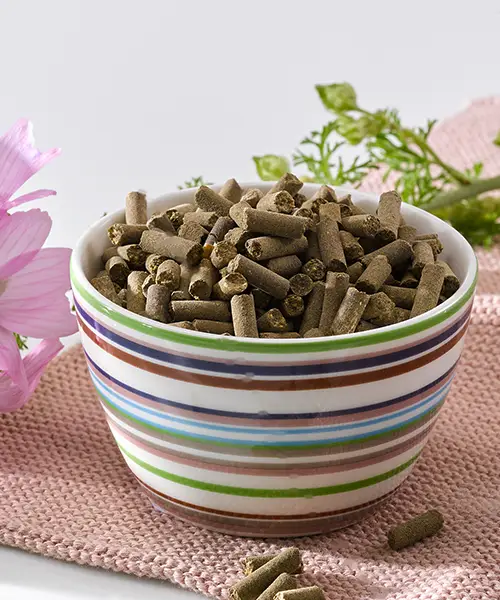
Advertisement: If protein needs to be supplemented in the diet, suitable options include OKAPI Sainfoin Cobs, OKAPI Ready-to-Feed Sainfoin Pellets (no soaking required), or OKAPI Ready-to-Feed Lucerne Pellets. Alternatively, the protein quality of the basal forage can be upgraded using essential amino acids (e.g. OKAPI Lymeth) without increasing total crude protein. |
In practical terms: When adjusting the diet of a horse with metabolic disease, do not reflexively switch from "high-sugar" to "high-protein". The marketing hype surrounding "high protein" products should be approached with caution for these horses. This applies especially to isolated protein sources such as pea protein, which is currently widely promoted as a quick fix. Why pea protein can be problematic in metabolically sensitive horses and how it acts in the feed trough is explained in detail in our article Pea Protein in Horse Feeding – When Practical Observations Raise Questions.
The foundation of the ration remains suitable forage in good quality; high-protein supplements only belong in the bucket if there is a genuine, documented need – and even then, only in carefully calculated amounts.
As is so often the case: Practical observation identified the pattern long before scientific research could cleanly prove it. The fact that an insulin-dysregulated horse can respond to high dietary protein levels with an insulin spike is measurable today – but the unease many experienced equine nutritionists felt regarding the "protein fattening" of horses was well-founded all along.
|
Further reading (fee-based): Laminitis does not develop overnight and is rarely just a "sugar problem". Those who understand the complex interactions between nutrition and metabolism can recognize warning signs early and take targeted action. In our Lecture: Laminitis, Dr. Christina Fritz examines the root causes, dispels common myths, and explains in a practical way what species-appropriate nutrition and holistic management require to sustainably prevent laminitis flare-ups. |
Sources
-
Loos, C. M. M., Dorsch, S. C., Elzinga, S. E., Brewster-Barnes, T., Vanzant, E. S., Adams, A. A., & Urschel, K. L. (2019). A high protein meal affects plasma insulin concentrations and amino acid metabolism in horses with equine metabolic syndrome. The Veterinary Journal, 251, 105341. https://www.sciencedirect.com/science/article/abs/pii/S1090023319300760
-
Palmer, A. L. et al. (2025). Corticosteroid administration enhances the glycemic, insulinemic, and incretin responses to a high-protein mixed meal in adult horses. Journal of Veterinary Internal Medicine, 39(2), jvim17305. https://pmc.ncbi.nlm.nih.gov/articles/PMC11891927/
-
Yanagisawa, Y. (2023). How dietary amino acids and high protein diets influence insulin secretion. Physiological Reports, 11(2), e15577. https://pmc.ncbi.nlm.nih.gov/articles/PMC9875820/
-
Newsholme, P., Bender, K., Kiely, A., & Brennan, L. (2007). Amino acid metabolism, insulin secretion and diabetes. Biochemical Society Transactions, 35(5), 1180-1186. https://portlandpress.com/biochemsoctrans/article-abstract/35/5/1180/85658/Amino-acid-metabolism-insulin-secretion-and