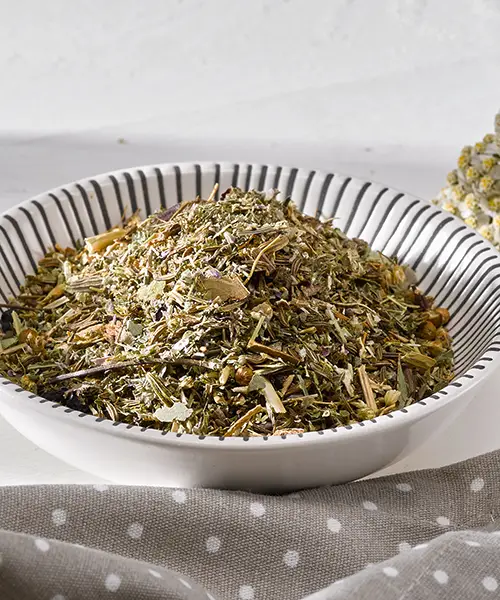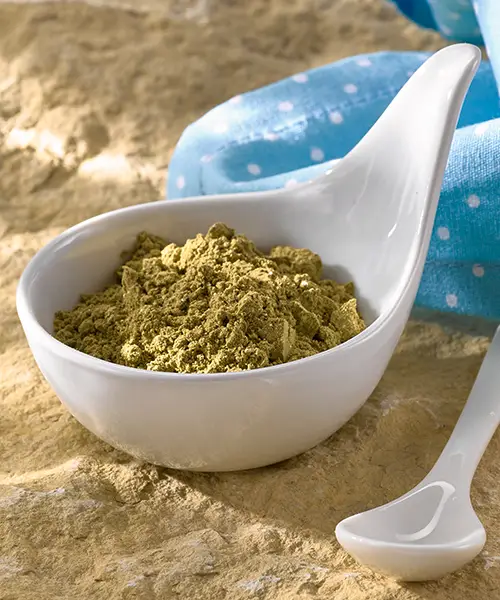
Low sugar, low starch – and yet dangerous insulin spikes? Find out here why pea protein for horses with EMS, insulin dysregulation, and laminitis risk is by no means harmless.
Read articlePea Protein in Horse Feeding – When Practical Observations Raise Questions
© Adobe Stock / Tanya
This article was translated using AI.
Pea protein has established itself as a supplementary feed for horses in recent years. It is primarily used to increase protein or amino acid supply, for example, for muscle building or in horses that supposedly require additional protein sources. The combination of very high protein content and simultaneously exceptionally low sugar and starch levels often appears particularly attractive.
However, observations from therapeutic practice are increasingly reaching us that at least give cause for closer inspection. Therapists report horses that develop or worsen metabolic problems under the feeding of concentrated pea protein products: recurring laminitis, problems in the area of tendons and ligaments, and in some cases, conspicuous fluid retention or a strongly “lymphatic” appearance.
Such observations are, of course, no proof of a causal relationship. If many horses are given pea protein, there will inevitably be horses among them that develop laminitis or other diseases independently of it. In addition, there are numerous possible accompanying circumstances such as basic forage, obesity, lack of exercise, pre-existing insulin dysregulation, or other supplementary feeds.
Nevertheless, research often begins exactly like this: a pattern is repeatedly noticed, and one wonders if there could be a plausible physiological explanation for it.
A closer look at the scientific literature reveals: surprisingly many data are missing for pea protein specifically in horses. At the same time, we now know quite a bit about how highly concentrated protein sources are produced, how different their composition can be, and – particularly interesting – how horses with insulin dysregulation react to protein-rich meals.
Pea Protein is Not Just “Pea”
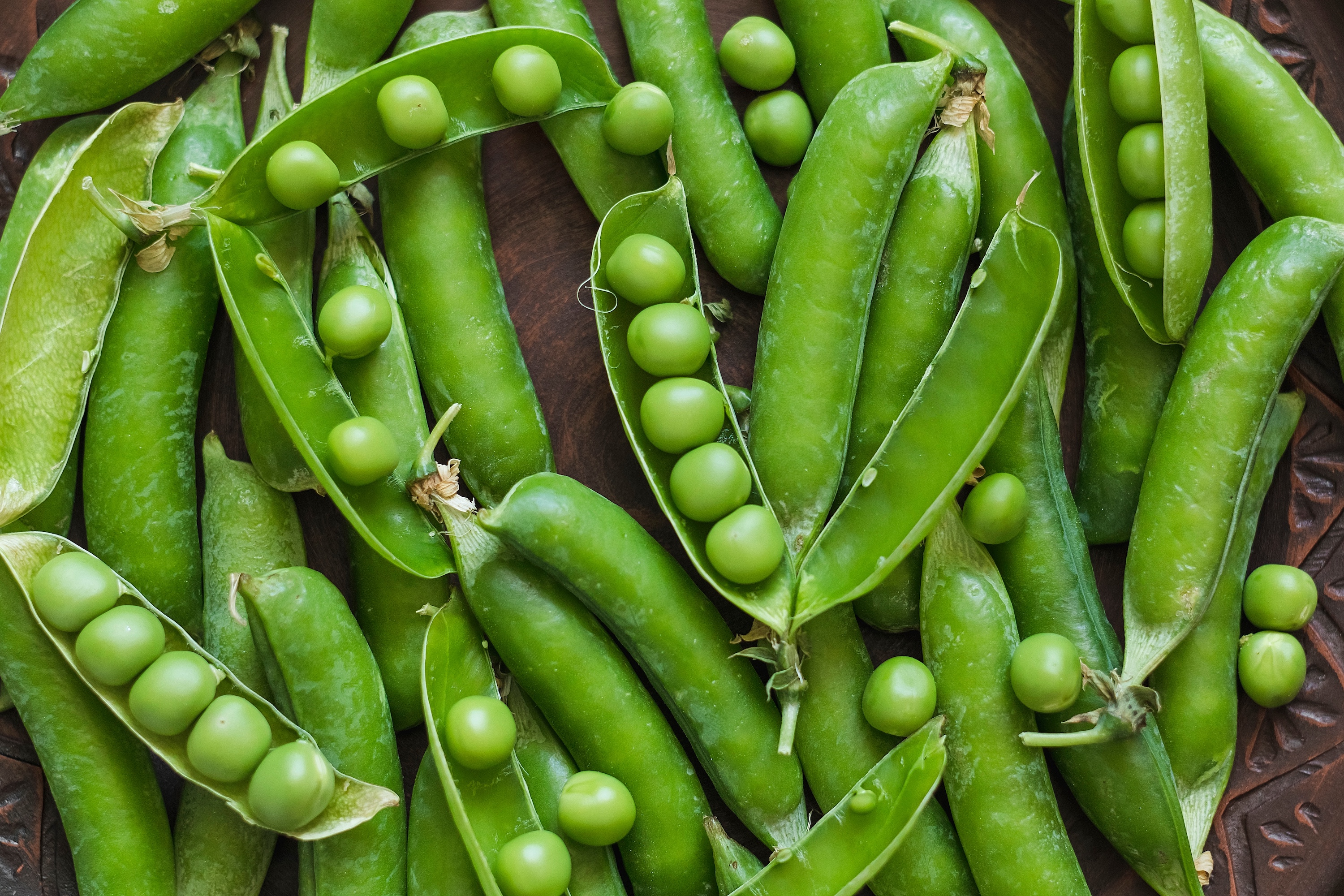
The term is somewhat misleading. Anyone feeding pea protein is not simply feeding ground peas.
The seeds of the pea (Pisum sativum) contain, in addition to protein, mainly starch, some dietary fiber, and smaller amounts of fat, minerals, and secondary plant substances. The natural protein content, depending on the variety and reference value, is approximately in the range of 20–30%. For the production of pea protein, this protein fraction is more or less heavily separated from the remaining components. The final product can thus contain 50, 70, 80, or even more than 90% protein.
Thus, “pea protein” is initially not a chemically clearly defined substance. There can be significant differences between a dry-fractionated pea protein concentrate with about 50% protein and a high-purity wet-extracted protein isolate – not only in protein content but also regarding protein structure, accompanying substances, and potentially also digestion.
And that is exactly what is relevant for horse feeding.
How is Pea Protein Produced?
In so-called dry fractionation, the peas are first dehulled and finely ground. Subsequently, the various particles are separated by size and density. Protein-rich cell components mainly end up in a fine fraction, while a larger proportion of the starch-rich components remains in another fraction.
The advantage is that this requires neither strong pH shifts nor large amounts of water. The proteins therefore remain comparatively natural. However, the protein purity is limited: typical concentrates are around 50–60%, and depending on the process, values of up to about 70–77% are technically possible. At the same time, more fiber, starch, and various naturally occurring accompanying substances of the pea remain in the fraction.
For highly concentrated pea protein isolate, a wet process is usually used. Industrially common is alkaline extraction followed by isoelectric precipitation.
In this process, pea flour is first suspended in water and adjusted, for example, with sodium hydroxide to a pH of about 8–9. Under these conditions, large parts of the proteins go into solution, while starch and fiber components can be separated. Subsequently, the pH value is lowered to approximately 4.5. This is the isoelectric point of a large part of the pea globulins: their net charge becomes so low that they precipitate. The protein precipitate is then separated, washed, neutralized again, heated or pasteurized, and finally usually spray-dried.
Depending on the process, isolates with approximately 80–90% protein are produced; some processes achieve even higher purities. Alternatively, modern processes work with membrane filtration or ultrafiltration.
But this also means: the raw material “pea” has been significantly chemically and physically altered.
Processing can influence the protein structure both positively and negatively. Moderate heating can unfold proteins and make them more easily accessible to proteolytic enzymes. In contrast, stronger heating or extreme pH conditions can cause aggregations and chemical changes, making certain amino acids less available or even leading to allergic reactions.
Thus, not every pea protein can be nutritionally equated with another pea protein.
Which Proteins are Contained Within?
The largest part of pea protein consists of storage proteins from the globulin group. Particularly important are vicilin, convicilin, and legumin.
Vicilin and convicilin belong to the so-called 7S globulins, legumin to the 11S globulins. Together, these globulins make up about 65–85% of the pea protein; depending on the variety, vicilin and legumin alone can account for 80–90% of the seed proteins. In addition, there are smaller albumin fractions and other proteins.
The amino acid profile of pea protein is generally considered high-quality for a plant protein. It contains relatively high amounts of lysine, arginine, and leucine, as well as other branched-chain amino acids such as isoleucine and valine. The sulfur-containing amino acids methionine and cysteine are comparatively weakly represented. The exact composition again depends on how much globulin and albumin has been preserved in the respective product. The albumin fraction can, for example, supplement some of the sulfur amino acids that are missing in the globulins.
And precisely some of the amino acids that are abundant in such protein products – including leucine, isoleucine, and arginine – are metabolically not just “building blocks for muscles.” They also act as signaling molecules and can influence insulin secretion.
The Side Fractions: Trypsin Inhibitors, Lectins, Phytate, and Co.
Peas belong to the legumes. Like other legumes, they contain various so-called anti-nutritive factors. These include, in particular, trypsin inhibitors, lectins, and phytic acid, along with saponins, tannins, and other secondary plant substances.
The term “anti-nutritive” does not automatically mean “toxic.” It initially describes substances that can influence digestion or nutrient availability.
Trypsin inhibitors are particularly interesting regarding the protein question. Trypsin is one of the essential proteolytic enzymes of the small intestine. If its activity is inhibited, dietary proteins can be broken down less effectively or more slowly.
In humans, it has even been experimentally shown for pea protein that the albumin fraction reduced ileal protein digestibility. Purified globulins reached about 94% real ileal digestibility, while the mixture of globulins and albumins was around 90%. The authors considered trypsin inhibitors in the albumin fraction to be a likely explanation.
How much of this is in a commercial pea protein product depends heavily on the manufacturing process.
Dry-fractionated concentrates tend to retain more of these natural accompanying substances. Wet fractionation can remove some of them, but by no means necessarily all. Investigations of commercial or experimental protein concentrates and isolates show significant differences in the levels of trypsin inhibitors, phytate, lectins, and tannins.
Phytate, in turn, can bind minerals such as zinc, copper, iron, and calcium and reduce their availability. For a horse receiving an overall well-balanced ration, this may not be relevant in small quantities. However, with long-term feeding of larger amounts of concentrated products, it would at least be sensible to look at the entire ration instead of evaluating the crude protein content in isolation.
© Adobe Stock / zoyas2222
How Well Does the Horse Digest Pea Protein in the Small Intestine?
Here comes one of the most surprising points of our literature review: we have not yet been able to find a reliable study in which the pre-caecal digestibility of pea protein concentrate or pea protein isolate in horses was directly determined. This is a real knowledge gap. And it is important because in horses, it is not only decisive how much crude protein is in a feed, but where this protein is digested.
Protein that is enzymatically broken down into peptides and amino acids in the stomach and small intestine can be immediately available to the horse as an amino acid source. Protein that leaves the small intestine undigested, on the other hand, reaches the cecum and large intestine and is initially available there to microorganisms, which can cause dysbiosis since the microbiome is not designed for the utilization of large amounts of protein.
For modern protein evaluation in horses, a distinction is therefore made, among other things, between cell-wall-bound and soluble protein. A literature analysis by Zeyner and colleagues showed that the so-called NDSCP fraction – i.e., the soluble protein not bound to neutral detergent fiber – can be estimated to be approximately 90% pre-caecally digestible on average. This is, however, a model across various feeds and not a measured value for pea protein isolate.
In horses, a real small intestine digestibility of nitrogen for soybean meal was experimentally determined at about 72%. Interestingly, the results simultaneously indicated that the amount that can be processed in the small intestine per meal might be limited.
In humans, highly purified pea protein isolates are exceptionally well ileally digestible. In a recent study, the real ileal amino acid digestibility averaged 93.6%, and nitrogen digestibility was 92%.
One cannot simply transfer this to horses, as our digestive system differs significantly from that of the horse in some places. However, it shows that an appropriately processed pea protein can indeed be a very quickly available, highly concentrated protein source.
And precisely from this, an interesting double hypothesis emerges:
-
If a product is very well pre-caecally digestible, it can create a pronounced amino acid flood into the blood within a short time.
-
If, on the other hand, it is less pre-caecally digestible due to processing, protease inhibitors, or high dosage, more nitrogen reaches the large intestine.
Both could be relevant in sensitive horses – albeit through completely different mechanisms.
Protein Can Release Insulin – Even Without Much Sugar
This is probably the most important point in the discussion about pea protein.
In horse feeding, the idea has established itself in recent years:
low sugar + low starch = metabolically safe.
For insulin-sensitive or insulin-dysregulated horses, this is too simplistic, because insulin is not released exclusively in response to glucose. Amino acids can also have insulinotropic effects.
A 2019 study examined six horses with Equine Metabolic Syndrome and six metabolically healthy control horses. After a protein-rich meal with 31% crude protein, the EMS horses had a ninefold stronger insulin response than the control horses, although glucose concentrations did not differ between the groups. At the same time, valine, methionine, isoleucine, and leucine were more strongly elevated in the EMS horses after the meal. However, the amount of protein used was high. Therefore, it cannot be concluded that a few grams of pea protein produce the same effect.
A later study might be even more interesting for practice. There, horses received only 0.25 g of crude protein per kg of body weight from a high-protein supplement or from alfalfa. For a 500 kg horse, this corresponds to 125 g of crude protein. A product with 80% protein would deliver this amount of protein with around 156 g of product. That is still a decent portion but is already in an order of magnitude that is at least conceivable for highly concentrated protein supplements.
The insulin-dysregulated horses reached average insulin peaks of around 95–119 µIU/ml after the meals, while the metabolically normal horses only reached about 27–38 µIU/ml. Sugar and starch intake were comparable between the protein variants. The high-quality protein preparation also led to higher plasma amino acid concentrations more quickly than the more forage-based alfalfa protein. The essential amino acids remained elevated for several hours in some cases. The authors, therefore, explicitly discuss that protein quality, amino acid profile, and absorption rate can influence the postprandial insulin response.
A review published in 2025 on protein and carbohydrate regulation in insulin-dysregulated horses has now come to a remarkable conclusion: Thresholds were developed for carbohydrates to limit postprandial hyperinsulinemia – comparable limits might also need to be developed for protein. This is a significant paradigm shift.
What Could This Have to Do with Laminitis?
In endocrinopathic laminitis, the role of hyperinsulinemia is now very well established. Insulin does not have to be just a byproduct of insulin resistance: experimentally, hyperinsulinemia artificially maintained over a longer period can trigger laminitis in otherwise healthy horses. In one such trial, all hyperinsulinemic horses developed laminitis; in the lamellar tissue, changes in inflammatory signaling pathways and acute-phase proteins were found.
This creates at least a plausible connection: a highly concentrated protein may cause only a moderate insulin response in a healthy horse. The same feed can trigger a significantly stronger hyperinsulinemia in a horse with previously unrecognized insulin dysregulation. If this horse is simultaneously already at risk for laminitis, such an additional insulin response could theoretically contribute to exceeding its individual load limit.
This is currently a hypothesis, not a proven pea protein pathogenesis.
Interestingly, an old study from 1980 is relevant here: in it, seven ponies were fed increasing amounts of soy protein. Under very high amounts of protein, urea in the blood rose significantly, as did water intake and indican production; laminitis occurred in two of the seven ponies.
This study cannot, of course, be directly transferred to a pea protein supplementary feed: it concerned soy protein, not pea protein, the number of animals was small, and the highest protein amounts were extreme. At a maximum of 4.26 g of protein per kg of body weight, this would correspond to more than two kilograms of protein daily for a 500 kg horse. The study therefore does not prove that normal protein supplementation causes laminitis. However, it shows that the old claim “protein basically cannot have anything to do with laminitis in horses” is also too generalized.
Especially against the background of today's research on protein-induced insulin reactions in horses with insulin resistance, this old observation deserves new attention.
And What Happens to Protein That Cannot Be Digested in the Small Intestine?
Protein that has not been enzymatically digested in the small intestine reaches the large intestine. There, microorganisms can ferment peptides, amino acids, and other nitrogen compounds. In horses, an amazingly large proportion of total nitrogen digestion actually takes place post-ileally. For supplying the horse with high-quality amino acids, however, this microbial protein digestion is significantly less valuable, as the essential amino acid absorption occurs pre-caecally.
Increased proteolytic fermentation also changes the nitrogen metabolites of the intestine. The old study from the 1980s showed a strong increase in indican production under high protein intake – an indication of increased microbial tryptophan degradation. At the same time, blood urea rose massively.
What a chronically increased intake of concentrated pea protein does to the equine microbiome is, in turn, not investigated. We must therefore clearly separate here: from findings in other animal species, we can find a proteolytic shift of the microbiome biologically plausible, but we cannot currently represent it as proven for pea protein in horses, especially since the entry into the large intestine also depends on the amount fed and the quality of the pea protein.
However, for products with significant trypsin inhibitors, this question would be particularly interesting: if enzymatic protein digestion in the small intestine is reduced, more protein could theoretically reach the large intestine as a substrate. This would be an excellently investigable hypothesis.
Why Might Tendons and Ligaments Specifically Become Conspicuous?
Here, the data situation is even thinner. We have not yet found a study that has directly examined pea protein or even just a high protein intake in connection with tendinopathies or suspensory ligament disease in horses. A direct connection between equine insulin dysregulation and classic tendon or suspensory ligament lesions is also much less studied than the connection between insulin and laminitis.
But that does not mean that the observation would be biologically completely far-fetched.
It is now well documented in human medicine that people with type 2 diabetes have an increased risk of tendinopathies, tendon ruptures, and poorer healing processes. Possible mechanisms discussed include insulin resistance, chronic hyperglycemia, low-grade inflammation, vascular changes, and so-called Advanced Glycation End Products (AGEs). These can cross-link collagen, alter the mechanical properties of the extracellular matrix, and impair repair processes.
In horses, there are at least indications that endocrine diseases can be accompanied by structural connective tissue changes. In horses with PPID, for example, reduced longitudinal collagen organization, cartilage inclusions, and pronounced proteoglycan deposits were described in the suspensory ligament. However, PPID is not the same as insulin dysregulation, so these results cannot simply be transferred.
Our working hypothesis here would therefore rather be: a horse that is already metabolically stressed or insulin-dysregulated could have an altered connective tissue environment and poorer repair capability. If a highly concentrated protein source repeatedly triggers strong insulin responses in exactly this horse, it could reinforce existing metabolic problems and thus indirectly also influence an already vulnerable musculoskeletal system. This is a plausible, but experimentally still completely open hypothesis at the moment.
The “Lymphatic” Horse – Perhaps the Most Exciting Observation
Even less directly explainable are reports about horses that become markedly “lymphatic” while being fed pea protein, for example, developing swollen legs, fluid retention in the neck or flanks, or an overall bloated appearance.
A pure explanation along the lines of “too much protein causes edema” is physiologically unconvincing. With high protein intake, nitrogen excretion via the urea cycle increases in horses, and water intake increases significantly accordingly.
In cases of real generalized or peripheral edema, one would therefore rather look at total protein and especially albumin. In horses, hypoalbuminemia is a classic cause of edema formation. An important cause, in turn, is a protein-losing enteropathy, i.e., a loss of plasma proteins via a diseased intestinal wall. Chronic enteropathies can occur in horses without pronounced diarrhea or fecal water.
This explicitly does not mean that pea protein causes a protein-losing enteropathy. But if it should repeatedly be shown in the conspicuous “lymphatic” horses that albumin or total protein levels drop simultaneously, that would be a very important clue and a question that should be followed up systematically.
A second conceivable trail is an immunological reaction. Pea protein is not fundamentally hypoallergenic. In humans, vicilin and convicilin in particular have been identified as relevant pea allergens; legumin or related storage proteins can also be immunologically relevant. We must not construct a “pea protein allergy of the horse” from this – there are simply no data for that.
But it shows that these highly concentrated storage proteins are by no means biologically inert. Whether individual horses can react immunologically to certain protein fractions or processing products would also be an interesting research question.
Perhaps the Problem Lies Precisely in the Fact That “Pea Protein” is Not a Uniform Product
According to research so far, this is one of the points that seems particularly relevant: two bags, both labeled “Pea Protein 80%,” do not necessarily have to be metabolically identical. The variety of pea, the ratio of legumin to vicilin and convicilin, the proportion of the albumin fraction, dry or wet fractionation, pH during extraction, temperature, drying process, as well as residual levels of trypsin inhibitors, lectins, phytate, and other accompanying substances can be different.
That is exactly why it would be problematic to attribute all observations across the board to the raw material “pea.”
-
Perhaps horses react to a certain dose?
-
Perhaps only insulin-dysregulated horses react?
-
Perhaps the speed of amino acid absorption is decisive?
-
Perhaps the processing makes a difference?
-
Perhaps residual amounts of anti-nutritive factors are relevant?
-
Perhaps it is an immunological reaction in individual cases?
-
Or pea protein is actually just an innocent bystander in some of the observed cases?
Currently, we do not know. At the same time, we also lack research that clearly shows that pea protein is problem-free or even nutritive for horses.
Why “Low Sugar and Starch” is No Longer Sufficient as a Quality Criterion
This is precisely where the most important practical consequence lies. Horse feeding has – for good reasons – dealt intensively with sugar and starch in recent years and shown how critical these two nutrients are for equine metabolism. Especially with EMS and laminitis risk, many horse owners now pay very close attention to the contents in individual feeds and the total ration.
But metabolism is more complex. A feed can be practically starch-free and low-sugar and still trigger a significant metabolic reaction. Research on protein-rich meals in insulin-dysregulated horses shows exactly that.
The current state of science therefore does not justify the sweeping statement:
“Pea protein is safe for laminitic horses because it contains little sugar and starch.”
We simply lack the data for that.
Neither, however, do the existing observations justify the opposite statement:
“Pea protein causes laminitis.”
What we can say is much more nuanced:
Concentrated protein sources can trigger significant postprandial insulin reactions in insulin-dysregulated horses. This has not been separately investigated for pea protein so far. At the same time, we do not know how well various pea protein concentrates and isolates are pre-caecally digested in horses and what effects long-term feeding has on the large intestine, microbiome, mineral supply, or metabolic regulation.
In a healthy sport horse with a real increased amino acid requirement, such supplementation may be assessed completely differently than in an easy-keeping, overweight, or already insulin-dysregulated horse. Exactly this differentiation has often been missing so far.
What We Would Now Like to Investigate
From a scientific perspective, pea protein would be an exceptionally interesting research topic.
Particularly revealing would first be a structured case series. For horses that have become conspicuous under pea protein, it would have to be documented which product was fed in what quantity and over what period, what other ration was present, what pre-existing conditions were there, when symptoms started, and what happened after discontinuation.
In cases of laminitis, or EMS or suspicion of insulin resistance, dynamic insulin tests and possibly targeted postprandial measurements after pea protein intake would be interesting. For “lymphatic” horses, total protein, albumin, kidney and liver parameters, as well as inflammatory markers would be particularly relevant.
And at the feed level, it would be urgently sensible to know not just “80% crude protein,” but to examine various pea protein products for actual amino acid profile, protein fractions, trypsin inhibitor activity, phytate, as well as their pre-caecal digestibility in horses. Only then can we turn a clinical observation into resilient knowledge.
What Does This Mean for Practice?
Pea protein is not automatically a bad feed. But it is also not simply a harmless way to get some extra protein into the horse. It is a highly concentrated, partially heavily processed protein raw material whose composition can vary significantly depending on the manufacturing process and about whose digestion, effects, and side effects in horses we simply know almost nothing.
Especially the new findings on protein feeding in insulin-dysregulated horses should make us cautious: even a low-sugar and low-starch meal can evoke a significant insulin response if it delivers large amounts of quickly available amino acids.
Whether exactly this mechanism can explain the observed laminitis cases under pea protein, we do not yet know. Regarding the observed tendon and ligament problems as well as the partially massive fluid retention, we are scientifically even more in the realm of hypotheses.
But that is exactly where interesting research begins.
If a pattern repeats in practice, the reaction should not be to demonize a feed prematurely. Neither should one ignore observations just because no study has yet examined exactly this question.
One should start asking the right questions.
Similar articles can be found here:
Rice Bran Oil for Horses: Miracle Cure or Overrated Cooking Oil?
Rice Bran for Horses: Grain-free, Protein-rich, Suitable for EMS? What’s Really Behind It
and in our Horse Feeding category
Sources
-
Asen, N. D., Aluko, R. E., Martynenko, A., Utioh, A., & Bhowmik, P. (2023). Yellow field Pea Protein (Pisum sativum L.): Extraction technologies, functionalities, and applications. Foods, 12(21), 3978. https://pubmed.ncbi.nlm.nih.gov/37959097/
-
Shanthakumar, P., Klepacka, J., Bains, A., Chawla, P., Dhull, S. B., & Najda, A. (2022). The current situation of Pea Protein and its application in the food industry. Molecules, 27(16), 5354. https://pubmed.ncbi.nlm.nih.gov/36014591/
-
Harasym, J., Paroń, O., & Pejcz, E. (2025). Pea Protein isolates: From extraction to functionality. Molecules, 30(23), 4650. https://pubmed.ncbi.nlm.nih.gov/41375245/
-
Mariotti, F., Pueyo, M. E., Tome, D., Berot, S., Benamouzig, R., & Mahe, S. (2001). The influence of the albumin fraction on the bioavailability and postprandial utilization of Pea Protein given selectively to humans. The Journal of nutrition, 131(6), 1706-1713. https://pubmed.ncbi.nlm.nih.gov/11385057/
-
Guillin, F. M., Gaudichon, C., Guérin-Deremaux, L., Lefranc-Millot, C., Airinei, G., Khodorova, N., ... & Calvez, J. (2022). Real ileal amino acid digestibility of Pea Protein compared to casein in healthy humans: a randomized trial. The American journal of clinical nutrition, 115(2), 353-363. https://pubmed.ncbi.nlm.nih.gov/34665230/
-
Zeyner, A., Kirchhof, S., Susenbeth, A., Südekum, K. H., & Kienzle, E. (2015). A new protein evaluation system for horse feed from literature data. Journal of nutritional science, 4, e4. https://pubmed.ncbi.nlm.nih.gov/26090101/
-
Farley, E. B., Potter, G. D., Gibbs, P. G., Schumacher, J., & Murray-Gerzik, M. (1995). Digestion of soybean meal proteinin the equine small and large intestine at various levels of intake. Journal of Equine Veterinary Science, 15(9), 391-397. https://www.sciencedirect.com/science/article/abs/pii/S0737080607804837
-
Loos, C. M. M., Dorsch, S. C., Elzinga, S. E., Brewster-Barnes, T., Vanzant, E. S., Adams, A. A., & Urschel, K. L. (2019). A high protein meal affects plasma insulin concentrations and amino acid metabolism in horses with equine metabolic syndrome. The Veterinary Journal, 251, 105341. https://pubmed.ncbi.nlm.nih.gov/31492392/
-
Loos, C. M., McLeod, K. R., Vanzant, E. S., Stratton, S. A., Bohannan, A. D., Coleman, R. J., ... & Urschel, K. L. (2022). Differential effect of two dietary protein sources on time course response of muscle anabolic signaling pathways in normal and insulin dysregulated horses. Frontiers in Veterinary Science, 9, 896220. https://pubmed.ncbi.nlm.nih.gov/35978710/
-
Loos, C. M. M., & Urschel, K. L. (2025). Current understanding of insulin dysregulation and its relationship with carbohydrate and protein metabolism in horses. Domestic Animal Endocrinology, 92, 106940. https://pubmed.ncbi.nlm.nih.gov/40073599/
-
Meyer, H., & Pferdekamp, M. (1980). Auswirkungen überhöhter Proteingaben beim Pferd. Zentralblatt für Veterinärmedizin Reihe A, 27(9‐10), 746-757. https://onlinelibrary.wiley.com/doi/10.1111/j.1439-0442.1980.tb02027.x
-
Jayathilake, W. M. N. K., de Laat, M. A., Furr, M., Risco, C., & Lacombe, V. A. (2024). Prolonged hyperinsulinemia increases the production of inflammatory cytokines in equine digital lamellae but not in striated muscle. The Veterinary Journal, 303, 106053. https://pubmed.ncbi.nlm.nih.gov/38043699/
-
Cannata, F., Vadalà, G., Ambrosio, L., Napoli, N., Papalia, R., Denaro, V., & Pozzilli, P. (2021). The impact of type 2 diabetes on the development of tendinopathy. Diabetes/Metabolism Research and Reviews, 37(6), e3417. https://pubmed.ncbi.nlm.nih.gov/33156563/
-
Hofberger, S., Gauff, F., & Licka, T. (2015). Suspensory ligament degeneration associated with pituitary pars intermedia dysfunction in horses. The veterinary journal, 203(3), 348-350. https://pubmed.ncbi.nlm.nih.gov/25641552/
-
Sanchez‐Monge, R., Lopez‐Torrejón, G., Pascual, C. Y., Varela, J., Martin‐Esteban, M., & Salcedo, G. (2004). Vicilin and convicilin are potential major allergens from pea. Clinical & Experimental Allergy, 34(11), 1747-1753. https://pubmed.ncbi.nlm.nih.gov/15544600/