Low sugar, low starch – and yet dangerous insulin spikes? Find out here why pea protein for horses with EMS, insulin dysregulation, and laminitis risk is by no means harmless.
Read articleRice Bran for Horses: Grain-free, Protein-rich, Suitable for EMS? What’s Really Behind It
© Adobe Stock / 琢也 栂
Table of contentsclose
This article was translated using AI.
Highlights at a Glance
-
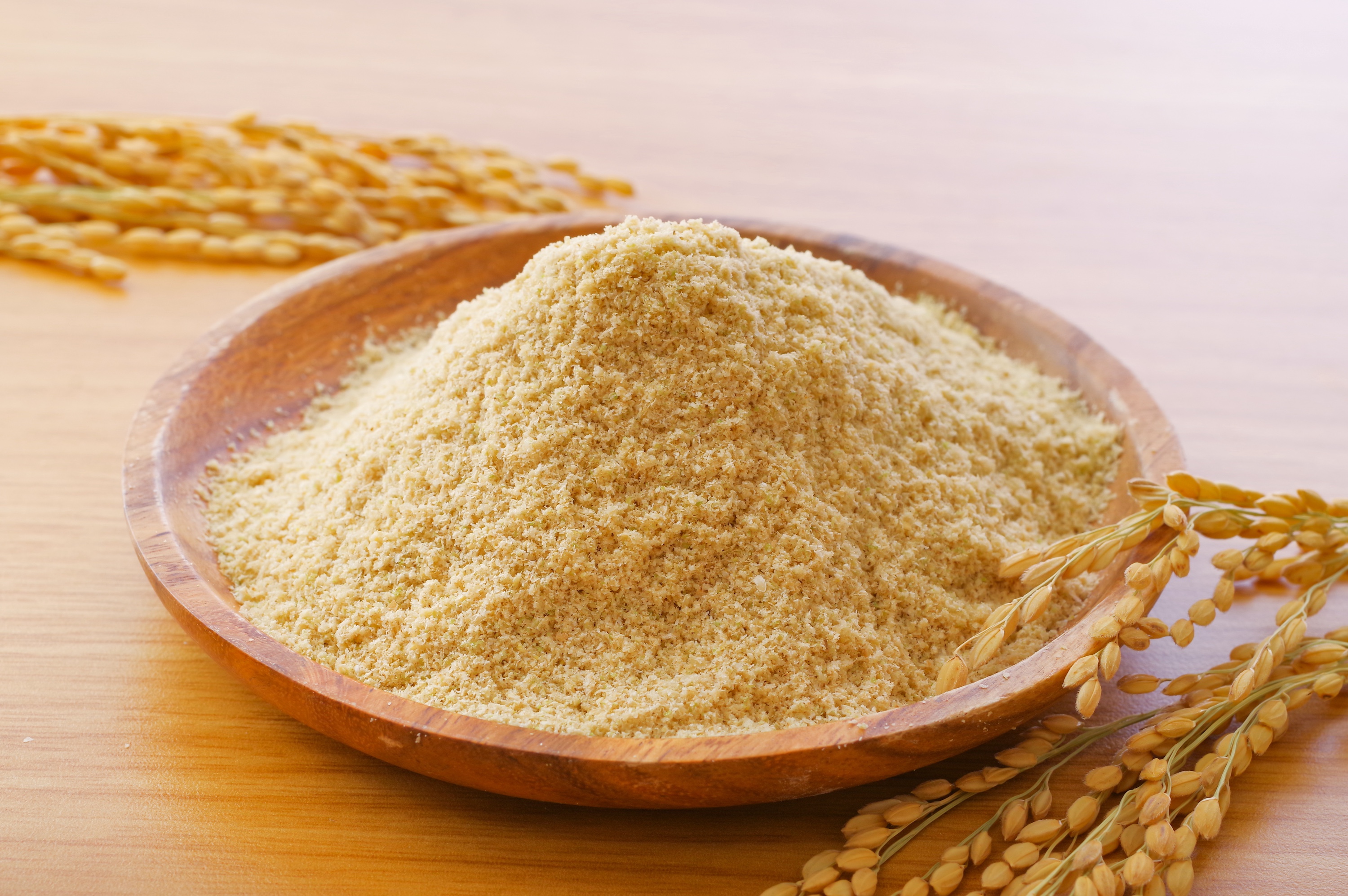
Rice bran is not a standalone feed, but an industrial waste product from rice processing – the layer milled off when polishing rice into white rice.
-
Depending on the degree of processing, rice bran contains 13–30% starch and sugar (NSC) – this is not grain-free in the physiological sense, even if no rice grains are present.
-
The calcium-phosphorus ratio in rice bran is extremely unfavorable at approx. 0.1% calcium and 1.3% phosphorus – long-term feeding burdens the mineral balance and must be balanced by targeted calcium supplementation.
-
Phytic acid in rice bran binds minerals such as calcium, zinc, and iron and reduces protein digestibility – significantly relativizing the supposed nutritional benefit.
-
For horses with EMS, insulin resistance, PSSM1, or MIM, rice bran should be viewed critically due to its starch content – the NSC content is well above what these horses should tolerate.
-
Rice bran must be stabilized because it goes rancid within hours without heat treatment – an indication of how naturally unstable this product is.
Rice bran is repeatedly hyped as the new wonder feed: grain-free, rich in protein and fat, supposedly ideal for horses with EMS, PSSM, or MIM. It sounds good – but it's not quite true. To understand why, one should look at what rice bran actually is, how it is produced, and what it does in the horse's body.
What is Rice Bran and Where Does It Come From?
When raw rice is processed into white rice, as it is preferred in Asia, the outer layer of the rice grain must be removed. This layer – consisting of the pericarp (silver skin), aleurone layer, and rice germ – is the rice bran. It is a waste product of industrial rice milling that has to go somewhere. Every year, 60 - 95 million tons are produced worldwide, traditionally used as fertilizer for rice fields or as livestock feed for farm animals.
It sounds like a natural product. In a way, it is – but it is one that the horse's digestion is not designed for and whose nutrient profile holds significant pitfalls.
What Is in Rice Bran?
The composition of rice bran varies depending on the rice variety, degree of grinding, and depth of processing, but is typically around:
- 11-17% crude protein
- 12-22% fat
- 13-30% non-structural carbohydrates (starch and sugar)
- 10-15% crude fiber
- approx. 0.1% calcium
- approx. 1.3% phosphorus
It also contains significant amounts of phytic acid (approx. 6–7%), trypsin inhibitors, and various bioactive substances such as gamma-oryzanol, tocopherols, and phytosterols.
The "Grain-Free" Argument: Why It Is Misleading
The argument that rice bran is grain-free is botanically correct – although rice belongs to the grass family (Poaceae), it is usually not listed as a classic grain in horse nutrition, and rice bran is just a residual product of the rice grain. The problem is: for the equine metabolism, it is irrelevant whether a starch comes from oats, barley, the whole rice grain, or specifically rice bran. What matters is that starch is starch.
Depending on the analysis, rice bran contains between 13 and 30% non-structural carbohydrates; the starch content alone is often 15–20%. For comparison: for horses with metabolic problems, all common nutritional guidelines recommend a total content of starch and sugar (NSC) of less than 10%, preferably under 6%, relative to the total daily ration. Rice bran as a single component significantly exceeds this value.
While the glycemic index of rice bran is lower than that of oats or corn, rice bran still triggers a measurable insulin response. For a horse whose insulin metabolism is already impaired, this is too much.
The Calcium-Phosphorus Problem
One of the most serious problems with regular feeding of rice bran is the extremely unfavorable mineral ratio. A healthy horse's organism requires a calcium-to-phosphorus ratio of at least 4:1 to 6:1 (editor's note: in German tradition often cited as 1:1 to 2:1; however, considering high phosphorus intake, supplemental calcium is vital). Rice bran provides approx. 0.1% calcium but 1.3% phosphorus – resulting in a ratio of almost 1:13.
Consistently high phosphorus in relation to calcium leads to a disruption of bone mineralization. The body compensates for the deficiency by mobilizing calcium from the bones – a process that can lead to bone loss in the long term. In animal feeding practice, rice bran is therefore only justifiable in combination with targeted calcium supplementation.
Anyone who buys rice bran and simply pours it into the trough is actively feeding a mineral imbalance with every ration.
Phytic Acid: The Silent Mineral Robber
Rice bran contains approx. 6–7% phytic acid – a compound that binds minerals such as calcium, zinc, iron, and manganese in the intestine and blocks their absorption. At the same time, phytic acid inhibits the enzyme trypsin, which significantly reduces the digestibility of the contained protein. The much-advertised crude protein of 11–17% sounds impressive – but a significant part of it never actually reaches the horse.
Rice Bran for EMS, PSSM, and MIM: What the Numbers Really Say
The fact that rice bran is recommended for horses with EMS, PSSM1, or MIM is an example of well-intentioned but physiologically incomplete feeding advice.
For EMS and insulin resistance: The goal is a strict reduction of the NSC content of the total ration to well below 10%. Rice bran with 13–30% NSC does not make a positive contribution to this. Furthermore, studies show that high-fat diets in horses with existing insulin resistance can worsen it – specifically the high fat supply from rice bran, predominantly in the form of Omega-6 fatty acids, is critical in this context.
For PSSM1: Sugar and starch are the main triggers for pathological glycogen storage in the muscles. Every starch-containing component in the ration – even if its glycemic index is lower than that of oats – contributes to the burden. PSSM1 horses should not be fed rice bran.
For MIM (PSSM2): Here, the protein requirement is paramount. The problem: the protein contained in rice bran is limited in its digestibility due to phytic acid and trypsin inhibitors. MIM horses need high-quality, readily available protein with a balanced amino acid profile – this is not guaranteed with rice bran.
The Stability Issue: Why Rice Bran Must Always Be Heat-Treated
Fresh rice bran goes rancid within a few hours after milling – due to the lipases it contains, which immediately begin to break down the fat. This leads to a rancid odor, flavor changes, and the degradation of nutritional values. Rice bran for use as horse feed must therefore be stabilized, usually through heat treatment (extrusion or steaming) and/or the addition of preservatives, which are not always subject to mandatory declaration.
This means: what is sold in stores as "natural" rice bran for horses is a heavily industrially processed product that has undergone heat treatment – with all the associated effects on the nutrient structure, particularly on heat-sensitive vitamins and protein quality.
Why Is Rice Bran Used in Horse Feed?
The answer is as simple as it is sobering: rice bran is cheap. As a waste product of industrial rice mills, millions of tons are produced every year and they have to be utilized somewhere. The global purchase price is about 23 cents per kilogram – significantly less than what most other protein sources in the animal feed industry cost. For comparison: soybean meal, another food industry waste product popular in horse feed, costs about 30 cents per kilogram, while sainfoin (Esparsette), which provides truly high-quality protein for horses, costs around 2.50 euros.
At the same time, the nutritional profile on the label looks impressive: 11–17% crude protein, 12–22% fat. These are values that are easy to market – as protein-rich, energy-dense, grain-free. For feed manufacturers, rice bran is therefore an attractive raw material: purchased cheaply, with positive figures on the label, and easy to wrap in marketing messages.
What the label doesn't show: the phytic acid in rice bran binds a significant portion of the minerals and inhibits protein digestibility, so that the stated nutritional values do not actually reach the horse. The crude protein on the packaging and the actually usable protein in the horse are two different things. What remains is a cheap industrial byproduct – with expensive packaging and a price markup fueled by marketing, not by value for the horse.
What Instead?
Anyone who wants to provide a horse with metabolic problems with healthy energy without burdening the insulin metabolism has better alternatives: high-quality hay in a composition appropriate for the horse's needs, high-quality fiber from soaked low-sugar hay cobs, Sainfoin or OKAPI Vitalcobs for a higher protein content in the ration with a high-quality amino acid profile. For horses with increased protein requirements, specifically selected amino acid supplements with a proven high content of lysine, methionine, and threonine (such as OKAPI Lymeth) are also recommended – rather than a rice mill waste product whose protein digestibility is restricted by anti-nutrients.