Fenugreek is known as a restorative herb for horses. Learn how it supports appetite, digestion & stomach – and why caution is advised with EMS and laminitis.
Herbal Advice: Fenugreek
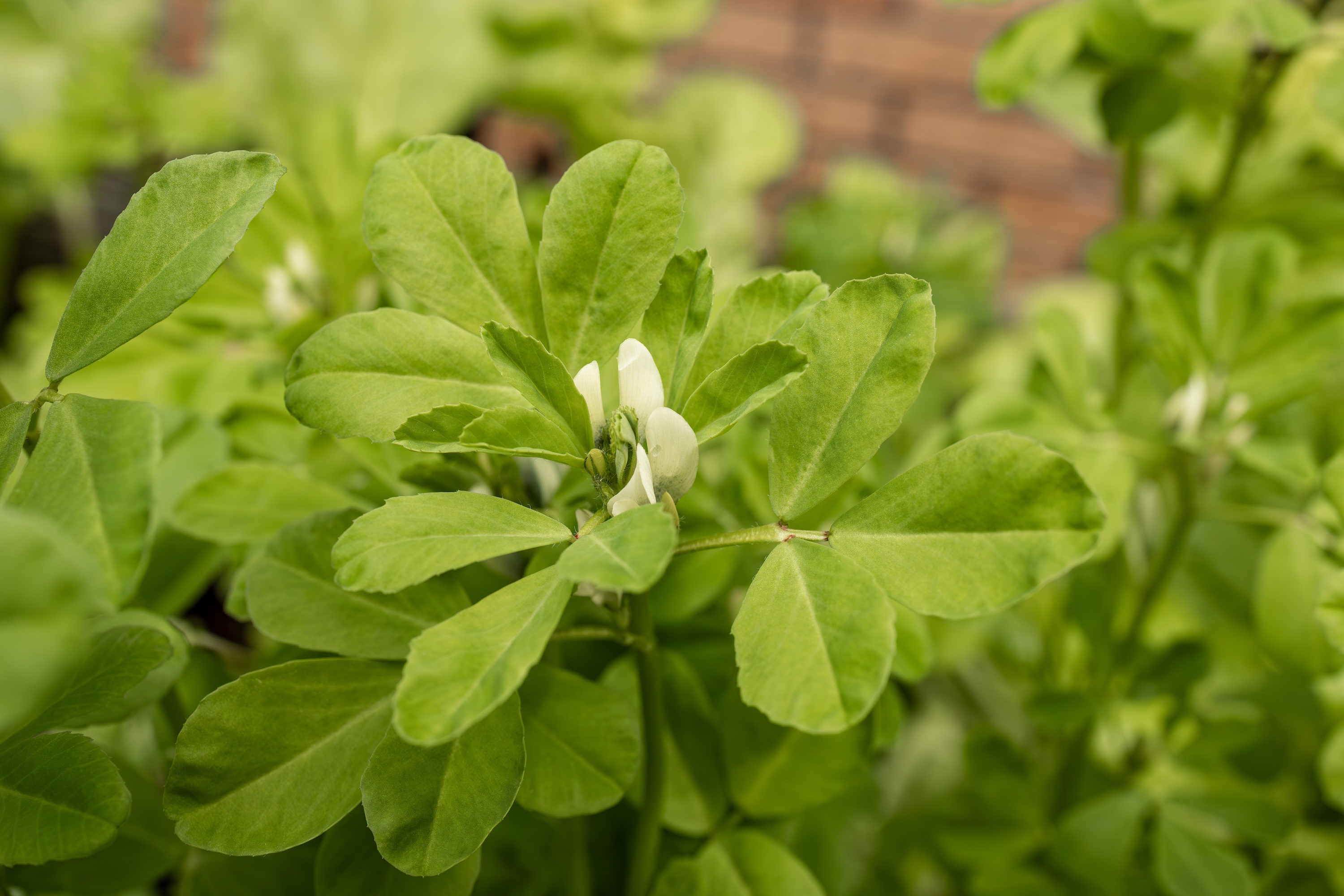
© Adobe Stock / Tosh Lubek
This article was translated using AI.
Herbal Profile:
|
Common name |
Fenugreek (Greek hay, fenugreek seed) |
|
Latin name |
Trigonella foenum-graecum |
|
Traditional use |
One of the oldest cultivated plants: As early as the Egyptian Ebers Papyrus (16th century BC), the seeds were mentioned as a remedy for burns. Via the Greeks and Romans, fenugreek reached Central Europe, was cultivated in monastery gardens, and was included by Charlemagne around 795 in the estate ordinance Capitulare de villis. Traditionally used for loss of appetite, emaciation, and weakness during convalescence, for gastrointestinal complaints and upper respiratory catarrh, to promote lactation, and externally as a warm poultice for boils, ulcers, and inflammation. In horses, it is a classic conditioning and appetite-stimulating herb for picky eaters, underweight and older horses, during convalescence, and for lactating mares. |
|
Scientifically proven effect(s) |
Mucilages (especially galactomannans), protein (20–30%, rich in lysine and tryptophan), fatty oil (5–10%), steroidal saponins (including diosgenin), 4-hydroxyisoleucine, trigonelline, choline, flavonoids (including apigenin, luteolin, vitexin), bitter compounds, trace amounts of essential oil containing the aromatic compound sotolon |
|
Contraindications |
Do not feed to pregnant mares, as fenugreek can stimulate the uterus. In cases of EMS, insulin resistance, and Cushing's, only after consultation, as 4-hydroxyisoleucine promotes insulin secretion and the seeds are high in protein. Consult a veterinarian when administering medications that affect blood glucose levels. Rare intolerances in cases of allergy to legumes. |
|
When is it harvested? |
The ripe seeds in late summer when the pods are brown and dry. Barely cultivated in Germany; commercial supply originates predominantly from India, China, Morocco, and Turkey. |
|
Which plant parts are used? |
The seeds; leaves and sprouts are used culinarily as vegetables and salad. |
|
How is it prepared? |
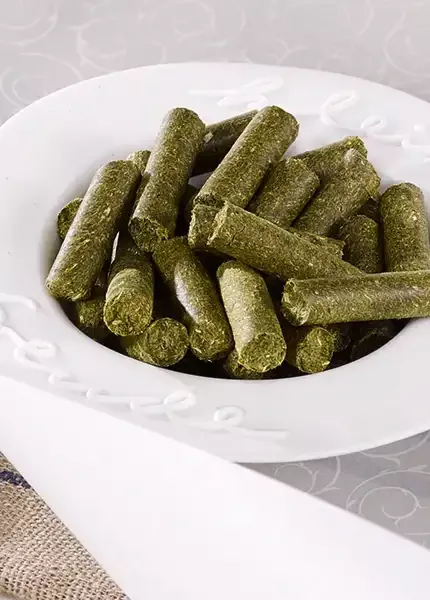
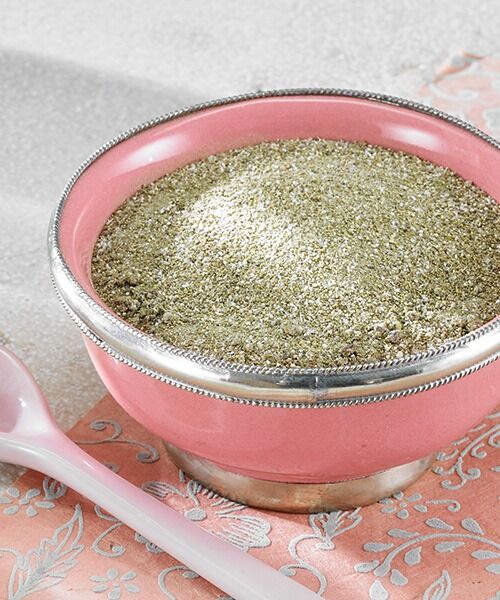
Cracked or ground seeds mixed into feed, or soaked in water overnight until they swell and form mucilage, and fed with feed or in a mash. Ground seeds are best scalded with boiling water to reduce microbial load. Externally as a warm poultice. |
|
Trivia |
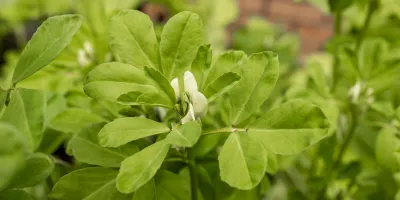
The German name describes the clover-like leaves and the horn-shaped curved pods. “Foenum-graecum” means “Greek hay” and recalls that the plant was used as livestock fodder as early as antiquity. “Trigonella” refers to the small, triangular-looking flowers. |
Herbal Tip:
Fenugreek is one of the world's oldest cultivated plants and has long held a place in the feed manger: its Latin name “foenum-graecum”, Greek hay, recalls that it was already cultivated as livestock fodder in antiquity. In modern horse feeding, fenugreek is regarded as a classic conditioning herb, used primarily for picky eaters and horses that need to gain weight. This makes it one of the best-known herbs for horses.
Its greatest strength is its appetite-stimulating effect, which was recognized for humans by Commission E. Bitter compounds and the spicy aroma stimulate salivation and the secretion of digestive juices. Furthermore, horses distinctly favor the taste: in a British study on flavor preferences, fenugreek ranked first among eight tested flavors, and mineral pellets flavored with fenugreek were consumed significantly faster than unflavored ones. For fussy eaters, it is therefore a tried-and-tested way to make feed appealing again.
However, the effects of fenugreek in horses do not rely solely on its flavor. The seeds consist largely of mucilage, which swells in the digestive tract, protects the mucous membranes, and regulates digestion. In addition, they provide high-quality protein rich in lysine, steroidal saponins, flavonoids, and the amino acid 4-hydroxyisoleucine, which stimulates insulin secretion and influences blood sugar.
The mucosal-protective properties also make fenugreek interesting for the stomach. In a study conducted at the University of Lisbon, horses with gastric ulcers received an aqueous extract of fenugreek seeds for four weeks. Ulcers in the glandular mucosa healed significantly better in treated horses than in the control group; however, the extract had no effect on lesions in the non-glandular region. Fenugreek was also an ingredient in an herbal blend that demonstrated results comparable to the medication omeprazole in another study. Nevertheless, sample sizes were small, and whenever gastric ulcers are suspected, the horse always requires professional veterinary care.
For equine weight gain, fenugreek works primarily indirectly: a horse that eats willingly and adequately again gains weight more easily. It is not a fattening agent. Before trying to build up a thin horse, underlying causes such as dental problems, parasites, gastric ulcers, or an inadequate supply of forage should be ruled out. How to properly feed underweight horses is covered in a separate article.
Fenugreek is also frequently associated with muscle building in horses. The rationale lies in its saponins containing diosgenin, which are reputed to have anabolic effects. In a study of men undergoing resistance training, a fenugreek extract improved strength and body composition; however, no studies exist for horses to date. The protein contribution should not be overestimated either: 50 g of seeds provide only about 12 g of protein, a fraction of the daily requirement. Muscle is built through targeted training combined with an adequate supply of essential amino acids such as lysine, methionine, and threonine. Fenugreek can support this process by promoting a better appetite, but it replaces neither training nor essential nutrition. How to distinguish fat from muscle is explained in a dedicated article.
Fenugreek is particularly suitable for senior horses that eat poorly or lose weight, for horses recovering from illness, surgery, or stressful periods, for hard keepers, and for sport horses in conditioning training. Traditionally, it is also fed to lactating mares to support milk production, and many horse owners value it for promoting a shiny coat.
Fenugreek is less suitable for easy keepers and horses with metabolic disorders such as EMS, insulin resistance, or Cushing's, or a predisposition to endocrinopathic laminitis. The 4-hydroxyisoleucine stimulates insulin release, and the high protein content can further amplify the insulin response. In horses whose insulin levels are already elevated, this is undesirable. In these cases, fenugreek should only be fed after professional consultation.
For a standard horse weighing around 500 kg, 25 to 50 g of fenugreek seeds daily has proven effective, equivalent to approximately two to four heaping tablespoons. Ponies receive about half this amount. The hard seeds are best cracked or soaked overnight until they swell and produce mucilage, then mixed into the feed or into a grain-free mash. For conditioning, fenugreek is typically fed as a 4- to 8-week regimen; for senior horses, it may also be given over a longer period in moderate quantities.
Side effects are rare when fed in standard amounts. Pregnant mares should not receive fenugreek, as it can stimulate uterine contractions. In horses receiving medications that affect blood glucose levels (SGLT2 inhibitors), veterinary consultation is essential. Anyone unsure whether fenugreek is suitable for their horse can consult a Sanoanimal therapist.
Fenugreek combines well with other medicinal herbs for horses. Combined with stinging nettle and green oat, it creates a classic conditioning blend; fennel adds a digestive component that is also soothing to the stomach.
A practical tip: Whole fenugreek seeds have a long shelf life when stored in a cool, dry, dark place, whereas ground seeds quickly lose their aroma. It is best to crush only enough for a few days or soak the daily ration the evening before feeding. The mucilage formed is desirable and makes the feed even more appealing to many horses.
References:
- Fritz, C. Kräuter, die Pferde fit machen. Sanoanimal Verlag, 2024.
- Goodwin, D., Davidson, H. P. B., and Harris, P. “Selection and acceptance of flavours in concentrate diets for stabled horses.” Applied Animal Behaviour Science 95.3-4 (2005): 223-232. https://www.researchgate.net/publication/223267514_Selection_and_acceptance_of_flavours_in_concentrate_diets_for_stable_horses
- Craveiro, I. V. A. “Estudo preliminar da eficácia das sementes de Trigonella foenum-graecum L. (feno grego) no tratamento da SUGE (Síndrome de Úlcera Gástrica Equina).” Dissertação de Mestrado, Universidade de Lisboa (2017). https://repositorio.ulisboa.pt/entities/publication/bb2c2e8a-6cba-4c02-9ca6-85c002b75576
- Kulcsár, M., et al. “Phytotherapy compared to omeprazol therapy in equine gastric ulcers.” Acta Veterinaria Brno 91.4 (2022): 309-315. https://actavet.vfu.cz/media/pdf/actavet_2022091040309.pdf
- Visuvanathan, T., et al. “Revisiting Trigonella foenum-graecum L.: Pharmacology and therapeutic potentialities.” Plants 11.11 (2022): 1450. https://pmc.ncbi.nlm.nih.gov/articles/PMC9182856/
- Broca, C., et al. “4-Hydroxyisoleucine: experimental evidence of its insulinotropic and antidiabetic properties.” American Journal of Physiology – Endocrinology and Metabolism 277.4 (1999): E617-E623. https://journals.physiology.org/doi/full/10.1152/ajpendo.1999.277.4.E617
- Neelakantan, N., et al. “Effect of fenugreek (Trigonella foenum-graecum L.) intake on glycemia: a meta-analysis of clinical trials.” Nutrition Journal 13 (2014): 7. https://pmc.ncbi.nlm.nih.gov/articles/PMC3901758/
- Wankhede, S., Mohan, V., and Thakurdesai, P. “Beneficial effects of fenugreek glycoside supplementation in male subjects during resistance training: A randomized controlled pilot study.” Journal of Sport and Health Science 5.2 (2016):176-182. https://pmc.ncbi.nlm.nih.gov/articles/PMC6191980/
A note on our content. Sanoanimal’s content (articles, podcasts, videos, webinars, etc.) is based partly on scientific studies and partly on more than 20 years of practical experience within the Sanoanimal therapist network. For many relationships, methods and feeding practices involving horses, independent scientific studies do not exist or are not yet available; the corresponding statements reflect knowledge gained through experience. Our aim is to combine current scientific knowledge with the practical experience of our network. Our content makes no promises of healing or effectiveness; it does not replace examination, diagnosis or treatment by a veterinarian or trained therapist. Please do not put any of it into practice without professional guidance. Learn more: Editorial principles and disclaimer