Discover what peppermint leaves do for digestion and the stomach, the proper dosage for horses, and how to prepare soothing peppermint tea.
Laminitis in Winter: Why Cold Weather Is So Dangerous for Previously Damaged Hooves
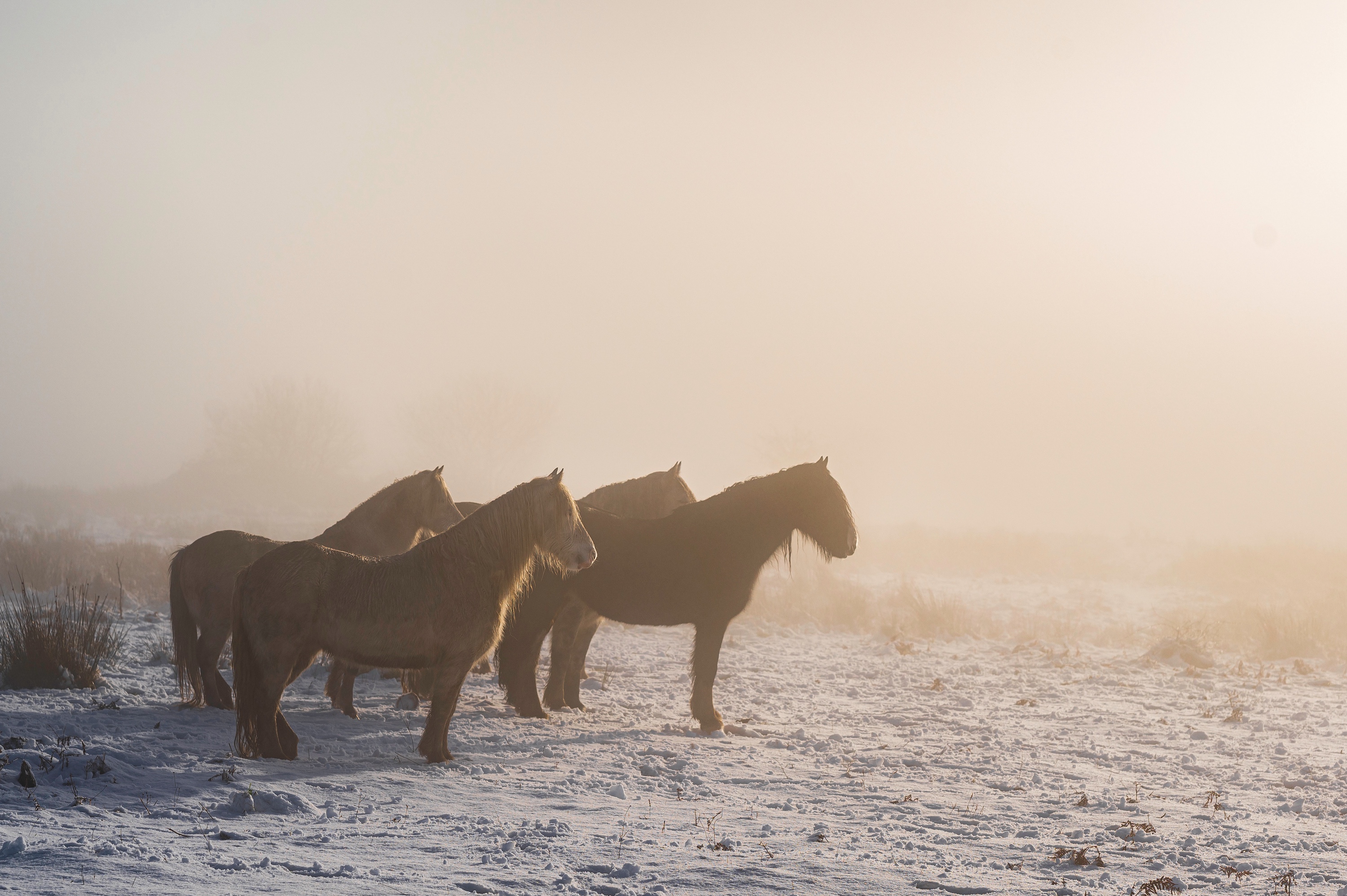
© Adobe Stock / parkerspics
This article was translated using AI.
Why horses with a history of laminitis are hit hardest – and what happens in the hoof and blood vessels
Key Takeaways
- Time and again, horses develop laminitis during or shortly after a sudden cold snap – with no change in feed, often overnight, and almost always in horses with a history of laminitis.
- Cold measurably alters blood circulation in the hoof and causes blood vessels to constrict; persistently elevated insulin levels act in the very same direction.
- In a horse with pre-damaged laminar attachments, the reserve is small – an additional cold stimulus can be enough to tip an otherwise compensated system over the edge.
- This does not contradict targeted cryotherapy in acute laminitis: therapeutic hypothermia is fundamentally different from a sudden, prolonged drop in ambient temperature.
- Chronic, undiagnosed laminitis is far more common than thought – many "sudden" cases of winter laminitis are actually the unmasking of long-standing hoof damage.
A pattern every practitioner recognises
There is a type of laminitis that cannot be explained by feed. Those affected are typically not "blank slates", but horses with a known history of laminitis, candidates that have been foot-sore for a long time, or horses with chronic, underlying damage to the laminar suspension. Feeding has remained unchanged, there was no access to unfamiliar feed, no breakout onto the neighbouring pasture, and no obvious trigger or recent history typically associated with laminitis, such as high fructan levels, sugar-rich feed, or similar factors. Then, the outside temperature drops sharply within a short period – and the next morning, the horse is walking stiffly or showing clear signs of laminitis.
This is often attributed to frozen ground, arguing that the hard surface triggered concussion-induced laminitis. However, this explanation falls short: in freezing cold, most horses tend to move less, and mechanical overload from excessive movement would hardly explain an episode that occurs overnight and often affects all four hooves simultaneously. Looking closer, the true cause is not found in the frozen ground, but in the blood vessels of the hoof.
What cold does to hoof circulation
The fact that cold alters blood circulation to the hoof is not speculation; it has been scientifically measured. Cooling the hoof of a healthy horse to four degrees Celsius for 30 minutes reduces perfusion in the laminar tissue to around 80 percent of baseline, whereas warming increases it. Cold, therefore, actively restricts blood supply in the digital region.
What is more: under cold conditions, the vessels become even more sensitive to signals causing them to constrict. In experiments on isolated digital veins, contractile responses were significantly stronger at cooler temperatures than at warmer ones. Cold does not simply passively lower hoof temperature; it also sensitises the vessels to constrict further. This narrowing of blood vessels is known as vasoconstriction. In a hoof with adequate functional reserve, this is a normal, harmless physiological response to cold, designed to minimise systemic heat loss. The exact same thing happens in our skin in cold weather – which is why it feels cold to the touch. In an already compromised hoof, however, this very vasoconstriction can push the already borderline blood supply below a critical threshold.
What high insulin levels do to blood vessels
This is where metabolism enters the picture. Persistently elevated insulin levels affect digital blood vessels in the exact same detrimental way. In isolated perfused equine limbs, artificially maintaining high insulin levels for around ten hours led to a marked increase in vascular resistance – meaning the vessels constricted – and laminar vessels showed significantly higher levels of endothelin-1, one of the body's most potent vasoconstrictors.
This results in two factors pulling in the exact same direction: insulin dysregulation, which already predisposes blood vessels to vasoconstriction, and a sudden cold stimulus on top. Many chronically laminitic horses likely maintain digital blood flow only with great difficulty, constantly teetering on the edge. An abrupt temperature drop can then be the final straw that breaks the camel's back. While this combination has not yet been directly tested in experimental settings, it is a considerably more plausible working hypothesis than "the ground suddenly froze, causing concussion laminitis".
Why pre-damaged horses are affected
This brings us to the core question: Why does the cold almost always hit the very same horses? The answer lies in the condition of the laminar apparatus before winter even sets in.
Think of this as a threshold model. A healthy horse has substantial reserves: a cold night triggers a normal, inconsequential vasoconstriction. A horse with pre-existing laminar damage, on the other hand, is already operating near its limit. For this horse, the very same cold stimulus does not hit a healthy system, but an already compromised one – and the final tipping point does not need to be significant at all.
Just how frequently such pre-existing damage goes unnoticed is highlighted by an insightful study: At the time of their Cushing's (PPID) diagnosis, owners reported a history of laminitis in only 37 percent of cases – yet thorough clinical and radiographic examination revealed evidence of previous laminitic damage in 76 percent of the horses. Furthermore, the higher the insulin levels, the more pronounced these changes were. Chronic, low-grade laminitis is therefore massively underestimated. Altered movement patterns are frequently attributed to osteoarthritis, "thin soles", or general foot sensitivity, and managed with therapeutic shoeing, when the horse is in fact suffering from subclinical laminitis. This explains why "sudden" winter laminitis disproportionately affects horses with a past history – and why it seems to appear out of nowhere in others, simply because early warning signs were misinterpreted.
To cool or not to cool in laminitis?
One might object: If cold is supposed to be harmful, isn't targeted cryotherapy considered the most effective protective measure in acute laminitis? Both statements are true, and the apparent contradiction resolves as soon as one distinguishes between two entirely different scenarios.
Therapeutic cooling (digital hypothermia) is one of the most thoroughly evidenced interventions against acute lamellar failure. In experimental models, all non-cooled hooves developed severe lesions, while cooled hooves were largely protected – even when cryotherapy was initiated only after lameness became apparent. In this context, however, the hoof is continuously maintained at very low temperatures for many consecutive hours immediately upon the onset of an acute laminitic episode. This actively downregulates tissue metabolism and enzymatic inflammatory processes, arresting tissue destruction.
A winter cold snap in a horse with an already severely compromised laminar apparatus is something entirely different. It primarily disrupts vasomotor tone, hampering continuous repair and regulatory mechanisms within the compromised suspension of the pedal bone. Practical experience shows that horses prone to laminitic flare-ups during cold snaps benefit considerably from keeping their lower legs warm during such weather spells, for instance with therapeutic warming boots such as Back on Track or Ceratex. For all other acute cases, the gold standard remains: cool immediately and continuously for the first 48 hours upon the onset of laminitis.
Winter further lowers the threshold
Beyond the cold, winter often introduces several minor contributing factors that may be innocuous on their own, but collectively lower the threshold for a laminitic episode. Many horses move less in cold weather, gain weight, and are transitioned to a new, potentially higher-sugar batch of hay. Weight gain in the preceding three months is a documented risk factor for laminitis, and exercise is proven to improve insulin regulation – even more effectively than dietary restriction alone.
On top of that comes stress: closed pastures, restricted winter paddocks, herd integrations with limited space to retreat, and increased competition at hay feeders represent genuine stressors. It is well documented that stress can spike insulin levels – a transport duration of just 90 minutes pushed insulin levels above the diagnostic threshold in clinically normal horses. What distorts diagnosis in a healthy horse can easily tip a borderline horse over the edge.
A brief word on Cushing's (PPID), which frequently enters the discussion in autumn: the regulatory hormone ACTH rises seasonally in all horses during late summer and autumn – this is a normal circannual rhythm driven by photoperiod, not an automatic sign of disease. This physiological autumn rise must be carefully differentiated from true PPID, as well as from pseudo-Cushing's, and both in turn from insulin dysregulation. Lumping everything together simply because ACTH is elevated frequently leads to misdiagnoses. And remember: pain also drives up ACTH levels. Testing ACTH in the midst of an acute laminitic bout will almost inevitably yield elevated levels – this is not necessarily Cushing's, but pain-induced stress.
What this means in practice
First and foremost: the risk of laminitis does not end when pasture season closes; it merely changes its face. Vigilance is particularly essential for horses with a history of laminitis, foot soreness, prominent growth rings, or chronic hoof wall changes – especially ahead of a forecasted cold snap.
If a horse reproducibly becomes foot-sore immediately following sudden temperature drops, this must be taken seriously and is not a coincidence. Such horses benefit from heightened observation during cold snaps and protection from rapid distal limb cooling. And because chronic damage so often remains undetected, a thorough assessment of the laminar apparatus and insulin regulation is warranted in any suspicious horse – even in lean, otherwise unremarkable animals.
The decisive question in winter laminitis is therefore rarely "What did the horse eat yesterday?", but rather: "What pre-existing damage was already present – and what additional trigger pushed this system past its threshold?" Asking this question makes it clear why it is repeatedly the very same horses affected.
Quellen
-
Pollard, D., et al. “Incidence and clinical signs of owner-reported equine laminitis in a cohort of horses and ponies in Great Britain.” Equine Veterinary Journal 51.5 (2019): 587-594. https://beva.onlinelibrary.wiley.com/doi/10.1111/evj.13059
-
Wylie, C. E., et al. “Risk factors for equine laminitis: a case-control study conducted in veterinary-registered horses and ponies in Great Britain between 2009 and 2011.” The Veterinary Journal 198.1 (2013): 57-69. https://www.sciencedirect.com/science/article/abs/pii/S1090023313004036
-
Tadros, E. M., et al. “Association between hyperinsulinaemia and laminitis severity at the time of pituitary pars intermedia dysfunction diagnosis.” Equine Veterinary Journal 51.1 (2019): 52-56. https://beva.onlinelibrary.wiley.com/doi/10.1111/evj.12963
-
Gauff, F., Patan-Zugaj, B., and Licka, T. F. “Hyperinsulinaemia increases vascular resistance and endothelin-1 expression in the equine digit.” Equine Veterinary Journal 45.5 (2013): 613-618. https://pmc.ncbi.nlm.nih.gov/articles/PMC4018505/
-
Zerpa, H., et al. “Cooling augments vasoconstriction mediated by 5-HT1 and alpha2-adrenoceptors in the isolated equine digital vein: involvement of Rho kinase.” European Journal of Pharmacology 569.1-3 (2007): 212-221. https://www.sciencedirect.com/science/article/abs/pii/S0014299907005389
-
Worster, A. A., et al. “Effects of external thermal manipulation on laminar temperature and perfusion scintigraphy of the equine digit.” New Zealand Veterinary Journal 48.4 (2000): 111-116. https://www.tandfonline.com/doi/abs/10.1080/00480169.2000.36175
-
Stokes, S. M., et al. “Continuous digital hypothermia prevents lamellar failure in the euglycaemic hyperinsulinaemic clamp model of equine laminitis.” Equine Veterinary Journal 51.5 (2019): 658-664. https://beva.onlinelibrary.wiley.com/doi/10.1111/evj.13072
-
van Eps, A. W., et al. “Continuous digital hypothermia initiated after the onset of lameness prevents lamellar failure in the oligofructose laminitis model.” Equine Veterinary Journal 46.5 (2014): 625-630. https://beva.onlinelibrary.wiley.com/doi/10.1111/evj.12180
-
Place, N. J., et al. “Seasonal variation in serum concentrations of selected metabolic hormones in horses.” Journal of Veterinary Internal Medicine 24.3 (2010): 650-654. https://academic.oup.com/jvim/article/24/3/650/8447203
-
Copas, V. E. N., and Durham, A. E. “Circannual variation in plasma adrenocorticotropic hormone concentrations in the UK in normal horses and ponies, and those with pituitary pars intermedia dysfunction.” Equine Veterinary Journal 44.4 (2012): 440-443. https://beva.onlinelibrary.wiley.com/doi/10.1111/j.2042-3306.2011.00444.x
-
Pinn-Woodcock, T. L., et al. “Seasonal elevation in equine adrenocorticotropic hormone occurs throughout the contiguous United States and is influenced by latitude and age.” Journal of the American Veterinary Medical Association 263.8 (2025): 1380-1389. https://avmajournals.avma.org/view/journals/javma/263/11/javma.25.04.0223.xml
-
Jacquay, E. T., Harris, P. A., and Adams, A. A. “The impact of short-term transportation stress on insulin and oral sugar responses in insulin dysregulated and non-insulin dysregulated horses.” Equine Veterinary Journal 57.4 (2025): 745-755. https://beva.onlinelibrary.wiley.com/doi/10.1111/evj.14403
-
Bamford, N. J., et al. “Influence of dietary restriction and low-intensity exercise on weight loss and insulin sensitivity in obese equids.” Journal of Veterinary Internal Medicine 33.1 (2019): 280-286. https://pmc.ncbi.nlm.nih.gov/articles/PMC6335535/
A note on our content. Sanoanimal’s content (articles, podcasts, videos, webinars, etc.) is based partly on scientific studies and partly on more than 20 years of practical experience within the Sanoanimal therapist network. For many relationships, methods and feeding practices involving horses, independent scientific studies do not exist or are not yet available; the corresponding statements reflect knowledge gained through experience. Our aim is to combine current scientific knowledge with the practical experience of our network. Our content makes no promises of healing or effectiveness; it does not replace examination, diagnosis or treatment by a veterinarian or trained therapist. Please do not put any of it into practice without professional guidance. Learn more: Editorial principles and disclaimer