Low sugar, low starch – and yet dangerous insulin spikes? Find out here why pea protein for horses with EMS, insulin dysregulation, and laminitis risk is by no means harmless.
Read articleThe Equine Gut Microbiome: Why Bacterial Diversity in the Digestive Tract Influences Respiratory Health, the Immune System, and Performance
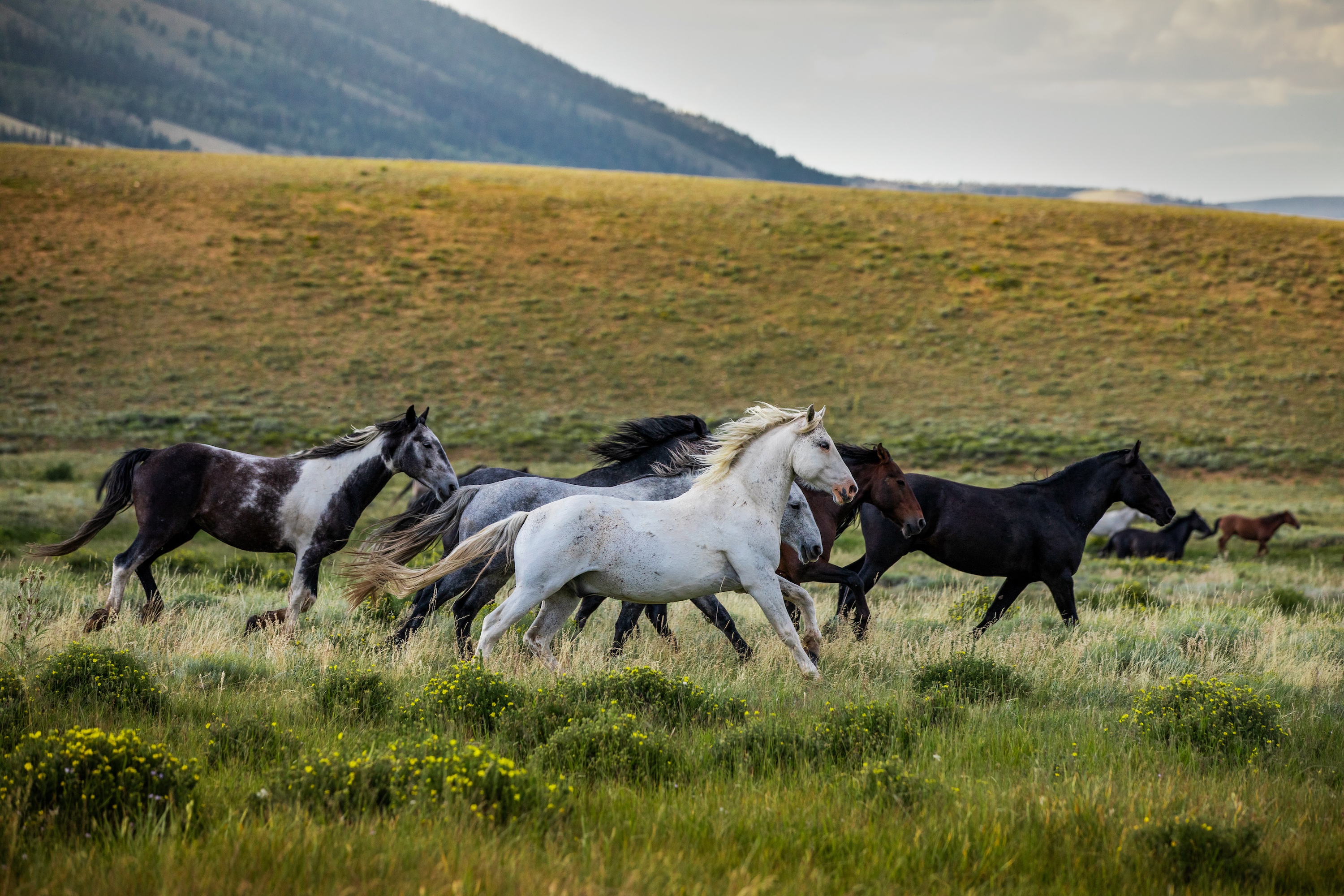
© Adobe Stock / Terri Cage
Table of contentsclose
This article was translated using AI.
Key Takeaways
-
The gut microbiome encompasses all bacteria, fungi, yeasts, and viruses in the horse's digestive tract, as well as their metabolic products – it is an independent, highly active organ with an influence on the entire body.
-
A study by the University of Surrey shows that the bacterial diversity in the feces of foals at just 28 days of age is linked to the later risk of respiratory diseases and even to athletic performance as a young horse.
-
A species-rich microflora in the large intestine is considered a central feature of a healthy horse, regardless of age – however, there is no "ideal" composition, as it varies greatly depending on region, feeding, and genetics.
-
Sudden feed changes, large amounts of concentrate, or a change in hay batches can sensitively disturb the balance of microorganisms and promote colic, laminitis, or a gradual acidification of the large intestine.
-
A fiber-focused, varied diet, avoiding haylage and other fermented feeds, slow feed transitions over at least two weeks, and a cautious use of antibiotics guided exclusively by a veterinarian are the most effective ways to protect the gut flora.
It has long been known that a horse's digestion depends on microorganisms. However, how closely this invisible ecosystem is linked to respiratory health, the immune system, and even later athletic performance is only becoming clear through modern genetic sequencing methods, which are now being used more frequently. What were once considered mere "digestive aids" are today understood as a complex organ active throughout the entire body.
What exactly is the equine gut microbiome?
The gut microbiome refers to the entire microbial community in the horse's digestive tract – bacteria, bacteriophages (viruses that infect bacteria), archaebacteria, protozoa, fungi, and yeasts – along with all the metabolic products these microorganisms produce. This ecosystem extends throughout the entire gastrointestinal tract but is particularly dense and metabolically active in the large intestine (cecum, large and small colon, rectum).
Scientists specializing in equine microbiome research increasingly describe it as an integral part of horse biology – comparable to the significance that the human microbiome has now achieved in human medicine. The way the organism interacts with these microorganisms thus has a decisive effect on health.
How gut flora influences digestion and metabolism
In the large intestine, specialized microorganisms ferment the plant fibers ingested with food, providing the horse with short-chain, volatile fatty acids such as butyrate, acetate, and propionate. These fatty acids are a central source of energy, especially for an animal whose digestive system is evolutionary designed for continuous fiber intake and not for large amounts of starch from grain, muesli, or pelleted concentrate.
A healthy microflora also protects the intestinal wall itself: it displaces unwanted bacteria that could release larger amounts of endotoxins, and the butyrate produced stimulates the intestinal mucosa to form a dense barrier. This prevents endotoxins and other undesirable substances from entering the bloodstream – a mechanism closely related to so-called Leaky Gut Syndrome, where an intestinal mucosa damaged by chronic inflammation can lead to weight loss and performance deficits.
The surprising connection between gut flora and respiratory health
Findings regarding the "critical phase" in the first weeks of a foal's life are particularly insightful. A study [1] by the University of Surrey examined over 400 fecal samples from 52 foals from birth to age three and systematically recorded respiratory, gastrointestinal, orthopedic, and performance-related health data in a cohort from the United Kingdom.
The central result: foals with lower bacterial diversity in their feces at 28 days of age had a significantly increased risk of later suffering from respiratory diseases. Interestingly, a connection to the athletic career also emerged: higher bacterial diversity in the first month of life was associated with better performance indicators in racing, measured among other things by official ratings and placings [1].
The use of antibiotics in the first four weeks of life was also examined: foals treated with antibiotics during this phase subsequently showed lower bacterial diversity and significantly more often developed respiratory diseases – an indication of how lasting an early intervention in the gut flora can be.
These findings align with observations in human medicine, where a diverse gut flora in early life is also linked to a better foundation for the later immune system. However, researchers emphasize that these are currently correlations and not a proven causal mechanism – the exact biological processes have yet to be investigated more closely.
A high degree of individual and regional variation
Another important aspect: there is no single "ideal microbiome" that works equally well for all horses. Investigations into the taxonomic composition of equine fecal flora show an extraordinary variety of bacterial groups such as Actinobacteria, Bacteroidetes, and Firmicutes, whose interactions are only beginning to be understood.
Even within groups of horses with almost identical feeding, similar training, and comparable genetic backgrounds – such as Thoroughbreds in racing – an astonishing individual variation in gut flora can be observed. Added to this are regional differences: depending on which forage is typically available in a region, such as different pasture grasses or hay types, a characteristic bacterial composition is formed [2].
A possible explanation for this geographical consistency lies in so-called vertical transmission: a foal receives a significant portion of its initial intestinal colonization from the mare, especially immediately after birth and through close contact and so-called coprophagy (eating feces) in the first weeks of life. If horse populations hardly mix over generations, their characteristic microbial profiles also remain stable over long periods.
Possible role of stomach flora in gastric ulcers
Even in the stomach itself – divided into an upper, squamous-lined region and a lower, glandular region – independent microbial communities exist in each. In horses with gastric ulcers (EGUS), altered bacterial populations have been found in the gastric mucosa compared to healthy animals.
An investigation of the glandular gastric mucosa in horses with and without equine glandular gastric disease (EGGD) found differences in the composition of individual bacterial groups, but no clear dysbiosis in the sense of a clearly disturbed balance; the data support the assumption that the presence or absence of certain bacteria could be associated with the disease rather than a definitive dysbiosis. Also, the germ Helicobacter pylori, known in human medicine as an ulcer trigger, could not be convincingly linked to gastric ulcers in horses [3].
Overall, it remains unclear whether altered bacterial populations are the cause or consequence of gastric ulcers. What is certain, however, is that factors such as feeding, stress, training intensity, and management contribute to determining the microbial balance in the stomach and the health of the gastric mucosa.
When do we talk about a disturbed gut flora (dysbiosis)?
There is currently no clear, universally valid definition for a disturbed gut flora. Instead of fixed limit values, specialists look at clinical abnormalities: a tendency toward colic, recurring diarrhea, free fecal water, or even frequent respiratory infections in the adult horse can be indications of an underlying disturbance of the gut flora. Since microorganisms in the gut are also demonstrably linked to the nervous system via the so-called gut-brain axis, there is discussion – based on findings from human and animal research – whether increased anxious behavior could also be a symptom.
In addition to generally inappropriate feeding, the shift from traditional, roughage-based management to more intensive, urban horse keeping with reduced diversity in feed and a focus on concentrates is considered a contributing factor to dysbiosis, which can increase susceptibility to metabolic diseases. An unindicated or improper use of antibiotics is also clearly linked to lasting changes in the gut flora.
Feeding as the most important lever for a stable gut flora
The classic horror scenario – a horse breaking into the feed room and overeating on concentrate – drastically illustrates what can also happen on a smaller scale: a large amount of undigested starch reaches the large intestine, where it is rapidly fermented into lactic acid by bacteria. The resulting abrupt drop in pH can lead to a mass die-off of microorganisms – with the risk of colic or severe laminitis as a result.
But even much more subtle changes carry risks that are often underestimated. If, for example, "just a little more" concentrate is given before a competition, this can already measurably stress the large intestine without dramatic external symptoms occurring. The result may be increased gas formation, a bloated belly, or mild colic symptoms – the results of increased, acidic fermentation in the large intestine.
A change in hay batches is also frequently underestimated in its effect on the gut flora. Every feed change – whether hay, concentrate, or turnout – should therefore fundamentally be done gradually over at least two weeks to give the microflora time to adapt.
Since the horse's entire digestive system is designed for continuous fiber intake, concentrate – even for sport horses with increased energy requirements – should always be used only as a supplement and in a balanced ratio to plenty of roughage. Additionally: the more diverse the plant selection, the more diverse the bacterial community in the gut usually is. Since many pastures and hay meadows today consist of relatively species-poor grass monocultures, whereas horses in their natural habitat would consume a significantly wider range of herbs and plant parts, a deliberately more diverse pasture and roughage design can support microbial diversity in the gut.
Antibiotics only after veterinary diagnosis
Antibiotics are an indispensable tool for treating bacterial infections but inevitably interfere with the gut flora. Their use should therefore be exclusively evidence-based – meaning: only when there is actually a justified suspicion of a bacterial infection, and always in coordination with the treating veterinarian. Uncritical or preventive use can, as the foal study described above shows, have long-term consequences for respiratory health and general well-being.
Practical recommendations for a healthy gut flora
The following guiding principles for daily practice can be derived from current research:
-
Establish hay as the basis for feeding and supplement with concentrate only specifically and in appropriate amounts
-
Offer the most diverse selection of roughage possible – species-rich hay and well-maintained, species-rich pastures – instead of limiting yourself to a single source like grass seed hay
-
Make every feed change – with hay, concentrate, or turnout – gradually over at least two weeks
-
Use antibiotics exclusively after veterinary diagnosis and instruction
-
Pay special attention to undisturbed, diverse intestinal colonization in foals during the first weeks of life, as this is where a decisive course is set for later health
Research still has much to do
Research into the equine microbiome is still in its infancy – especially compared to research on humans or rodents. But we already know today that the horse's gut microbiome is far more than just a passive digestive aid – it is a dynamic, highly individual ecosystem with effects on metabolism, the immune system, and even respiratory health. A single ideal profile does not exist, but a species-rich, stable microflora is considered an important health feature regardless of breed, geographic region, or discipline.
Those who pay attention to fiber-focused, varied feeding, careful feed transitions, and a responsible use of antibiotics create the best conditions for this invisible but influential microbial community to stay in balance – from the foal's first weeks of life into old age.
Sources:
-
Leng, J., Moller-Levet, C., Mansergh, R.I. et al. Early-life gut bacterial community structure predicts disease risk and athletic performance in horses bred for racing. Sci Rep 14, 17124 (2024). DOI: 10.1038/s41598-024-64657-6
-
Gilroy R, Leng J, Ravi A, Adriaenssens EM, Oren A, Baker D, La Ragione RM, Proudman C, Pallen MJ. "Metagenomic investigation of the equine faecal microbiome reveals extensive taxonomic diversity." PeerJ, 2022;10:e13084. DOI: 10.7717/peerj.13084
-
Paul LJ, Ericsson AC, Andrews FM, et al. "Gastric microbiome in horses with and without equine glandular gastric disease." Journal of Veterinary Internal Medicine, 2021. DOI: 10.1111/jvim.16241
-
Wunderlich G, Bull M, McGilchrist N, Zhao C, Ross T, Rose M, Chapman B. “The horse gut bacteriome and anaerobic mycobiome are influenced by seasonal forages and small intestinal starch digestibility.” Journal of Applied Microbiology, 2025;136(9):lxaf203. DOI: 10.1093/jambio/lxaf203
-
Cryan JF, Dinan TG. “Mind-altering microorganisms: the impact of the gut microbiota on brain and behaviour.” Nature Reviews Neuroscience, 2012;13(10):701–712. DOI: 10.1038/nrn3346 (Human study/review article – basic principle of the gut-brain axis, not directly studied in horses but recognized as a cross-species mechanism)
-
Metcalf JL, Song SJ, Morton JT, Weiss S, Seguin-Orlando A, Joly F, Feh C, Taberlet P, Coissac E, Amir A, Willerslev E, Knight R, McKenzie V, Orlando L. “Evaluating the impact of domestication and captivity on the horse gut microbiome.” Scientific Reports, 2017;7:15497. DOI: 10.1038/s41598-017-15375-9