This article was translated using AI.
Key points at a glance:
- Thoracic sling exhaustion occurs when the muscles supporting the trunk are overloaded and the ribcage sinks.
- Typical signs: hollowed saddle area, prominent withers, pronounced lower neck muscles, tense shoulders.
- Causes are diverse: incorrect training, ill-fitting saddle, starting a horse too early, lack of gymnastic work.
- Treatment requires a consistent break from riding or training without a rider and systematic muscle building.
- Without therapy, the condition worsens and leads to irreversible damage.
A Common and Often Overlooked Problem
Thoracic sling exhaustion (Trageerschöpfung) is a term that has only gained increased attention in recent years, although the problem itself is as old as riding. More and more horses are showing symptoms of exhausted trunk-supporting musculature – yet many owners do not recognize the signs or consider them normal. "That's just how my horse is built" or "That's typical for the breed" are frequent misjudgments when thoracic sling exhaustion is actually present.
The term was significantly shaped by equine osteopath Tanja Richter, who repeatedly encountered horses in her practice with similar symptoms: the ribcage had sunk between the shoulders, the back muscles were tense, and the weight-bearing musculature was exhausted. These horses could no longer healthily carry the weight of the rider – they were "carrying-exhausted."
The tragedy is that many of these horses continue to be ridden despite their problems. They still function somehow, perhaps showing rideability issues or minor lameness, but the connection to thoracic sling exhaustion is not recognized. Yet, thoracic sling exhaustion is not just a cosmetic problem, but a serious health condition that leads to permanent damage if left untreated.
Symptoms and Causes
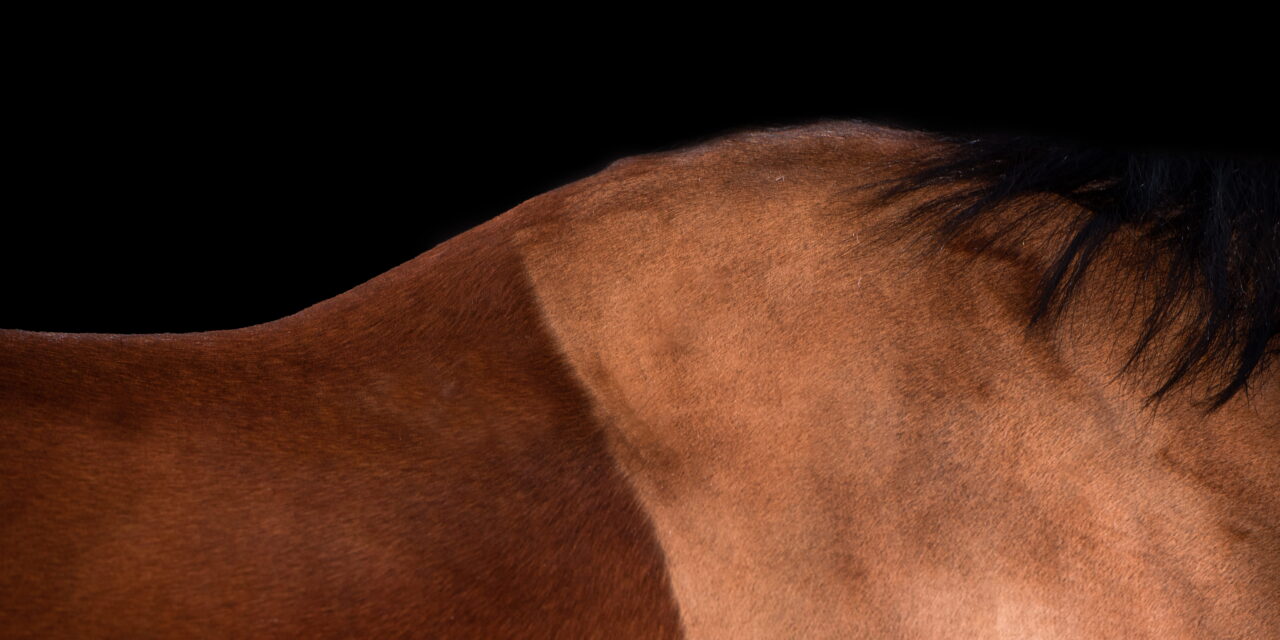
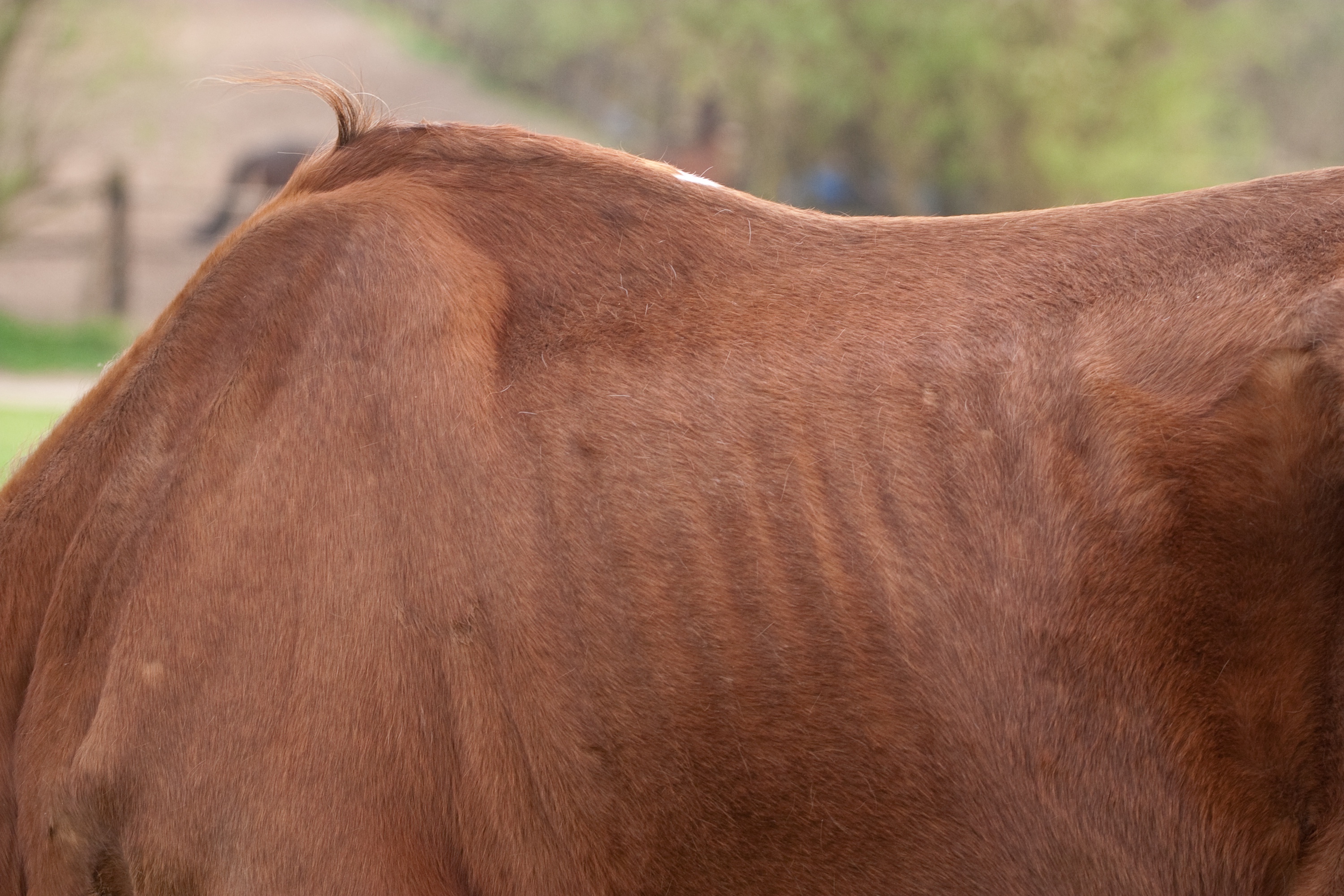
The symptoms of thoracic sling exhaustion are quite characteristic if you know what to look for. The most striking sign is the sunken ribcage. The trunk sags between the shoulder blades, and the saddle area is hollowed out. As a result, the withers appear excessively prominent – they stand out not because they are particularly high, but because the surrounding musculature is missing.
Typically, musculature is lacking in front of the withers. The so-called "holes" on both sides of the withers, where the trapezius muscle should actually be, are clearly visible. Instead, the shoulder musculature is exceptionally pronounced – not because the horse is trained there, but because these muscles must work permanently to hold up the sinking ribcage.
The lower neck muscles (ewe neck) are often hard and bulkily developed, while the upper neck muscles are weak. The horse shows the typical "inverted" neck. The belly sags – the so-called hay belly. The croup looks tense and tight, and the lumbar muscles are hardened. Often, the sternum also protrudes clearly.
The causes of thoracic sling exhaustion are diverse and usually a combination of several factors. Incorrect training is at the top of the list: horses that have never learned to go through the back, that are constantly ridden with a high head and hollow back, do not develop a functioning thoracic sling. The back muscles are forced to help carry, become permanently tense, and the ribcage sinks.
An ill-fitting saddle that presses on reflex zones and causes the horse to hollow its back contributes massively to the development of thoracic sling exhaustion. Starting a horse too early, before the musculature is sufficiently developed, can also lay the foundation. A three-year-old horse that is already being ridden regularly often does not yet have the physical prerequisites to healthily carry a rider.
Lack of suppleness, missing stretching phases in training, excessive or prolonged strain, and too little free movement due to stall confinement are all contributing factors. An unbalanced or too heavy rider can also contribute to the overload. And sometimes health problems play a role: gastric ulcers, chronic pain, or old injuries can lead to the horse adopting compensatory postures that lead to thoracic sling exhaustion in the long run.
What Happens in the Body
From a biomechanical perspective, thoracic sling exhaustion is the result of an exhausted and dysfunctional trunk-carrying system. As described in previous articles, the horse's ribcage hangs only by musculature between the shoulder blades. This thoracic sling musculature – mainly the abdominal, pectoral, and serratus muscles – must actively lift and stabilize the ribcage.
If these muscles do not work correctly or are overwhelmed, the ribcage sinks downward. Gravity pulls it between the shoulders. The shoulder muscles become tense as they try to stop the sinking. At the same time, the back muscles can no longer work loosely but must help carry – a task they are not designed for.
The spine is pushed downward. The spinous processes move closer together, and the vertebral joints are compressed. The back can no longer swing; movement is blocked. The horse does not go through the back but moves stiffly and inelastically. The hindquarters cannot step under correctly because the pelvis does not tilt properly and the lumbar spine is blocked.
The horse desperately tries to compensate for this situation. The croup tries to lift the back from behind, leading to tension in the croup muscles. The lumbar spine tries to round to lift the ribcage, leading to overload of the lumbar vertebrae. The neck muscles tense up to stabilize the back via tension on the nuchal ligament, leading to a hardened lower neck.
All these compensations cost an enormous amount of energy but are not effective. The horse is trapped in a permanent state of tension. It can no longer let go, no longer relax, and no longer swing loosely. Every movement becomes an effort, and every training session becomes a torment.
Long-term Consequences Without Treatment
If thoracic sling exhaustion is not treated, the condition worsens continuously. The musculature that should actually be carrying continues to atrophy. The musculature working compensatorily hardens more and more. The ribcage sinks further, and the spine is subjected to greater stress.
In the long run, structural damage occurs. The vertebral joints develop osteoarthritis due to chronic misalignment. The spinous processes come so close that they touch – resulting in Kissing Spines. Ligaments and tendons are overloaded and become inflamed. The nerves emerging between the vertebrae are compressed, leading to pain and even signs of paralysis.
The front legs also suffer. Because the ribcage hangs between the shoulders, the forehand is overloaded. The horses walk heavily on the forehand, leading to increased wear and tear on joints, tendons, and hooves. Navicular syndrome, tendon damage, and osteoarthritis in the front legs are all common secondary diseases of thoracic sling exhaustion.
Even internal organs can be affected. When the ribcage sinks, the lungs and heart have less space. Breathing can be impaired, and some horses develop a chronic cough. The digestive organs can also be disturbed in their function if the abdominal cavity is constricted by the sagging ribcage.
© Adobe Stock / Sven Cramer
Training Protocol for Affected Horses
Treating thoracic sling exhaustion is a long process that requires patience and consistency. The most important thing initially is relief. A horse with thoracic sling exhaustion should initially no longer be ridden – or only very little and very correctly. The rider's weight would only worsen the situation.
Instead, training begins from the ground. Physiotherapy and osteopathy help to loosen tense muscles and release blockages. This is followed by targeted training without rider weight: work in hand, lunging, and double lunging. The goal is to build up the thoracic sling musculature and teach the horse to move correctly.
Exercises that activate the abdominal muscles are important. Backing up is one of the best exercises for this, as the abdominal muscles must work hard. The "arching the back" exercise, where you gently run your fingers along the belly and the horse reflexively arches its back, is also helpful.
Pole work at a walk in hand or on the lunge challenges the horse to lift its legs higher and activate its back. Hill work – if available – strengthens the hindquarters and automatically activates the abdominal muscles. Working on different surfaces and small balance training exercises are also useful.
Lunging work must be correct. The horse should not just run in circles but learn to stretch, arch its back, and find its balance. Good guidance – for example, by a trainer familiar with biomechanics – is valuable here.
When the horse is ready again after weeks or months, the trunk has lifted, and the musculature shows initial progress, you can slowly begin light riding again. Initially only short sessions, only in a stretching posture, only at a walk and light trot. The focus is on the horse learning to carry its trunk and go through its back even with the rider's weight.
The saddle must, of course, fit. It is often necessary to have the saddle readjusted after muscle building because the shape of the back has changed. The rider must also do their part: a balanced, light seat is essential. A rider who falls into the horse's back or sits crookedly would undo all progress.
The Prognosis
The good news is: thoracic sling exhaustion is not necessarily the end of a riding horse's career. If recognized early and treated consistently, many horses can be rebuilt. The musculature can regenerate, the ribcage can lift again, and the horse can learn to carry itself correctly.
However, this process takes months, often even one to two years. And it requires the owner's willingness to forgo riding or ride with heavy restrictions during this time. Not everyone is willing or able to do this. Many horses with thoracic sling exhaustion are therefore never properly treated and suffer all their lives.
The bad news is: the longer the exhaustion exists and the more severe it is, the poorer the prognosis. If structural damage has already occurred – Kissing Spines, advanced osteoarthritis, tendon calcifications – these are irreversible. The horse will never be completely healthy again. The condition can be stabilized, further deterioration prevented, and the horse can be given a life with little pain, but the damage remains.
In very severe cases, with extreme thoracic sling exhaustion, a pronounced swayback, and multiple structural damages, the horse may no longer be rideable. It can only be moved from the ground or should be retired.
Prevention is the Best Protection
As with so many health problems, prevention is the best protection against thoracic sling exhaustion. A horse that is trained correctly from the beginning, that learns to go through the back, and whose thoracic sling musculature is systematically built up, will not develop thoracic sling exhaustion.
This means: do not start horses too early, give them time to mature physically. Pay attention to correct riding from the start, work a lot in a stretching posture, activate the hindquarters, use a well-fitting saddle and have it checked regularly, allow sufficient free movement, and do not rely solely on stall confinement. The rider should work on a balanced seat.
This all sounds self-evident, but it apparently isn't. Otherwise, so many horses would not develop thoracic sling exhaustion. The problem is widespread and affects horses of all breeds, age groups, and disciplines. It is a silent suffering that is often not recognized or not taken seriously – until it is too late.
Anyone who recognizes the signs of beginning thoracic sling exhaustion in their horse should act immediately. The earlier you intervene, the better the chances of a full recovery. A carrying-exhausted horse is a suffering horse – even if it might not show it openly. The responsibility lies with the human to recognize and end this suffering.