Not just sugar & starch: A high-protein diet can also increase laminitis risk in horses with EMS, insulin resistance & Cushing's!
Vitamin E and Your Horse: When Pasture Does the Job and When It Doesn't
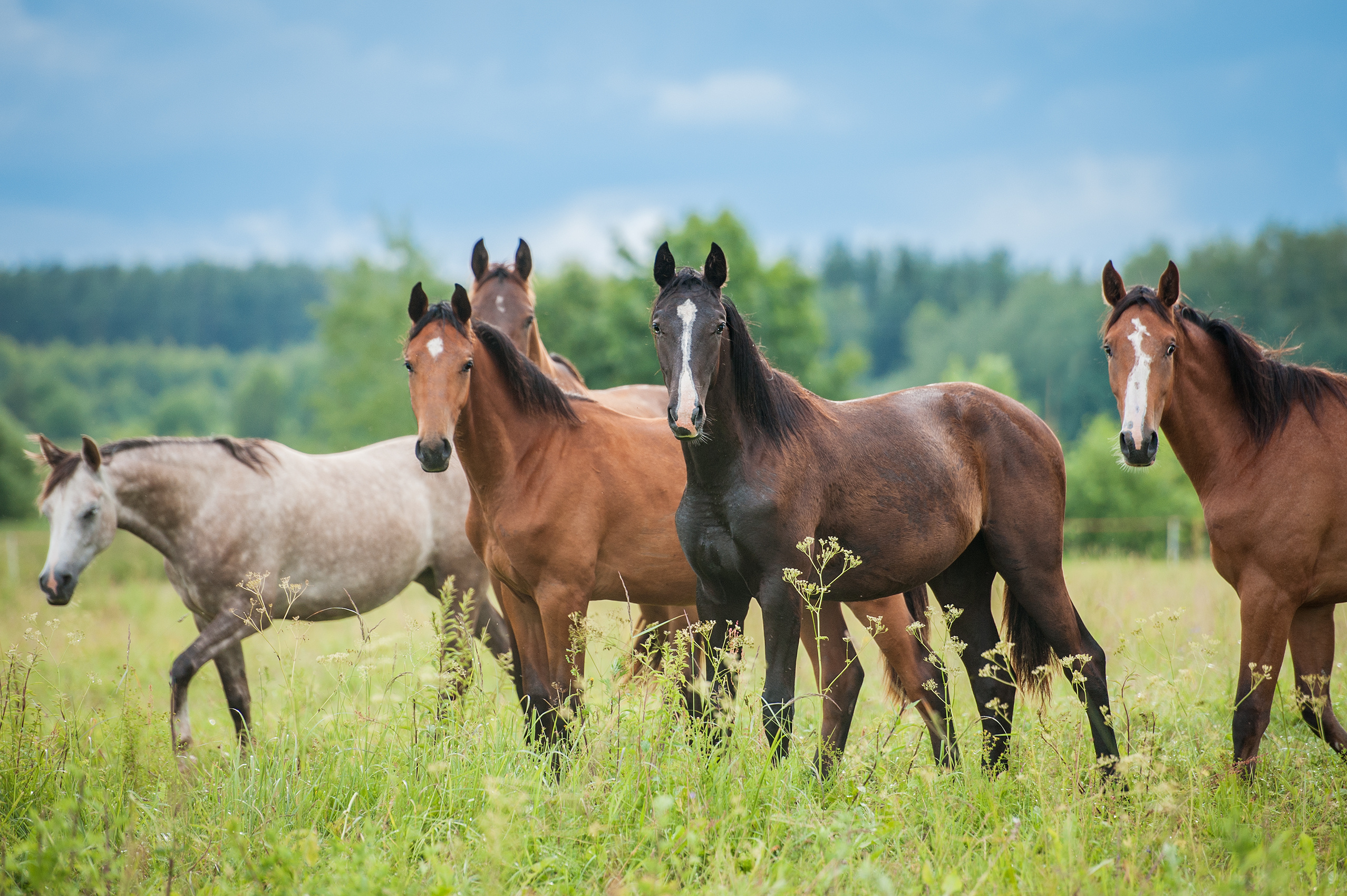
© Adobe Stock / Rita Kochmarjova
Key Takeaways
-
Fresh pasture grass contains high levels of biologically active natural vitamin E. Hay loses most of it within weeks of cutting.
-
Horses store fat-soluble vitamins including vitamin E in liver and fat tissue. Summer grazing builds reserves that carry into winter.
-
A horse with normal summer pasture access is very unlikely to be vitamin E deficient.
-
Horses without any grass access – laminitis cases, horses in full box rest, horses on heavily overgrazed yards – are the realistic candidates for supplementation.
-
Synthetic vitamin E (dl-alpha-tocopherol) has significantly lower bioavailability than natural vitamin E (d-alpha-tocopherol). If you supplement, form matters enormously.
-
High-dose antioxidant supplementation in horses with adequate vitamin E status may actively work against training adaptation – a physiological mechanism well established in exercise science.
Vitamin E is genuinely important for horses. It protects muscle cells from oxidative damage, supports immune function and plays a role in neurological health. It's also one of the nutrients that really does decline sharply in dried forage. So far, so agreed.
Where the story gets more complicated is what happens when horses have access to fresh grass – and how much of a seasonal buffer that actually creates.
What pasture actually provides
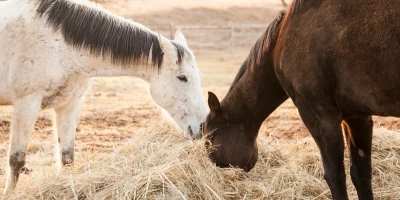
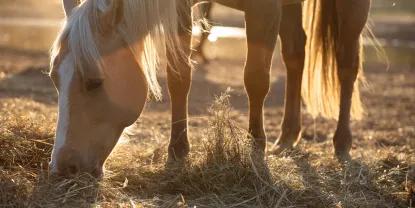
Fresh growing grass contains between 45 and 400 IU of vitamin E per kg of dry matter, depending on the species, maturity and season – with actively growing spring and summer grass consistently at the higher end of that range. To put that in practical terms: a 500kg horse consuming 10kg of dry matter per day from good quality pasture takes in somewhere between 500 and 2,000 IU of natural alpha-tocopherol daily. The NRC maintenance requirement for a 500kg horse is around 500–1,000 IU per day. In other words, a horse with unrestricted access to healthy, actively growing pasture can meet its entire daily vitamin E requirement in a matter of hours of grazing (1.5 - 5hrs per day, depending on pasture quality) – and will typically exceed it comfortably throughout the grazing season.
Unlike hay, which can lose up to 80% of its vitamin E content within weeks of harvest and up to 90% over a full storage season, pasture delivers vitamin E in the most biologically active form – natural RRR-alpha-tocopherol – which is the form horse tissues absorb and utilise most efficiently.
Fat-soluble vitamins are stored. A horse that grazes freely through spring and summer into autumn accumulates vitamin E in its liver and adipose tissue. Those reserves don't disappear overnight when winter arrives. Research shows a clear seasonal pattern in plasma vitamin E concentrations, with values peaking in summer in horses on pasture and declining over winter – but in horses with adequate summer grazing, levels typically remain within the adequate range throughout a normal UK winter on good quality hay.
Natural versus synthetic vitamin E: why the form matters
Not all vitamin E supplements are equal, and this is a point that matters practically if supplementation is genuinely indicated. A peer-reviewed study in exercising horses (Fagan et al., 2020, Journal of Equine Veterinary Science, 91:103103) compared three groups: horses receiving 1,000 IU of synthetic vitamin E (dl-alpha-tocopherol), 4,000 IU of synthetic vitamin E, or 4,000 IU of natural vitamin E (RRR-alpha-tocopherol) over a six-week training protocol. Natural vitamin E produced a 77% increase in serum alpha-tocopherol, compared to 33% for high-dose synthetic and only 23% for low-dose synthetic. The natural form also resulted in lower markers of oxidative damage and lower inflammatory cytokine activity.
The reason for this difference lies in molecular structure. Natural vitamin E exists as a single stereoisomer (RRR-alpha-tocopherol), which is the form horse tissues recognise and use most efficiently. Synthetic vitamin E is an equal mixture of eight stereoisomers, of which only one – at 12.5% of the total – is the biologically preferred RRR form. Doubling the dose of synthetic vitamin E cannot compensate for this structural disadvantage. Synthetic vitamin E dominates commercial feeds and supplements because it is cheaper and has a longer shelf life – not because it works better. If supplementation is indicated, natural vitamin E is the only form worth using.
Why antioxidant supplementation can work against training adaptation
There is a physiological argument against routine high-dose vitamin E supplementation in sport horses that is well established in exercise science but rarely discussed in equine nutrition. Free radicals produced during exercise are not purely damaging – they also act as signalling molecules that trigger the cellular adaptations to training: mitochondrial biogenesis, upregulation of endogenous antioxidant enzymes, and improved oxidative capacity in muscle fibres. When exogenous antioxidants are supplemented in high doses, they can blunt these redox-sensitive signalling pathways, interfering with the very adaptations that make training effective.
A double-blind, randomised, controlled trial in humans (Paulsen et al., 2014, Journal of Physiology, 592:1887–1901) found that vitamin C and E supplementation hampered the endurance training-induced increase in mitochondrial proteins critical for muscular endurance, despite subjects training identically to the placebo group. A 2020 review (Braakhuis & Hopkins, International Journal of Environmental Research and Public Health, 17:8452) concluded there is convincing evidence that vitamins C and E, alone or in combination, blunt skeletal muscle adaptations to endurance training. The authors noted that while supplementation does not appear to reduce VO2max directly, the cellular machinery that underpins long-term conditioning is measurably compromised.
The mechanism is not species-specific. Horses depend on exactly the same redox-sensitive signalling cascades to build oxidative capacity and mitochondrial density during training. Routinely supplementing vitamin E in horses with adequate status from pasture access may therefore work against the training process rather than supporting it.
Who actually needs supplementation
The horses who genuinely benefit from vitamin E supplementation are those with little or no access to fresh grass year-round: horses confined to grass-free paddocks or tracks due to laminitis or metabolic conditions, those in intensive training with very high oxidative demand and no pasture access, horses on heavily overgrazed or predominantly bare paddocks, and horses showing clinical signs of deficiency such as muscle weakness, poor recovery or neurological symptoms including equine motor neuron disease (EMND).
For a horse with reasonable summer turnout and decent winter hay, routine high-dose vitamin E supplementation adds cost without adding meaningful benefit – and in actively trained horses, may be counterproductive.
Sources
Fagan MM, Harris P, Adams A, Pazdro R, Krotky A, Call J, Duberstein KJ. Form of vitamin E supplementation affects oxidative and inflammatory response in exercising horses. Journal of Equine Veterinary Science. 2020;91:103103. DOI: 10.1016/j.jevs.2020.103103
Paulsen G et al. Vitamin C and E supplementation hampers cellular adaptation to endurance training in humans. Journal of Physiology. 2014;592(8):1887–1901. DOI: 10.1113/jphysiol.2013.267419
Braakhuis AJ, Hopkins WG. Antioxidants and Exercise Performance: With a Focus on Vitamin E and C Supplementation. International Journal of Environmental Research and Public Health. 2020;17(22):8452. DOI: 10.3390/ijerph17228452