
Is your horse too fat, too thin, or at an ideal weight? Dr. Christina Fritz explains why the eye, the scale, and the Body Condition Score can be misleading.
Read articleEMS, MIM, Laminitis: Understanding Carbohydrates in Feed
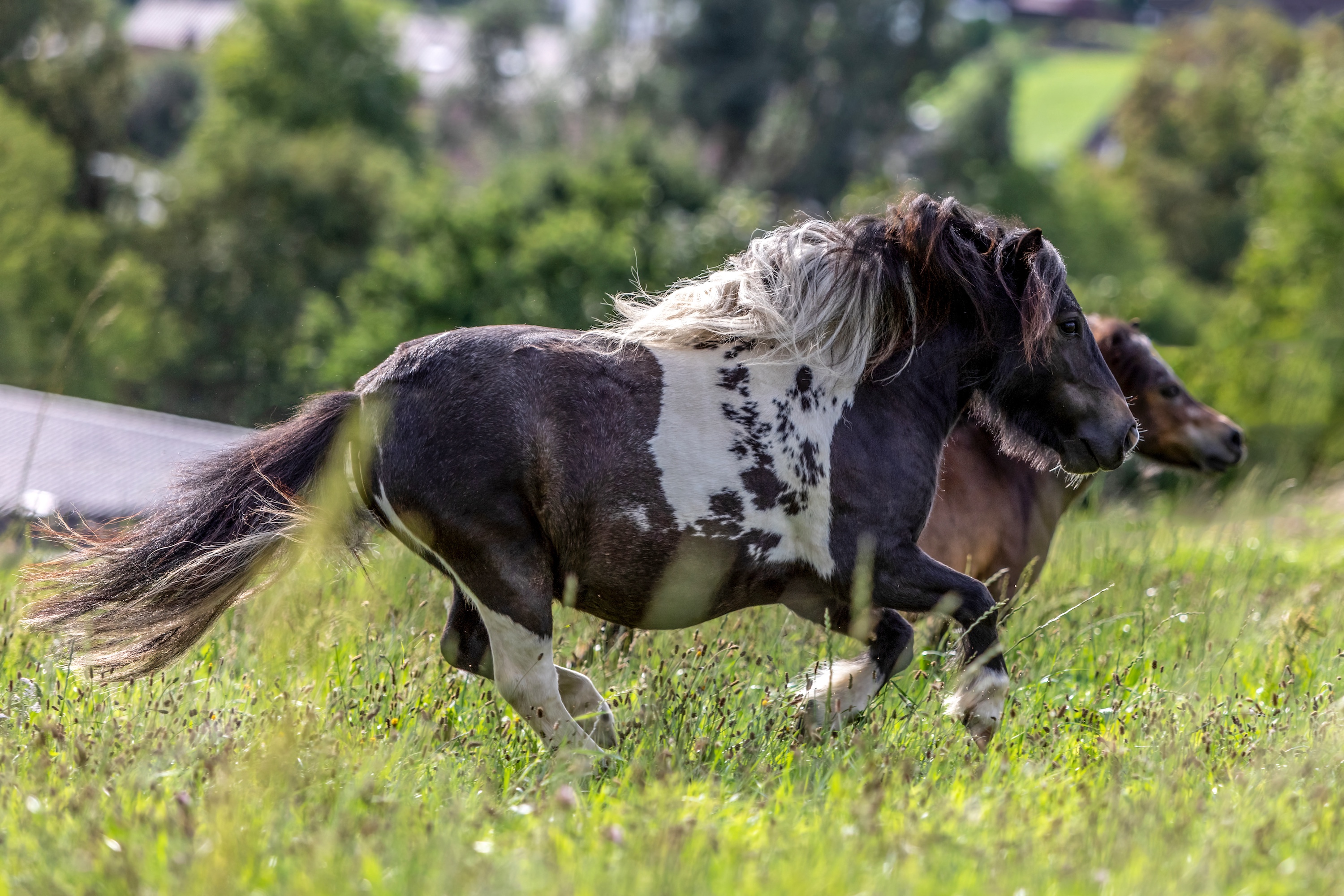
© Adobe Stock / Annabell Gsödl
This article was translated using AI.
The Essentials in Brief:
- Not all carbohydrates are the same: Depending on their type, they affect blood sugar, the gut, and metabolism in completely different ways.
- Sugar and starch drive up blood sugar – this is the central problem in EMS and insulin dysregulation.
- Fructans, inulin, and stachyose are rapidly fermented in the cecum – this can trigger cecal acidosis and laminitis.
- Pectins also ferment very quickly in the cecum – dysbiosis is a risk here too if consumed in large quantities.
- Cellulose is the only fiber that is fermented slowly and in a controlled manner, providing healthy volatile fatty acids.
- Lignin is almost indigestible: Horses that primarily eat straw literally starve on a full stomach.
- Many "fat horses" do not have true EMS, but rather pseudo-EMS – yet carbohydrates remain the decisive lever for them too.
Why Carbohydrates Are Such a Big Topic
Hardly any topic in horse nutrition is misunderstood as often as carbohydrates. The common simplification is: "Low sugar = good, high fiber = good." This is true – but only roughly. Not every sugar is equally problematic, not every fiber is equally harmless, and the effect depends decisively on where in the digestive tract a carbohydrate is processed.
For horses with EMS, pseudo-EMS, a history of laminitis, or muscle metabolism disorders such as MIM / PSSM, this knowledge is not a "nice-to-have" – it is the foundation of every sensible feeding decision.
Carbohydrate Types and Their Effects on the Horse
Sugar and Starch → Blood Sugar Rises
Simple sugars (glucose, fructose, sucrose) and starch from grain are digested in the small intestine and absorbed directly into the blood. Blood sugar levels rise – the pancreas secretes insulin. In horses with insulin dysregulation, however, the cells no longer respond adequately to this signal: blood sugar remains elevated, the pancreas produces more and more insulin – a vicious cycle that can lead to obesity and/or laminitis in the long term.
It is also important to know: Starch has a limited capacity for digestion in the small intestine. What is not processed there travels further into the cecum – with the same consequences as other non-small-intestinal-digestible polysaccharides such as fructans.
Particularly relevant for: Horses with insulin dysregulation, history of laminitis, MIM/PSSM spectrum, obesity as EMS or pseudo-EMS.
Where they occur: Grains (corn, wheat, barley, oats...), mueslis and other concentrates, also as hidden sugars in grain-free compound feeds, succulent feeds (apples, carrots in larger quantities), fresh pasture grass, hay from high-yield meadows.
Fructans, Inulin, Stachyose → Rapid Cecal Fermentation
The horse cannot digest these carbohydrates enzymatically at all – they reach the cecum (caecum) undigested. There, they are fermented extremely quickly by microorganisms. The problem: this produces large quantities of organic acids, the pH value in the cecum drops rapidly – cecal acidosis occurs. Acid-forming bacteria displace the beneficial inhabitants of the large intestine, the intestinal wall becomes inflamed and permeable, and endotoxins enter the blood. The result: dysbiosis, systemic inflammation – and, with a corresponding predisposition, laminitis.
Fructans are considered a major trigger of pasture laminitis in autumn and winter. Their content in grass fluctuates significantly – it is particularly high after sunny days and cold nights, as well as during drought stress.
Particularly relevant for: All horses – not just high-risk horses.
Where they occur: Fructan in fresh pasture grass (fluctuates strongly depending on season and time of day), in significantly smaller amounts also in hay; inulin in many roots such as Jerusalem artichoke or chicory, and stachyose in soybeans.
Pectins → Also Fast Fermentation in the Cecum
Pectins are often referred to as "good fiber" – but that is only partially true. They ferment in the cecum somewhat more slowly than fructans, but still significantly faster than cellulose. In large quantities, this can also lead to malfermentation, rapid pH reduction, and dysbiosis, with all the consequences we also see with fructan or stachyose.
Particularly relevant for: All horses – especially those receiving beet pulp as a roughage substitute.
Where they occur: Beet pulp (including unmolassed!), young grass, second or third cut hay, apples, carrots.
Cellulose, Hemicellulose → Slow Fermentation = Healthy Energy
Cellulose and hemicellulose are the horse's most important energy sources – and they function exactly as the horse's digestive tract has learned over millions of years. In the large intestine, they are fermented slowly and in a controlled manner by specialized microorganisms. This produces volatile fatty acids (primarily acetate, propionate, butyrate) – the horse's actual primary source of energy. No blood sugar spike, no insulin surge, no risk of dysbiosis or acidosis in the large intestine.
This is the reason why good hay is the basis of any species-appropriate feeding – and why concentrates cannot replace this basis.
Particularly relevant for: All horses.
Where they occur: Good hay, fiber-rich grass (not too young!), straw (in moderation).
Lignin → Indigestible: Filling Without Energy
Lignin is the "lignification" of plant fiber. It can be broken down efficiently neither enzymatically nor microbially in the horse's gut – the body therefore gets practically no energy from it. This means: a horse that primarily receives straw instead of hay has something in its stomach all day – but it "starves" nonetheless because the energy intake is insufficient. Straw is therefore only suitable as a supplementary filler for horses that really need to be set at a very low calorie level – and even then only in combination with good hay and a carefully adjusted mineral supply.
Where it occurs: Straw, over-mature hay, branches, twigs, tree trunks, stable structures.
Who Needs to Watch What?
Horses with MIM / PSSM Spectrum
For these horses, blood sugar is the focus: sugar and starch are the central problem. The muscles have a problem with energy from glucose – they need volatile fatty acids from cellulose digestion instead. Concentrates and grains have no place here; the sugar content of hay and pasture grass must also be strictly monitored.
Horses with Insulin Dysregulation
Sugar and starch are also the main problem here – because of their direct effect on blood sugar and insulin balance. But fructans and pectins in large quantities are also relevant, as a disturbed intestinal flora further fuels insulin dysregulation.
Horses with EMS or Pseudo-EMS
Many overweight horses labeled as having "EMS" actually have pseudo-EMS – i.e., excessive lymph accumulation. Hindgut dysbiosis, KPU, hormonal imbalances, or insulin resistance are possible causes. Horses with EMS, on the other hand, suffer from excessive fat deposits. These are due to excessive energy intake, so the starch and sugar, as well as the protein content of the ration, must be examined more closely. EMS candidates can also have insulin resistance at the same time, whereby both clinical pictures can reinforce each other.
For horses with EMS or pseudo-EMS, as for all horses: energy must come from the volatile fatty acids of cellulose and hemicellulose fermentation in the large intestine. All other carbohydrates are problematic.
Horses with a History of Laminitis
Both the blood sugar pathway (sugar/starch → insulin dysregulation → lamellar ischemia) and the pathway via large intestine disorders (fructans/inulin/stachyose/pectins → cecal acidosis → endotoxins → inflammation) can trigger laminitis. Both pathways must be monitored simultaneously.
Feedstuffs at a Glance
|
Feedstuff |
Dominant Carbohydrate Type |
Evaluation |
|
Good hay (analysis!) |
Cellulose |
✅ Basis of feeding |
|
Straw |
Lignin |
⚠️ Only as a filler, never as main feed |
|
Beet pulp (unmolassed) |
Pectins |
⚠️ to ❌ better not to feed, especially with a tendency toward dysbiosis |
|
Pasture grass (young, stressed) |
Fructans, sugar |
⚠️ to ❌ Consider time of day and season, monitor risk horses strictly |
|
Hay with high sugar or NSC |
Sugar, (fructans) |
⚠️ Have hay analyzed! If sugar values are high, obtain different hay or soak out the sugar. |
|
Grains (oats, corn, wheat, barley) |
Starch (high) |
❌ Unsuitable for all high-risk and metabolic horses |
|
Muesli / Concentrate / Compound feed |
Starch + Sugar |
❌ Not suitable |
|
Beet pulp (molassed) |
Pectins + Sugar |
❌ Pectin and sugar content too high |
What Does This Mean in Practice?
Have hay analyzed. The sugar and fructan content in hay varies considerably – depending on the cutting time, weather, and storage. An analysis is not optional for high-risk horses; it is mandatory. Target value: sugar always below 10% in dry matter, optimally below 6%.
Cut out grain, muesli and other concentrates. Without exception, not even "just a handful".
Beet pulp is problematic. Even unmolassed beet pulp contains high levels of pectins that ferment quickly. Therefore, it is better to avoid them to prevent dysbiosis.
Use straw correctly. Useful as a supplementary filler for obese (EMS) horses – but never as the main feed, never instead of hay, and always with an adjusted protein and mineral supply.
Grazier with a plan. Fructan levels are highest in the morning and after cold-sunny periods. Sugar levels can rise dangerously high on sunny days. It is better to let high-risk horses onto the pasture only from midday, with a grazing muzzle – or not at all.
Not All Carbohydrates Are the Same – and This Can Save Your Horse's Life
Anyone who truly understands carbohydrates in horses stops looking only at numbers on the feed bag. What matters is where in the digestive tract a carbohydrate is utilized, how quickly it is processed there – and whether the horse's body can handle it. For horses with EMS, pseudo-EMS, a history of laminitis, or muscle metabolism disorders such as MIM or PSSM, this is no small matter. It is the difference between sick and healthy.