This article was translated using AI.
Every year in spring and autumn, the number of Cushing's diagnoses increases disproportionately. More and more horse owners are unsettled about whether their horse's coat is still normal or already pathological, whether all horses over 20 have Cushing's anyway, and these uncertainties are all too often fueled by diagnoses that are not always reliable.
In this context, Cushing's in the sense of PPID (Pituitary Pars Intermedia Dysfunction, i.e., "true" Cushing's) remains a very rare disease in very old horses.
Much more common is "Pseudo-Cushing," i.e., horses that show symptoms of a Cushing's horse but which are not due to a pituitary adenoma. This is because the visible symptoms are only an expression of a dysregulated adrenal gland that permanently secretes too many glucocorticoids, i.e., the body's own cortisol. This is responsible for the symptoms.
The adrenal glands are not only controlled by the pituitary gland but also play a role in many other hormonal processes. For example, stress is one of the most important factors that leads to an increased release of such glucocorticoids in horses, which – in the case of long-term stress – can trigger symptoms of a Cushing's horse over time.
The stress can come from both "outside" and "inside." External factors that can cause permanent stress include, for example:
– unsuitable housing (too large an open stable group, too much change / unrest in the group, high or low ranking position, lack of bedding and thus sleeping options, and much more)
– unsuitable feeding or feeding management (too long breaks between roughage, too few roughage feeding places, roughage automatic feeders with insufficient frequency options, high concentrate feed doses, non-species-appropriate feed such as haylage or structural chaff, and much more)
– over- or under-challenging by the rider
– unsuitable saddle, pressing harness, incorrectly buckled bridle, incorrect hoof trimming, and much more
But internal factors can also cause stress. These include, among others:
– permanent pain (unrecognized gastric ulcers, "sensitive" walking which is actually subliminal chronic laminitis, saddle or harness pressure, unrecognized dental problems, back pain due to wrong equipment or wrong riding style, and much more)
– thermal stress (if the horses are not able to adequately regulate their heat balance, which can be the case with both very old horses and those that are blanketed and/or clipped)
– high internal tension in insecure or anxious horses or those with a high proportion of Thoroughbred blood, especially in combination with unfavorable group composition
– metabolic dysfunctions (unrecognized insulin resistance, undiagnosed detoxification disorders, dysregulation in the hormone or mineral balance, and much more)
If a horse is under permanent stress for one reason or another, this stress causes the pituitary gland to release the hormone ACTH (Adrenocorticotropic Hormone) to an increased extent. It controls the adrenal glands in such a way that it stimulates the release of glucocorticoids. These, in turn, cause the visible Cushing's symptoms.
For this reason, the ACTH value is not a diagnostic measure for the presence of PPID!
A horse that is in pain due to a laminitis flare-up or is suffering from thermal stress because it is still wearing a thick winter coat but the weather today happens to be warm spring weather, will automatically also have high ACTH. This has nothing to do with it having true Cushing's!
Especially in spring, laminitis flare-ups can also occur for completely different reasons. The possible causes for such spring laminitis range from access to fructan- or endophyte-rich grass (e.g., under the fence or thrown over the fence by well-meaning passers-by) to detoxification disorders that trigger laminitis symptomatically due to the additional strain of the coat change.
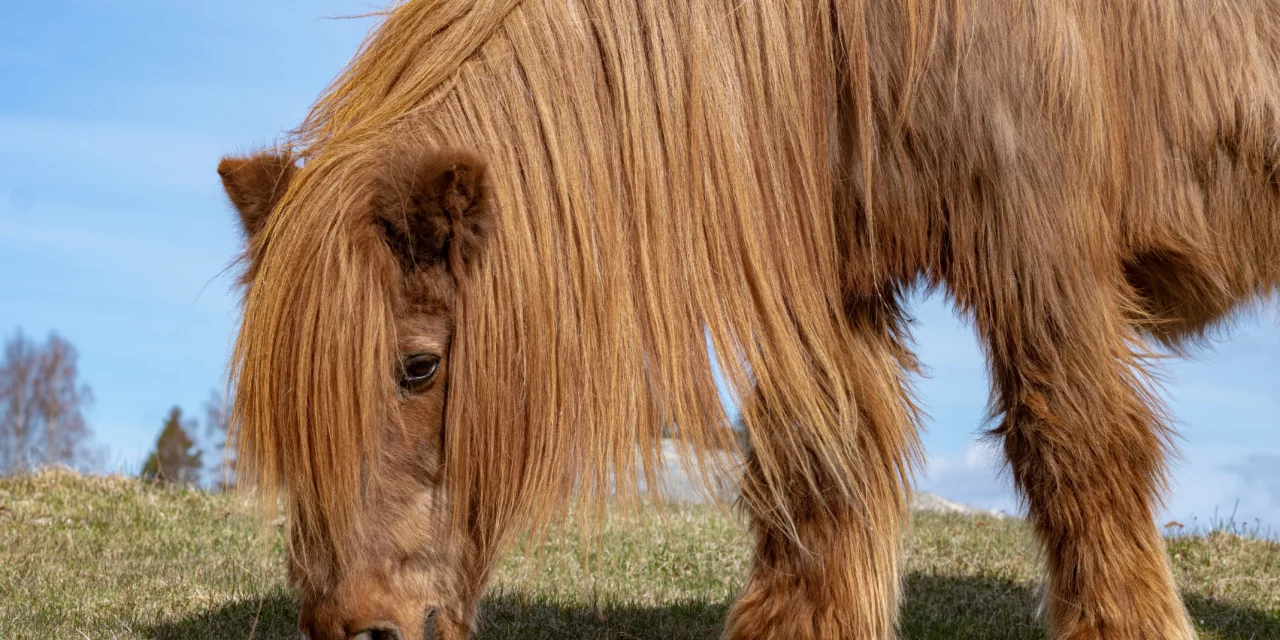
In addition, many horse professionals today no longer have a feeling for what a "normal" winter coat is. The trend of wrapping horses in thermal blankets as early as possible before winter ensures that such horses naturally no longer form a normal winter coat – a desired effect for the rider.
You can hardly find a stable where all horses stand in the paddock without a blanket. Even in open stables, blanketing is now done enthusiastically, and sometimes clipping is done underneath. No wonder then that a horse in open stable or cold stable housing that does not wear a thermal blanket stands out with its thick coat.
In addition, older horses form more winter coat anyway (and often also have a denser summer coat) than younger horses. This is simply because they utilize their feed less effectively due to age and thus have less energy available for "heating." So they have to put on a "thicker jacket" for the winter, so to speak, and they keep it on until not only the days but also the nights are constantly warm.
Therefore, in mixed-age groups in spring, it can always be observed that the very young and the very old horses are the last to lose their winter coat. This has nothing to do with Cushing's but is a completely normal coat change behavior. As long as an old horse is still losing its winter coat (even if later and slower than its younger colleagues), it does not necessarily mean it has Cushing's.
So before mass Cushing's ACTH tests start again for horses over 20 with a proper winter coat, one should first take a deep breath and ask whether the horse actually shows the symptoms for it.
The typical symptoms include not only a dense coat, but above all one that no longer falls out and no longer stops growing. In the case of true Cushing's, you eventually have to clip the horses because the coat still won't fall out even at an outside temperature of 30 degrees.
Laminitis is also one of the symptoms, of course, but here you must rule out other causes of laminitis such as insulin resistance, fructan- or endophyte-rich grass, detoxification disorders, poisonous plants in the hay, etc., before you can include this in the diagnosis.
In Cushing's, brittle tendons are also an essential part of the clinical picture; the horses constantly suffer from tendon and suspensory ligament damage that heals only insufficiently.
Horses with Cushing's also lose more and more weight, even if hay cobs are offered ad libitum and even legumes (alfalfa, sainfoin) are included in the diet. This weight loss does not refer to the natural muscle breakdown that simply goes hand in hand with the fact that older horses are often no longer worked – or at least no longer as athletically.
Of course, this is also accompanied by back and croup muscle breakdown, but this is physiological and has nothing to do with pathological muscle atrophy caused by Cushing's. Furthermore, muscle breakdown must be seen in relation to feeding: A horse that can no longer chew hay in sufficient quantities due to its age will naturally also lose weight – quite independently of Cushing's. Therefore, care must be taken to supplement with hay cobs and, if necessary, legumes in good time.
Horses with Cushing's also have a significantly weakened immune system, which is reflected in an increased susceptibility to infections (cough, skin fungus, lice...) and a poor healing rate.
However, the older horses get, the weaker the immune system is by nature, so you don't have to immediately think of Cushing's just because the senior has a patch of skin fungus under the mane.
If a horse shows several of these symptoms, the next step is to ask whether it might be due to permanent stress (see above). You will often find something here. If the cause of stress is removed, e.g., if the senior is removed from the group overnight and put into a box where they can eat hay or hay cobs instead, the supposed Cushing's symptoms often disappear on their own.
Of course, chronic diseases such as insulin resistance, gastric ulcers, detoxification disorders, chronic laminitis, etc., must also be ruled out. If such underlying diseases are treated, this very often goes hand in hand with the disappearance of Cushing's symptoms.
Yes, there are more and more horses in our stables that have Cushing's according to the ACTH diagnosis. However, if you subtract all those cases where the ACTH is only increased due to acute (e.g., laminitis flare-up, thermal stress) or chronic stress (housing, feeding, pain, diseases), then Cushing's remains a very rare disease in very old horses.
Most horses are simply misdiagnosed here. If you provide targeted support in the right place, you can achieve a high quality of life again without suppressing symptoms with medication for the rest of their lives.
Once you have been given a diagnosis of "Cushing's" for your horse, whether from the vet or well-meaning fellow boarders, whether due to an ACTH value or just due to symptoms (thick coat, laminitis in winter...), you as the owner are often completely unsettled. Tablets or not? Wait and see or take action immediately? Will my horse die now if I do nothing?
First of all, a Cushing's diagnosis should not be assumed based on a single symptom (e.g., thick winter coat) alone. If a horse has a benign tumor on the pituitary gland (pituitary adenoma), then several symptoms always occur in parallel.
Thick winter coat, delayed coat change in spring, lethargy around the coat change, reluctance to move in winter, laminitis flare-ups outside of spring as well as muscle breakdown over the winter, polyuria and polydipsia can also have many other causes.
Diagnostically, the ACTH test is unfortunately not very meaningful, as ACTH – just like glucocorticoids ("body's own cortisol") – is subject to circadian, ultradian, and seasonal rhythms and there are also independent micropulses over the course of a day. Translated, this means: depending on which phase the blood is taken in, the value can be high or low. A one-time measurement is not meaningful here.
In addition, ACTH and cortisol are increased under stress. What triggers the stress does not matter. Whether it is stress from housing (bullying in the herd, too little roughage...), stress from the metabolism, e.g., due to insulin resistance, or stress because the vet is coming to take blood – in any case, an increased ACTH value will be measured.
Whether a horse actually has PPID (i.e., a pituitary adenoma) or whether it is a peripheral dysregulation of the hormonal system (Pseudo-Cushing, peripheral Cushing, Cushing-like syndrome), cannot currently be proven with a simple blood test. A clear diagnosis can only be made a) with a head CT scan under general anesthesia and clinical conditions, which is stressful for the horse and expensive for the owner, or as a necropsy – i.e., cutting open the horse and looking, which is only possible after the horse has died. In the first diagnostic case, the costs run into thousands of euros; in the latter case, it is too late for therapy.
But what does that mean for me as a horse owner now?
If my horse shows several symptoms pointing to Cushing's, then this first of all means that my horse has a permanently high cortisol level. This may be related to a pituitary adenoma, but it doesn't have to be. In most cases, the cause is to be found in a permanently increased stress level.
In this case, one should therefore first eliminate possible causes of stress – from housing and feeding to training. The topic of stress should not be taken lightly with an attitude like "well, he gets chased around a lot in the group, at least he moves" or "yes, I know they get way too little roughage, but there's just no other stable with an arena here, so he just has to live with it." For the horse, permanent stress means, just like for us humans, that at some point it gets burnout, and that can look like Cushing's in a horse.
That stress (incidentally, just like roughage breaks >4h) can cause gastric ulcers in horses is now known to most horse owners. Gastric ulcers are extremely painful and thus cause further stress. Laboratory diagnostics should also be used to clarify whether insulin resistance or a detoxification disorder is present. Both can also lead to Cushing's symptoms in the long run.
If something is found here, stress should be eliminated and any possible underlying diseases should be treated. In the vast majority of cases, the symptoms disappear within a few months. Horses that respond to these measures with improvement do not have PPID, because a tumor does not automatically regress just because housing or feeding is optimized or insulin resistance is treated. These are horses in which the increased ACTH and cortisol levels have other causes.
If the symptoms do not improve despite all optimization of feeding, housing, training, possible causes of pain, and possible metabolic diseases, but gradually get worse, then the presence of true PPID must be considered. In that case, the horse can usually be managed symptom-free over its final months of life by administering Prascend. Since the tumor continues to grow, however, the symptoms keep reappearing, whereupon the dose then has to be increased each time until the horse has to be euthanized.
Anyone who is unsure about their horse and first wants to take the path without Prascend can, for example, contact Dr. Patricia Wanas (patricia@wanashelp.at). She is a veterinarian and specializes in metabolic diseases in horses. In her experience, true PPID is still very rare. Most horses with a Cushing's diagnosis (including those with significantly increased ACTH values) that she has treated so far (without Prascend!) became completely healthy once the underlying causes of the stress were eliminated or treated (pers. comm.).