Low sugar, low starch – and yet dangerous insulin spikes? Find out here why pea protein for horses with EMS, insulin dysregulation, and laminitis risk is by no means harmless.
Read articleTeff Hay for Horses: Healthy Hay Alternative or Overrated Trend?
© Adobe Stock / alfredo430
This article was translated using AI.
The Most Important in Brief
-
Teff hay is obtained from teff grass, an annual, heat-loving sweet grass originally from Ethiopia.
-
In horse feeding, teff hay is primarily interesting due to its often low sugar and starch content.
-
Especially for easy keepers, overweight horses, or horses with metabolic problems, teff hay can be a possible forage option.
-
The nutritional values of teff hay vary greatly depending on location, cutting time, fertilization, weather, and processing.
-
Teff hay is usually a single-variety hay and therefore does not automatically replace the diversity of a good, species-rich meadow hay.
-
Without hay analysis, teff hay should not be categorically classified as "low sugar" or "metabolically suitable."
-
With long-term feeding of larger quantities, special attention should be paid to mineral supply, calcium balance, and an overall balanced ration.
Teff Hay for Horses: Why Everyone Is Suddenly Talking About It
Teff hay is appearing more and more frequently in the horse world as an allegedly ideal alternative to normal hay. Especially for horses with obesity, insulin resistance, EMS, a tendency to laminitis, or other metabolic problems, it is often recommended as a "low-sugar specialty hay." This sounds tempting at first, as many horse owners are familiar with the problem: available hay is often too high in energy, too rich in sugar, or simply too "rich" for easy keepers.
Nevertheless, it is worth taking a closer look. Because teff hay is not a magic diet feed, but first and foremost a forage made from a specific type of grass—a monoculture forage. How well or poorly it is suited for a horse depends not just on the name "teff," but primarily on the actual analysis, the quality, the cutting time, and the individual horse.
Caution is advised, especially with trends in horse feeding. What sounds like the perfect solution at first glance can have advantages and disadvantages in practice and is often more marketing than physiology. Teff hay can be a sensible option for certain horses. However, it is not automatically better than good, late-cut, species-rich hay.
What is Teff Hay?
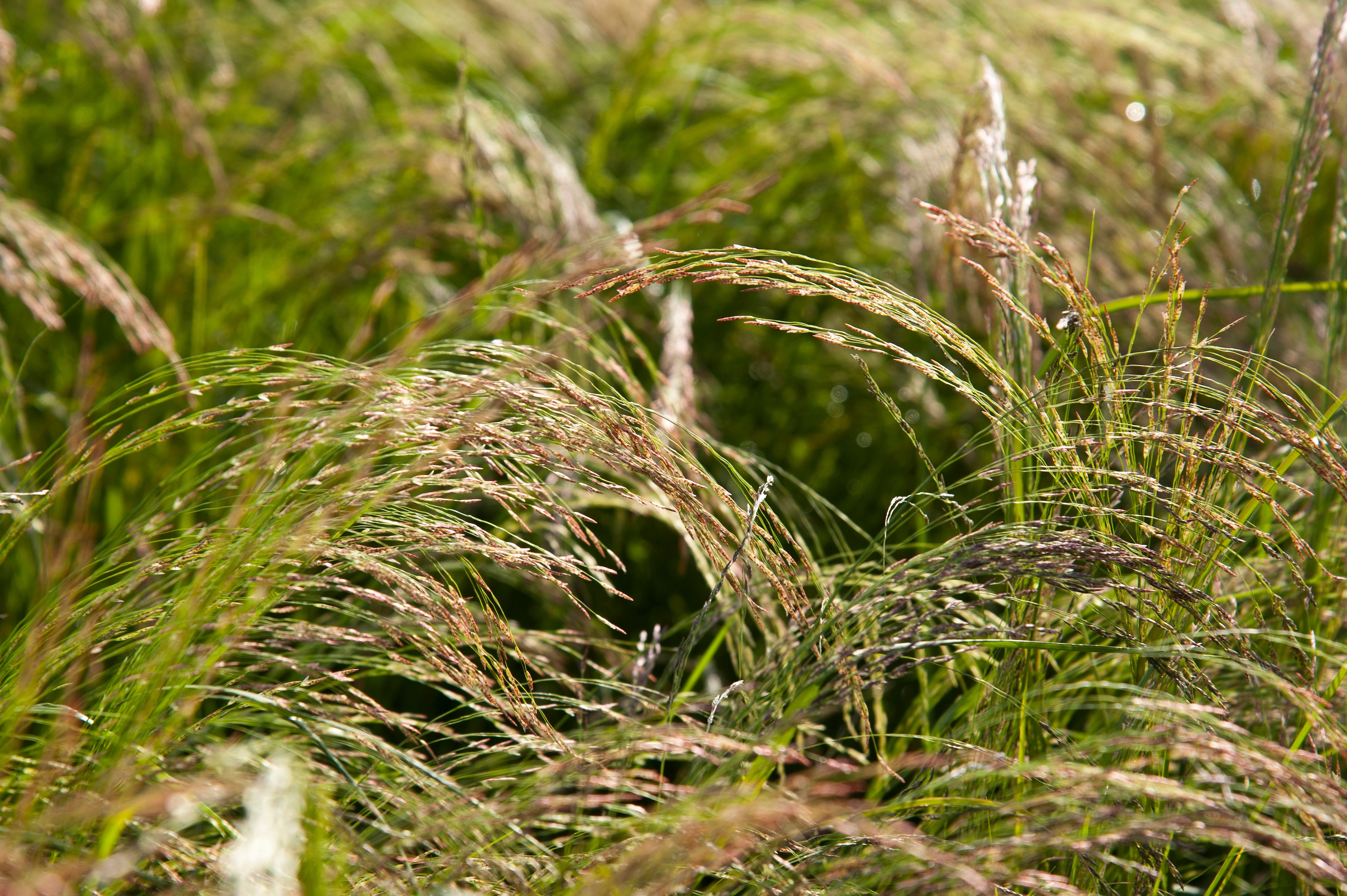
Teff hay is produced from teff grass. Botanically, it is Eragrostis tef, an annual sweet grass. Teff is known to many people as a gluten-free grain from Ethiopian cuisine. Traditionally, flour is made from the tiny teff grain, for example, for injera, the typical sourdough flatbread.
For horse feeding, however, it is not the grain that is decisive, but the entire plant, which is grown as green fodder, cut, dried, and processed into hay. Teff grass belongs to the heat-loving so-called C4 grasses. These plants are adapted to warm, dry conditions and can grow quickly under suitable climatic conditions.
In forage production, teff is interesting because it can provide a yield relatively quickly in warm regions and can be cut multiple times. It is used as a forage plant in the USA, South Africa, Australia, and increasingly in regions with warm summers and mild winters. For Central Europe, teff is not yet a classic standard grass for forage because it is heat-loving and reacts sensitively to cold and frost.
How is Teff Hay Produced?
Teff grass is sown as an annual forage plant. It grows particularly well in warm summer months and can be harvested relatively quickly under suitable conditions. Depending on the location, weather, and management, several cuts are possible. For hay production, the grass is mowed, dried, and then pressed into bales.
For the quality of teff hay, the same factors are decisive as for any other hay: cutting time, weather during drying, soil, fertilization, plant population, harvesting methods, and storage. An early cut usually provides a softer, more nutrient-rich hay with higher protein content. A later cut usually contains more structure but less protein and energy. Palatability can also change with the degree of maturity.
This means: Teff hay is not a standardized product. One bale of teff hay can have completely different values than that of another batch. The name alone does not tell you whether the hay is suitable for a metabolically sensitive horse.
Why is Teff Hay Produced for Horses?
The most important reason for the interest in teff hay is its reputation as a low-sugar and low-starch forage. Many horses today become overweight much more easily than in the past. They stand on nutrient-rich pastures, move little, and at the same time have genetically efficient feed conversion. For such horses, energy-rich hay can quickly become a problem.
Especially for horses with insulin resistance, EMS, or a tendency to laminitis, the content of easily soluble carbohydrates plays an important role. These include primarily sugar, starch, and other non-structural carbohydrates. In many analyses, teff hay actually shows lower values than some classic hay varieties from cooler climate zones. The University of Minnesota describes teff as tending to be higher in fiber and lower in non-structural carbohydrates and digestible energy than many legumes or grasses growing in temperate climate zones.
But this is exactly where the danger lies: in everyday life, "teff can often be lower in sugar" quickly becomes "teff is always low in sugar." This is not true. Teff hay can also have significantly different nutritional values depending on cultivation, cutting time, and harvest conditions. For metabolically sensitive horses, you should therefore never feed by the label, but according to analysis.
What Nutritional Values Does Teff Hay Have?
The nutritional values of teff hay can fluctuate significantly. Typically, teff hay is described as a fiber-rich, often lower-energy forage. Many analyses show moderate protein levels and comparatively low sugar and starch levels. This is precisely why it becomes interesting for easy keepers.
As a rough guide, teff hay can range around moderate crude protein, high fiber content, and often lower NSC values, depending on harvest conditions. NSC stands for "non-structural carbohydrates." These include primarily sugar, starch, and fructans. For horses with metabolic problems, this value is particularly interesting.
In a study by Staniar and colleagues (Staniar, W. B., et al. "Voluntary intake and digestibility of teff hay fed to horses." Journal of animal science 88.10 (2010): 3296-3303.), teff hay was fed to horses at various stages of maturity. It was shown that the cutting time and degree of maturity have a significant influence on nutrient composition, feed intake, and digestibility. Earlier cuts were better accepted and provided more usable nutrients than very late teff hay. The study is interesting because it shows: even with teff hay, it is not just the plant species, but primarily the harvest time that determines the feeding value.
In practice, this means: Teff hay should be analyzed just like any other hay. Without hay analysis, you do not know how much sugar, protein, energy, calcium, phosphorus, magnesium, zinc, copper, or selenium is actually in the feed.
Typical Nutrient Contents of Teff Hay as a Guide
|
Parameter |
Teff Hay Orientation Values |
Classification for Horses |
|
Dry Matter |
approx. 90–93 % |
Corresponds to normally dry hay |
|
Crude Protein |
approx. 9–21 % in DM, average approx. 14–15 % |
Usually exceptionally high, which is problematic for easy keepers (obesity, EMS); hay usually has 6-9% crude protein content |
|
Crude Fiber |
approx. 33–34 % in DM |
High-structure forage, comparable to late-cut hay |
|
NDF |
approx. 51–68 % in DM, average approx. 57 % |
High fiber content; very high values can reduce intake and digestibility |
|
ADF |
approx. 32–40 % in DM, average approx. 36 % |
Usually within a usable range for horses; higher values mean lower digestibility |
|
Starch |
approx. 0.6–1.5 % in DM |
Generally very low, in the range of hay or slightly above |
|
NSC |
in one horse study approx. 5.4–8.4 % in DM; other data show approx. 8–12 % |
Can be low, but do not assume blindly, as values can rise to 12%, placing it in the range of high-sugar hay |
|
Calcium |
approx. 0.43–0.56 % in DM |
Usually moderate |
|
Phosphorus |
approx. 0.20–0.37 % in DM |
Usually moderate |
|
Calcium-Phosphorus Ratio |
approx. 2 : 1 in one horse study |
Generally suitable, but must fit the overall ration and is significantly tighter than in hay (usually 4:1 - 6:1) |
|
Magnesium |
approx. 0.16–0.17 % in DM |
Generally normal to moderate |
|
Potassium |
approx. 1.6–2.2 % in DM |
Can be relevant depending on the batch, e.g., for specific conditions |
|
Zinc |
approx. 23–29 mg/kg DM |
Not sufficient for the needs of many horses |
|
Copper |
approx. 8–11 mg/kg DM |
Often not sufficient to meet requirements |
|
Manganese |
approx. 98–250 mg/kg DM |
Fluctuating, often relatively high |
|
Iron |
approx. 83–237 mg/kg DM |
Highly variable |
Is Teff Hay Really Low in Sugar?
Teff hay can be low in sugar. But it doesn't have to be. This is the most important point if teff hay is to be used as a specialty hay for metabolically sensitive horses.
The sugar content of hay is not determined solely by the type of grass. The time of day of cutting, solar radiation, temperature, drought stress, fertilization, degree of maturity, and drying also play a role. Teff hay from unfavorable harvest conditions may be unsuitable for a sensitive horse. In contrast, a late-cut, species-rich meadow hay can certainly have lower sugar levels than expected.
For horses with EMS, insulin resistance, a tendency to laminitis, or significant obesity, there should therefore always be a hay analysis available, regardless of whether it is teff hay, seeded hay, or normal hay: sugar values can fluctuate significantly depending on the population, cutting time, and weather, and for easy keepers, a low sugar content is particularly important.
The sentence "My horse is getting teff hay, so it's safe" is therefore too simple. A correct statement would be: "My horse is getting analyzed teff hay, whose values match its needs."
Crude Protein in Teff Hay: Not Automatically "Lean" Hay
One point is often underestimated with teff hay: the protein content can be significantly higher than what is known from many late-cut, rather nutrient-poor horse hay varieties. While normal horse hay in practice usually lies in the range of 6 to 9 percent crude protein, teff hay can be significantly higher depending on the cutting time, location, and fertilization. Especially early cuts can be comparatively rich in protein.
This is important because teff hay is often perceived as "light," "lean," or "suitable for dieting." This assessment usually refers to the sugar or starch content, not automatically to the protein content. A hay can therefore be relatively low in sugar and still have a "rich" crude protein content.
For many healthy horses, a slightly higher protein content is not a problem at first, as long as the overall ration fits and sufficient exercise, water, and minerals are available. For easy keepers, overweight horses, or horses with metabolic problems, however, you should look more closely. Because if teff hay is fed in large quantities, the daily protein intake can be significantly higher than expected, which can manifest in weight gain and kidney problems.
Even more important is the classification for horses that are deliberately supposed to receive a rather nutrient-poor forage. This includes, for example, very easy-keeping ponies, horses with low workloads, or horses where weight loss is aimed for. Here, teff hay is not automatically the "lean" solution just because it is advertised as a specialty hay. The actual analysis of the batch is always decisive.
In practice, this means: With teff hay, you should look not only at sugar, starch, and energy, but also at crude protein. Especially early, well-fertilized cuts can be significantly richer than expected. Later-cut teff hay is often more fibrous and can contain less protein, but depending on the stage of maturity, it is sometimes eaten and digested less well. Teff hay is therefore not a general diet hay, but a forage that, just like any other hay, must be evaluated based on its analysis.
© Adobe Stock / vprotastchik
Teff Hay Compared to Species-Rich Meadow Hay
A good, species-rich meadow hay continues to be the most sensible forage basis for many horses. It contains not only crude fiber, energy, and protein, but also a natural diversity of grasses, herbs, and different plant structures. This diversity can be valuable for occupation, feed intake, intestinal flora, and the supply of secondary plant substances. Horses are not pure grass eaters by nature, but prefer a very broad range of plants in their diet if they have the choice.
Teff hay, on the other hand, is usually a single-variety or very uniform feed. This is not a fundamental problem, but it makes a difference. A horse that receives exclusively teff hay gets a much more monotonous plant basis than a horse that eats good, species-rich meadow hay.
For metabolically sensitive horses, a suitable nutrient-poor teff hay can still be better than a high-sugar performance hay. But it does not mean that teff hay is fundamentally higher quality. It is more of a specialty ration component for specific situations.
The decisive question is therefore not: "Is teff hay better than normal hay?" The better question is: "Which hay fits this horse, its health, its metabolism, and its management?"
Possible Disadvantages of Teff Hay
Teff hay has advantages, but also points that should be viewed critically. The most important disadvantage is the often one-sided plant basis. A single-variety forage can be practical but does not offer the diversity of a good meadow hay.
Another point is mineral supply. As with other hay, trace elements such as zinc, copper, or selenium can be too low in teff hay, while others like manganese tend to be too high. However, this is not a specific teff problem but affects many batches of hay. Therefore, a suitable mineral feed always belongs with a good forage ration.
With teff, oxalates are also discussed. Oxalates can bind calcium and thus influence calcium availability. As a heat-loving C4 grass, teff is one of those plants where this point should be considered. This does not mean that teff hay is automatically dangerous. However, if long-term feeding of large quantities is planned, the calcium supply should be consciously checked and the overall ration appropriately balanced.
Acceptance can also vary. Some horses love eating teff hay, others sort it out or consume it less well, especially if it is late-cut, hard, or very stalky. Picky horses, seniors, or horses with dental problems often benefit more from well-structured meadow hay or, additionally, from low-sugar hay cobs.
Origin of Teff Hay: Regional Forage or Imported Goods?
Teff originates from the highlands of Ethiopia and Eritrea. There, the plant has been cultivated for thousands of years, primarily as a grain crop for human nutrition. As a forage for horses, teff grass later gained importance, especially in warm, drier regions, including the USA, Australia, and South Africa. In the USA, teff is grown in states such as Idaho and Nevada, both for grain use and as a forage plant.
In Germany, however, teff grass is not yet a classic standard forage. Although it can be grown here, it needs sufficiently warm conditions, is not winter-hardy, and is used more as an annual summer or catch crop on fields. German cultivation is therefore currently more of a specialty or niche cultivation and is not comparable to the availability of regional meadow hay.
For horse owners, this is also important from an ecological perspective. If teff hay does not come from regional or at least German cultivation, long transport distances, additional storage, and sometimes complex drying or processing steps may occur. Then one should soberly weigh whether the health benefits for the respective horse justify this effort.
For Which Horses Can Teff Hay Be Sensible?
Teff hay with suitable analysis values can be sensible for horses that need a lower-energy and lower-sugar forage but should still chew for a sufficiently long time. This includes primarily overweight horses, easy-keeping breeds, horses with EMS, insulin resistance, or a tendency to laminitis, as well as horses where the locally available meadow hay is regularly too high in energy.
It does not necessarily have to replace the entire hay ration. It is often more sensible to combine teff hay with suitable meadow hay or another analyzed forage to keep an eye on both energy intake and plant diversity.
Teff hay is less suitable as a blanket solution for all horses. The nutrient levels fluctuate too much for that, and each batch must be considered individually.
Feeding Teff Hay Correctly
Anyone wishing to feed teff hay should introduce it slowly into the ration. Even if it is "only" hay, a change in the type of forage always means an adjustment for the intestinal flora. Especially with sensitive horses, the exchange should be gradual over several days to weeks.
Before feeding, the hay should be checked sensorily: it should smell fresh, not be dusty, not moldy, and contain no foreign objects. Bales from imported goods or long storage should be checked particularly carefully. Teff hay is only a good horse feed if the hygienic quality is also correct.
A hay analysis is particularly useful. It should at least include energy, crude protein, crude fiber or fiber fractions, sugar, and starch. Only then can it be assessed whether this teff hay really fits the horse.
For metabolically sensitive horses, feeding should not be controlled by the type of hay alone. Exercise, body weight, pasture access, concentrated feed, treats, mineralization, and general management must also be taken into account. Low-sugar hay helps little if the horse simultaneously receives plenty of pasture grass, muesli, or high-sugar snacks.
Buying Teff Hay: What Horse Owners Should Look For
When buying teff hay, you should not only ask for the name. More important is specific information about the batch. This includes origin, cutting time, harvest year, storage, hygienic quality, and ideally a current analysis.
Especially with horses with metabolic problems, you should not rely on statements such as "suitable for horses with laminitis" or "guaranteed low sugar." Such information sounds good but does not replace laboratory values. The decisive factor is what is actually in the bale.
The price should also be classified realistically. Teff hay is often more expensive than regional meadow hay, especially if it is imported or marketed as a specialty hay. This can be justified if the quality and analysis are right. However, it is not automatically sensible to buy expensive teff hay if good, late-cut, analyzed meadow hay is available regionally.
Teff Hay Can Be Sensible – But Only with Analysis and Judgment
Teff hay is an exciting forage because it can often be high in fiber and comparatively low in sugar and starch. For easy keepers, overweight horses, or horses with metabolic problems, it can certainly be a sensible alternative or supplement to normal hay.
At the same time, the trend should be viewed critically. Teff hay is not an automatically healthy specialty feed. Nutritional values fluctuate, protein can be very high, which again makes it problematic for easy keepers, plant diversity is lower than with good meadow hay, and with long-term feeding, special attention should be paid to a balanced mineral supply.
The most important basis therefore remains the same as for any hay: check quality, perform analysis, observe the horse, and design the overall ration appropriately. Then teff hay can be a useful component. Without this control, it is just another fad feed with good marketing.