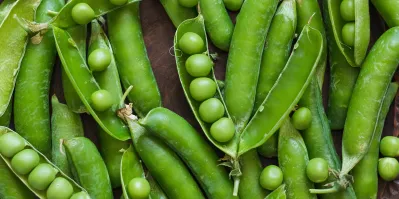
Low sugar, low starch – and yet dangerous insulin spikes? Find out here why pea protein for horses with EMS, insulin dysregulation, and laminitis risk is by no means harmless.
Read articleFeeding myths that harm your horse – and what is actually true
© Adobe Stock / Grubärin
Table of contentsclose
This article was translated using AI.
The most important things at a glance
-
Forage is the basis of every horse's diet – but without mineral feed and a salt lick, there is no complete supply.
-
Beet pulp does not make horses more muscular; instead, it causes them to retain water – making them look round, but not healthy.
-
Grain as concentrated feed for sport horses is an outdated model: starch promotes insulin resistance and hindgut problems.
-
Poor quality hay cannot be fixed by any supplement in the world – quality is irreplaceable.
-
Mash does not provide warmth – the horse's true heat source is fiber fermentation in the hindgut.
-
Year-round grazing sounds natural but is not in reality: without vast areas, meadows quickly become overgrazed and make horses sick.
-
Too little hay does not make horses slim, but sick – the solution is the right hay quality, not less forage.
-
Haylage is not the same as hay – the lactic acid it contains slowly changes the gut microbiome and can lead to fecal water, laminitis, and detoxification disorders.
Myth 1: "Forage alone is enough"
Hay correctly forms the foundation of every horse's diet. However: forage is rarely mineral-balanced. Depending on its origin, soil, and harvest time, important minerals and trace elements are often missing – or specific ones are present in excess, blocking the absorption of others. A high-quality mineral feed and a free-choice salt lick are therefore part of the basic supply for every horse. Not as a luxury, but as a necessity.
Myth 2: "Thin horses must be fed beet pulp"
Beet pulp is considered a classic means of putting weight on a horse. You do see results quickly – but unfortunately not the ones you hoped for. Beet pulp contains pectins that are rapidly fermented in the hindgut. This leads to an acidification of the intestinal environment; the horse absorbs more acids, which are then stored in the connective tissue. The body reacts with lymph retention to dilute the acids and stabilize the pH value. The horse looks rounder – but what you see is water, not healthy muscle mass. If you want to build up a thin horse, you should look for the cause: gut health, teeth, parasite load, hay quality – and if necessary, consult a nutritionist.
Myth 3: "Sport horses need plenty of concentrated feed"
For centuries, hard-working horses were given oats, barley, or corn – and indeed, grain provides quickly available energy. What was not known back then: the starch contained in grain is highly problematic for the equine gut. If undigested starch reaches the hindgut, it disrupts the microbiome and promotes dysbiosis, which makes the forage harder to utilize. Starch digested in the small intestine drives up blood sugar and thus insulin release – with long-term consequences for the metabolism. Insulin resistance, laminitis, and performance slumps can be the result. Modern equine nutrition for sport horses relies on starch-free, protein-rich, and fiber-rich energy sources – because research now clearly shows that this is the better choice.
Myth 4: "Supplements can compensate for poor hay quality"
That would be nice – but unfortunately, it is not true. Hay that is moldy, dusty, or has been stored too long harms the horse insidiously: it strains the respiratory tract, disrupts the gut microbiome, and releases mycotoxins. For the worst-case scenario – slightly moldy hay in a transitional situation – there are mycotoxin binders that can be added to the feed to mitigate the consequences in the short term. But this is not a permanent solution. Anyone who feeds their horse poor quality hay or haylage in the long run will see it get sick – no matter how many supplements are put in the trough. Quality in the basic forage is non-negotiable and cannot be replaced by anything.
Myth 5: "Mash warms the horse in winter"
A warm mash in winter feels caring – and that is exactly why this myth persists so stubbornly. However: traditional mash acts in the horse's body similarly to glucose in humans. It provides quick energy that dissipates just as quickly. Modern mash products are often nothing more than muesli mixed with water – with ingredients that one should preferably not give to a horse as mash or muesli. And warming? A mash certainly doesn't do that, even if it reminds us of the "stew" we appreciate in winter. The horse's body generates its heat through fiber fermentation in the hindgut – a process that lasts for hours and warms from the inside. Anyone who really wants to keep their horse warm in winter ensures they have hay around the clock so the microbiome can work optimally.
Myth 6: "Pasture is natural, so year-round is best"
Yes, horses are grazing animals. No, that does not mean that year-round grazing is species-appropriate in our latitudes. Wild horses use vast areas – we are talking about 20 hectares or more per animal – and return to the same spot on average only once or twice a year. This allows the soil and vegetation to recover. Our pastures are significantly smaller, used too intensively, and have no chance to regenerate. The result: compacted soil, overgrazed areas, altered plant communities – and within a few years, a stable full of horses with hoof problems, metabolic disorders, and intestinal diseases. The species-appropriate solution for densely populated areas is: close the pasture in winter, use a paddock with hay 24/7 – and in summer, use the pasture with care and breaks for the soil.
Myth 7: "Hay must be rationed for overweight horses"
This myth is not only wrong but can actively cause harm. Horses do not get fat from plant fibers – they get fat from too much sugar or too much protein in the feed. Rationing hay means: the horse stands for hours without food, the stomach still produces acid, the stress hormone cortisol rises – and cortisol increases blood sugar levels and thus insulin resistance and weight gain – a vicious cycle. So, you are doing the opposite of what you want. The actual question is not "how much hay," but "which hay." For easy keepers, the sugar content should be below 6%, for others a maximum of 10%. The crude protein content should be between 6 and 9% – if it is higher, the horse puts on fat. A hay analysis costs little and provides clarity. This allows every horse to be supplied in a species-appropriate way and without hunger – entirely without rationing.
Myth 8: "Hay or haylage – it's all the same"
It is not. Haylage is fermented grass, wrapped in plastic and preserved by lactic acid bacteria – the principle is the same as in sauerkraut production. The low pH value caused by the resulting lactic acid is not a side effect, but the actual preservative: it prevents the wrapped organic material from molding. So much for the technology. The problem: with every portion of haylage, you feed gigantic amounts of lactic acid and lactic acid bacteria into the digestive tract. Over time, these settle in the gut, lowering the pH value there and favoring acid-loving bacteria – at the expense of the natural intestinal flora, which quietly dies off under these conditions. What follows is not a dramatic acute illness, but a creeping imbalance: fecal water, laminitis, detoxification disorders like KPU – problems where many horse owners do not consider haylage as the cause for a long time. Good, dust-free hay in the right quality is and remains the better choice – for the gut, the metabolism, and long-term health.