Key points at a glance:
- Routine, non-targeted administration of dewormers promotes the development of resistance to common active ingredients.
- Targeted deworming based on regular fecal testing is the only sustainable form of parasite prevention.
- The principle is the same as with antibiotics: medication should only be used when an infestation has been confirmed—not as a precaution.
- Cooperation with a specialized laboratory and correct sample collection are essential for reliable results.
- Dewormers are not inherently harmful; they are indispensable tools when an infestation is confirmed.
- A targeted approach protects your horse’s gut flora and actively helps preserve the effectiveness of available medications.
Preventive health care is a core principle of modern horse management. For a long time, this included the fixed ritual of administering chemical dewormers twice a year—without testing. However, this routine has led to a serious problem that threatens overall equine health: resistance. Today we know that indiscriminate deworming not only places unnecessary strain on the horse, but also permanently undermines the effectiveness of the few medications still available.
The resistance dilemma: why routine deworming fails
A comparison with human medicine is helpful here. Just as with antibiotics, the more frequently chemical dewormers (anthelmintics) are used, the faster resistance develops. Imagine taking antibiotics twice a year simply because you mightget a bacterial infection—bacteria would quickly become resistant to all available drugs.
The same applies to horses:
- Not all worms are killed: with each deworming treatment, the strongest parasites—those naturally more resistant to the active ingredient—survive.
- They reproduce: these surviving worms multiply and pass their resistance on to the next generation.
- The drug becomes ineffective: the next time, the dewormer no longer works against this population—the medication is effectively “burned.”
Since hardly any new active ingredients are being developed, targeted (selective) deworming is the only sensible preventive strategy against this looming scenario.
Targeted prevention: fecal testing instead of the calendar
Selective deworming—also known as modern deworming—is based on regular fecal examinations. Treatment is only carried out when a relevant parasite burden has been confirmed and an appropriate active ingredient can be selected.
This approach offers decisive advantages:
- Protection of the horse: the horse is not unnecessarily exposed to chemical substances, and the sensitive gut flora remains intact.
- Resistance management: parasites are denied the opportunity to develop widespread resistance because only infected horses are treated.
- Preservation of medications: the few still-effective drugs remain available for real emergencies and heavy infestations.
What matters most: working with the laboratory
The success of selective deworming depends largely on correct implementation and analysis.
1. Proper sample collection
To obtain meaningful fecal test results, samples must be collected correctly:
-
Single sample or composite sample: consult your laboratory to determine which approach is appropriate.
For a single sample, collect one generous handful from a freshly passed manure pile. Use a plastic bag or dog waste bag as a glove, take the sample, then turn the bag inside out over your hand. Tie securely.
For a composite sample, collect one sample per day over three consecutive days. This is important for parasite species that do not shed eggs continuously, such as tapeworms. - Fresh and clean: collect manure immediately after it is passed. Avoid samples contaminated with sand, soil, or old bedding.
- Correct storage: label all bags and store them cool until shipping—ideally in a refrigerator. If that feels unpleasant, place them in a sealed plastic container used exclusively for fecal samples.
- Timing: eggs eventually hatch into larvae, which may no longer be detected by egg-count methods, leading to false-negative results. To avoid this, store samples for as short a time as possible. Ideally, collect the sample on Monday morning and mail it immediately so it reaches the lab by Tuesday, where it can be refrigerated and analyzed promptly.
2. A specialized laboratory
It is essential to send samples to a specialized veterinary laboratory experienced in equine parasitology. Only these labs can reliably identify different parasite species and accurately determine egg counts (EPG—eggs per gram) in order to make sound treatment recommendations.
The most important parasite species at a glance
Not all parasites pose the same level of risk. Effective prevention requires knowing the main players in order to tailor treatment accordingly.
| Parasite | Occurrence / Risk | Required measures |
| Small strongyles (Cyathostominae) | Very common. Larvae can encyst in the intestinal wall and cause severe colic. | Regular fecal testing and targeted deworming. |
| Large strongyles (Strongylus vulgaris) | Rare but very dangerous. Larvae migrate through blood vessels and can cause severe organ damage. | Usually detected through monitoring of small strongyles; once yearly larval culture recommended for safety. |
| Roundworms (Parascaris equorum) | A “juvenile disease.” Heavy infestations in young horses cause growth disorders and small-intestine impaction colic. | Fecal testing 4–6 times per year in horses up to 6 years old; adults usually develop resistance to reinfection, though eggs are still detected in routine tests. |
| Tapeworms (Anoplocephala perfoliata) | Common but generally less dangerous. Can occasionally cause colic and nutrient deficiencies. | Often missed in routine tests. Composite samples and targeted testing (e.g. ELISA or specialized fecal methods) once yearly and when suspected. |
Prevention is better than blind treatment
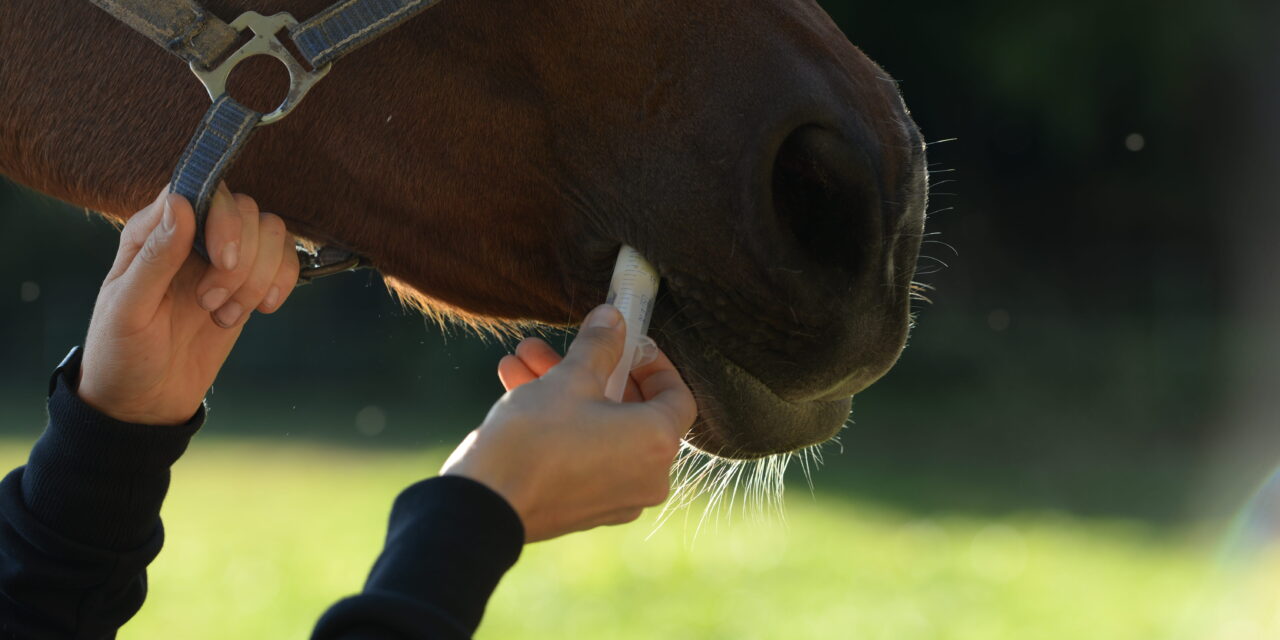
Chemical dewormers are indispensable medications when treating intestinal parasite infestations. However, they are not wellness products and not preventive in the sense of immunization.
By critically questioning routine “preventive” deworming and choosing targeted parasite management instead, horse owners act in the best interest of their own horses—and take responsibility for equine health as a whole. Selective deworming helps ensure that effective tools remain available in the fight against parasites. If you are unsure, discuss the approach with your veterinarian or therapist and take an active role in managing your horse’s preventive health care.