Key points at a glance:
- Auxiliary reins are pieces of equipment used in addition to the normal bridle to influence the horse’s posture or limit certain movements.
- A basic distinction is made between fixed auxiliary reins (such as side reins or draw reins attached to the girth) and those held in the rider’s hand (such as running reins).
- Every auxiliary rein was originally developed with a sensible intention—as a temporary aid for specific training situations.
- In practice, however, auxiliary reins are often misused, adjusted too tightly, or abused as a permanent solution, which explains the justified criticism of their use.
- When used correctly, auxiliary reins can be supportive in certain situations—but they never replace sound training and good riding.
Hardly any topic in the horse world is as polarizing as the use of auxiliary reins. For some, they are indispensable training aids; for others, tools of suppression. As is so often the case, the truth lies somewhere in between. Every auxiliary rein was originally developed for a valid reason: to support horses during specific stages of training, to correct certain issues, or to improve safety. The problem is not the tool itself, but how it is used. Incorrect adjustment, continuous use, or attempting to compensate mechanically for a lack of skill or training—these are the reasons why auxiliary reins are rightly viewed critically.
To use auxiliary reins sensibly—or to assess their use critically—it is first necessary to understand what they are, how they work, and what role they can (and should) play in horse training.
What are auxiliary reins? A definition
Auxiliary reins are pieces of equipment used in addition to the standard bridle to influence the horse’s head and neck position or to limit certain movements. They generally work through mechanical pressure or restriction and provide the horse with an external frame that facilitates certain postures while making others more difficult or impossible.
The term “auxiliary reins” is somewhat misleading, as strictly speaking they are not reins in the traditional sense—meaning a direct connection between the rider’s hand and the horse’s mouth through which fine, graduated signals can be given. Instead, they are auxiliary devices with different modes of action, which can have very different effects depending on their type and adjustment.
The two main categories: fixed vs. hand-held
Auxiliary reins can essentially be divided into two broad categories that differ fundamentally in how they work:
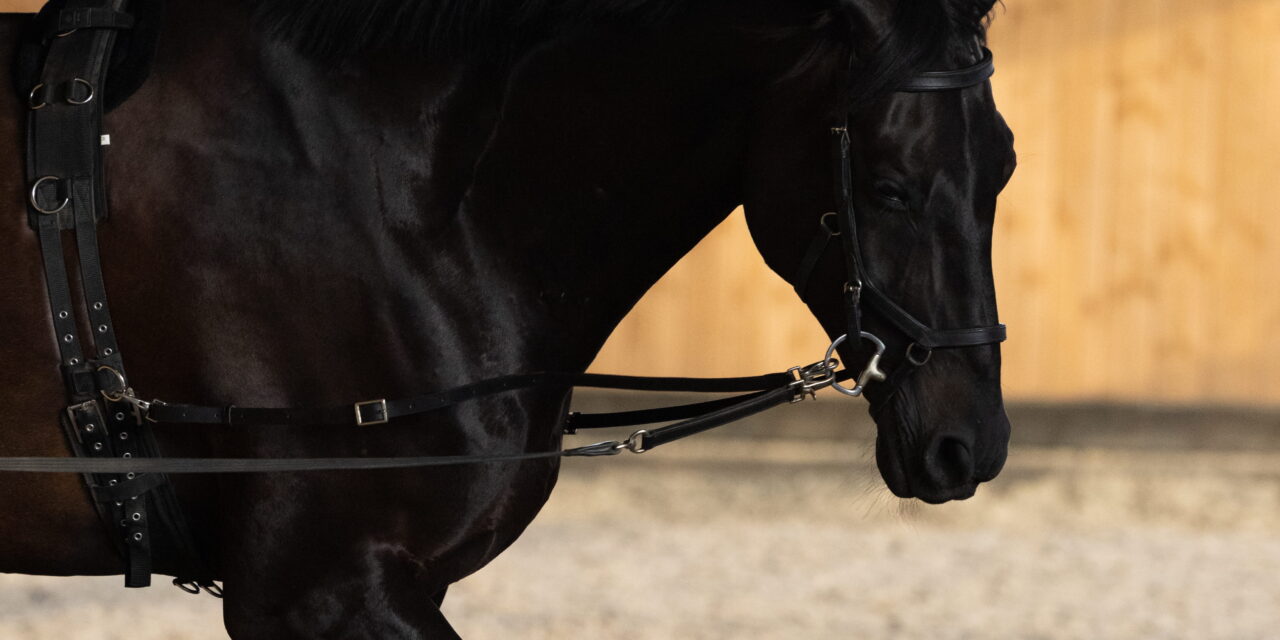
Fixed auxiliary reins are attached to the horse before riding or lunging and remain in the same setting throughout the entire work session. This category includes side reins, triangle reins, fixed draw reins, the chambon, or neck stretchers. They act continuously and provide the horse with a rigid, unchanging frame.
Advantage: predictability and, especially when lunging, a degree of safety.
Disadvantage: no situational adjustment and the risk of causing harm over time if incorrectly adjusted.
Hand-held auxiliary reins are held by the rider like normal reins and can be applied gradually or released completely at any time. These include running reins, Thiedemann reins, or the riding version of the gogue. In theory, they allow for finer, situation-dependent influence but require significantly more skill and feel from the rider. In inexperienced hands, their often-amplified leverage can make them particularly severe and therefore problematic.
The martingale occupies a special position. Strictly speaking, it is less about influencing posture and more about safety—it is primarily intended to prevent the horse from throwing its head up uncontrollably and injuring the rider.
The original purpose: auxiliary reins as temporary aids
The various auxiliary reins were developed for different reasons. Some were intended to help young or unbalanced horses find stretch more easily. Others served to correct problematic habits such as extreme head tossing or excessive leaning on the hand. Still others were designed as safety devices to protect horse and rider from injury.
The crucial point is this: all of these aids were originally intended as temporary support. They were meant to be used during specific phases of training to help the horse find a desired posture or develop a certain quality of movement. The goal was always to remove them again once the horse had learned to show the desired balance and posture independently and willingly.
An auxiliary rein is not a solution—it is, at best, a bridge toward a solution. It may help the horse understand how a certain posture feels or give the rider time to work on their seat and aids. What an auxiliary rein can never do, however, is build the musculature required to maintain a healthy posture in the long term. It cannot create relaxation, true willingness to stretch, or genuine suppleness in the sense of the classical training scale.
Auxiliary reins and the training scale
The classical training scale—rhythm, relaxation, contact, impulsion, straightness, collection—forms the foundation of gymnastic horse training. It describes a logical progression in which each step builds on the previous one. Within this system, auxiliary reins can play only a very limited, supportive role at best.
In the phase of relaxation, for example, auxiliary reins such as triangle reins or the chambon may theoretically help by inviting the horse to stretch and allowing the back to swing. However, this only works if the horse perceives the rein as an invitation rather than a constraint—something that depends on correct adjustment and the overall context (a calm environment, competent lunging, appropriate tempo).
When it comes to contact, things become more critical. True contact develops from the hindquarters, when the horse steps forward with a swinging back into the bit and seeks an elastic, trusting connection to the rider’s hand. An auxiliary rein that mechanically restricts head position cannot replace this genuine contact—it can, at most, prevent the horse from evading excessively upward or sideways while the rider works on their influence.
For impulsion and collection, auxiliary reins are even less suitable, as these qualities require true weight-bearing of the hindquarters, conscious balance, and a high degree of suppleness—none of which can be created through external restriction. They can only be achieved through systematic, gymnastic training.
The fine line between support and manipulation
The decisive question with any use of auxiliary reins is this: am I supporting the horse’s natural development, or am I merely manipulating an outward appearance while masking the real issues?
For example, a young horse that is insecure when being lunged and throws its head up may, with correctly adjusted triangle reins, learn that stretching and allowing the back to swing feels more comfortable. In this case, the auxiliary rein provides a framework within which the horse can have a positive experience. But if the same triangle reins are adjusted too short, they force the horse into a position it cannot yet sustain muscularly, leading to tension and frustration—and thus the opposite of relaxation.
The boundary is fluid and depends on countless factors: the experience of the person riding or lunging the horse, the individual constitution and history of the horse, the specific training goal, and not least the duration and intensity of use.
When can auxiliary reins be useful?
Despite all criticism, there are situations in which auxiliary reins can be justified:
- In lunging young or unbalanced horses that are learning to stretch and use their backs, triangle reins or a chambon can be helpful—provided they are correctly adjusted and used only temporarily.
- In corrective training with horses that have severe contact issues or strongly resist the rider’s hand, experienced trainers may work with running reins to introduce new movement patterns.
- In riding schools, side reins are often used to provide a certain level of safety for riders of varying experience and to prevent school horses from developing problematic postures due to constantly changing, often unbalanced riders.
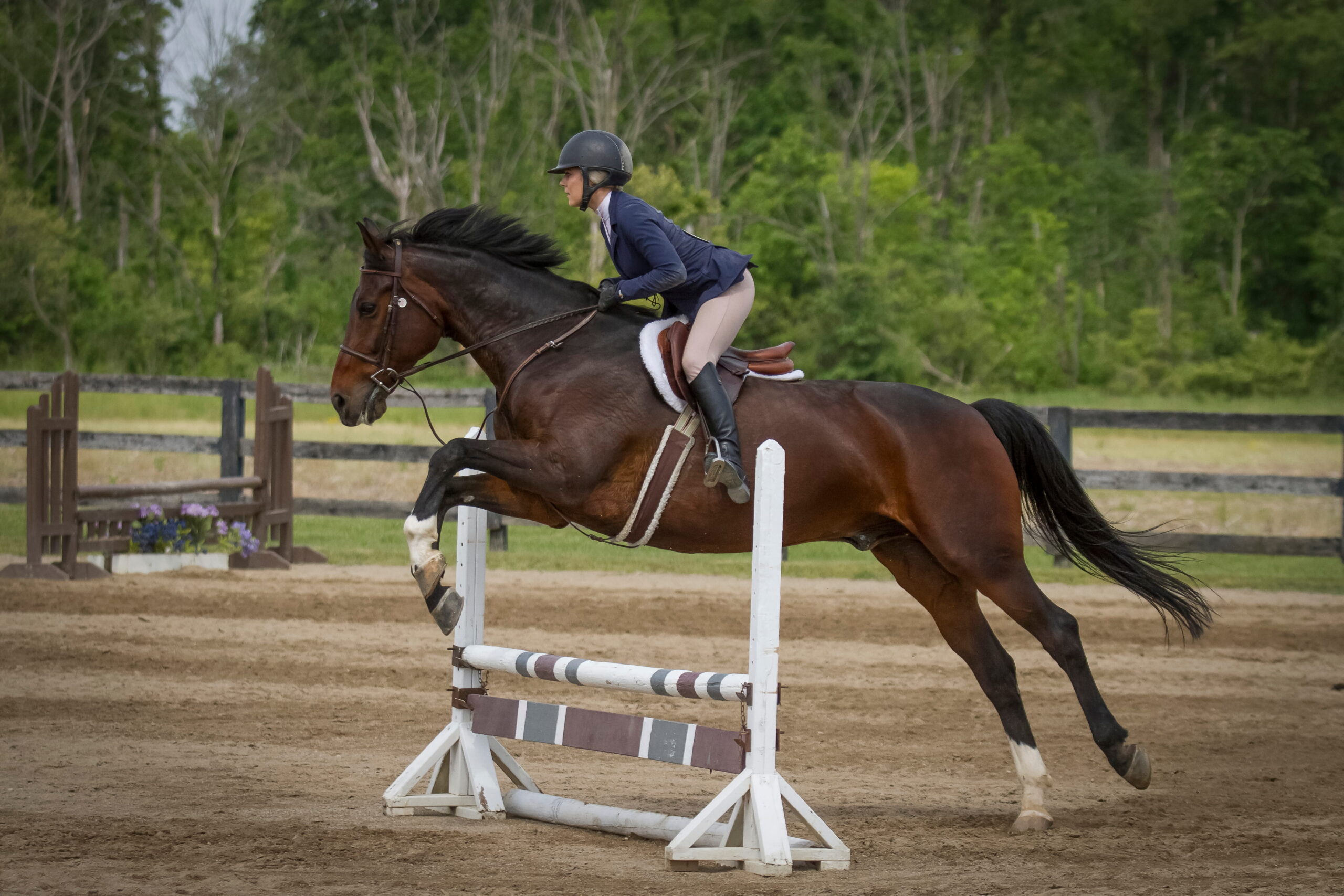
- As a safety aid when jumping or riding out, a martingale can be useful to prevent the horse from throwing its head up in critical situations and injuring the rider.
All of these applications can be valid—but only if the auxiliary rein is chosen competently, adjusted correctly, and understood for what it is: a temporary aid, not a permanent solution.
© Adobe Stock / Leah Richardson
Auxiliary reins are no substitute for good riding
Perhaps the most important principle when dealing with auxiliary reins is this: they can never replace what should be achieved through good riding, sound training, and time. A horse that permanently requires auxiliary reins to show an acceptable posture is not correctly trained—it is merely being forced into an external shape while its internal development is lacking.
Auxiliary reins can serve as a bridge, they can provide support in specific moments, and—when used correctly—they can help the horse have a positive experience. But they cannot think, feel, or respond individually to the horse. They are mechanical tools, and they are only as good or as bad as the person using them.
The real skill lies in recognizing when an auxiliary rein truly helps and when it merely conceals a problem that should be addressed in a different way. This distinction requires experience, keen observation, and the willingness to be honest with oneself: am I using this auxiliary rein because it genuinely benefits the horse’s current stage of development—or because it allows me to quickly hide a problem that would otherwise require more work, time, and perhaps greater competence on my part?
Using auxiliary reins with knowledge and responsibility
Auxiliary reins are neither instruments of cruelty nor miracle solutions. They are tools that can help or harm depending on how they are used. Their original intention was usually a good one, and in the right hands they can be useful in specific situations. Reality shows, however, that they are often misused—adjusted too tightly, used for too long, and without real understanding of their effects on the horse’s biomechanics and mental state.
Anyone who chooses to use auxiliary reins should thoroughly educate themselves about how they work, their risks, and their correct application. Even more important, however, is the question: do I really need this auxiliary rein, or could I achieve the same goal without it—perhaps not today, but with more time, patience, and targeted training?
In the following articles in this series, we will examine the different types of auxiliary reins in detail, analyze their specific effects, and highlight both their potential benefits and their risks. Because only those who understand how an auxiliary rein works can decide whether and how it should be used sensibly—or when it is better to do without it altogether.