Key points at a glance:
- The three most common mistakes when using auxiliary reins are: adjusting them too short, setting them too rigidly without freedom of movement, and using them permanently instead of temporarily.
- Incorrectly used auxiliary reins lead to serious biomechanical problems: the horse curls behind the vertical, falls onto the forehand, develops muscular tension, and is unable to establish a healthy posture in the long term.
- Psychologically, auxiliary reins can lead to learned helplessness, resignation, and loss of natural joy of movement—the horse merely functions instead of actively participating.
- From an animal welfare perspective, auxiliary reins become problematic when they cause pain or suffering, excessively restrict freedom of movement, or are used over an inappropriate length of time.
- The ethical responsibility of the rider or lunge handler is to honestly assess whether an auxiliary rein truly serves the horse—or merely their own convenience.
Auxiliary reins can certainly be used in a sensible way. However, the reality in riding facilities around the world often looks very different: horses being lunged in side reins that are adjusted far too short, school horses spending their entire working lives in auxiliary reins, riders attempting to compensate for lack of training or riding ability through running reins. The justified criticism of auxiliary reins is not directed at the tool itself, but at its incorrect, excessive, or even abusive use.
This article highlights the darker side of auxiliary reins: what can go wrong, what consequences this has for the horse, and where the ethical boundaries lie.
Mistake No. 1: Adjusting auxiliary reins too short
By far the most common and most consequential mistake is adjusting auxiliary reins too short. What many people fail to understand is that the desired head–neck position should not be forced through mechanical pressure, but achieved through correct training and gradual muscular development. An auxiliary rein should merely define an outer boundary—it should never continuously push the horse into a position it cannot yet sustain through its own strength.
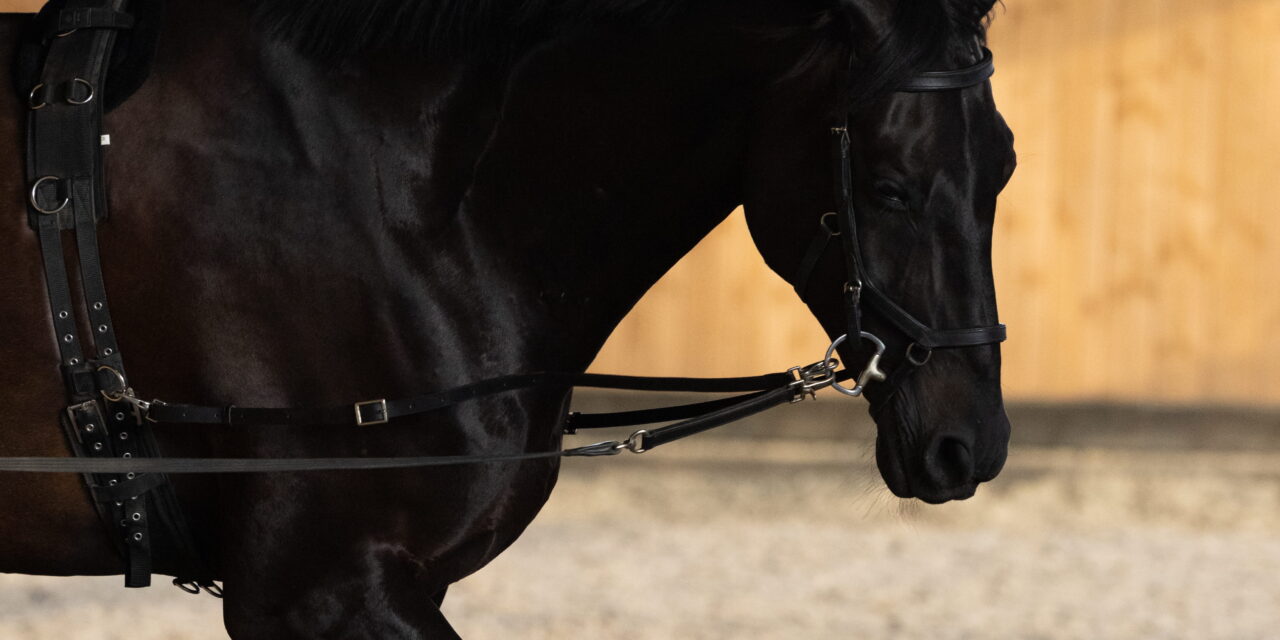
A typical scene on the lungeing arena: a young horse is fitted with side reins or triangle reins adjusted so short that there is hardly any room left for head and neck movement. The underlying assumption is often: “The shorter they are, the faster the horse will adopt the desired outline.” The opposite is true.
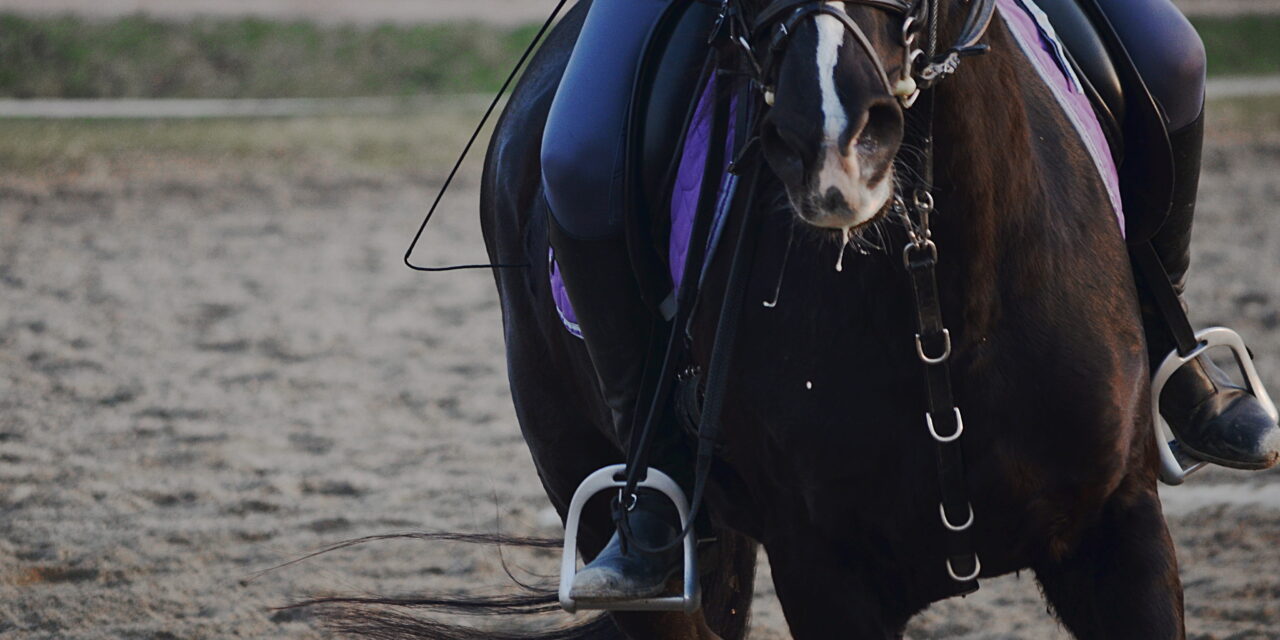
Auxiliary reins adjusted too short force the horse into a position it is not yet biomechanically capable of maintaining. The musculature required to actively support this posture is not sufficiently developed. As a result, the horse evades the pressure—either downward, by curling behind the vertical, or upward, by over-flexing at the poll and pushing out the under-neck muscles. In both cases, severe tension develops instead of the desired relaxation.
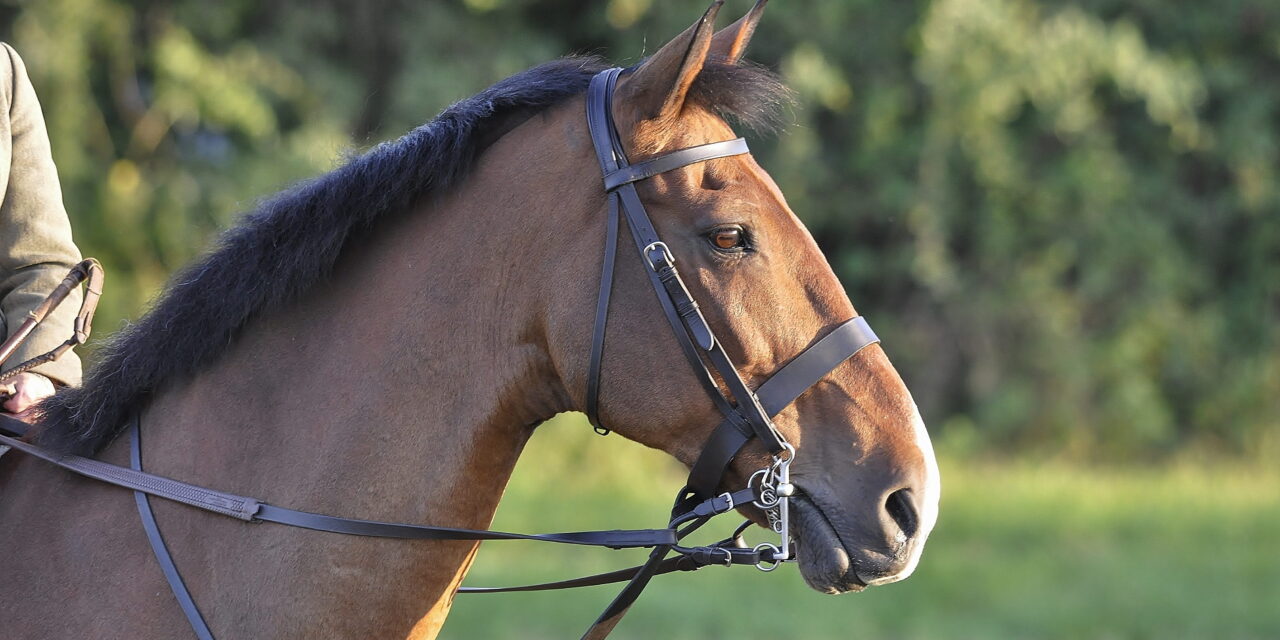
Correct adjustment is generous enough to allow freedom of movement. The auxiliary rein should only come into effect when the horse clearly moves beyond the intended frame—not before. As a rule of thumb: if the auxiliary rein is in constant contact, it is too short.
Mistake No. 2: Overly rigid adjustment without freedom of movement
Closely related to overly short adjustment is excessive rigidity. Horses are animals of movement—their entire bodies are designed for fluid, elastic motion. A horse’s head–neck position is not static; it constantly changes depending on gait, speed, balance, and terrain. A horse in canter requires more freedom forward and upward than a horse in walk; a horse on the inside lead needs more lateral flexibility than on the outside lead.
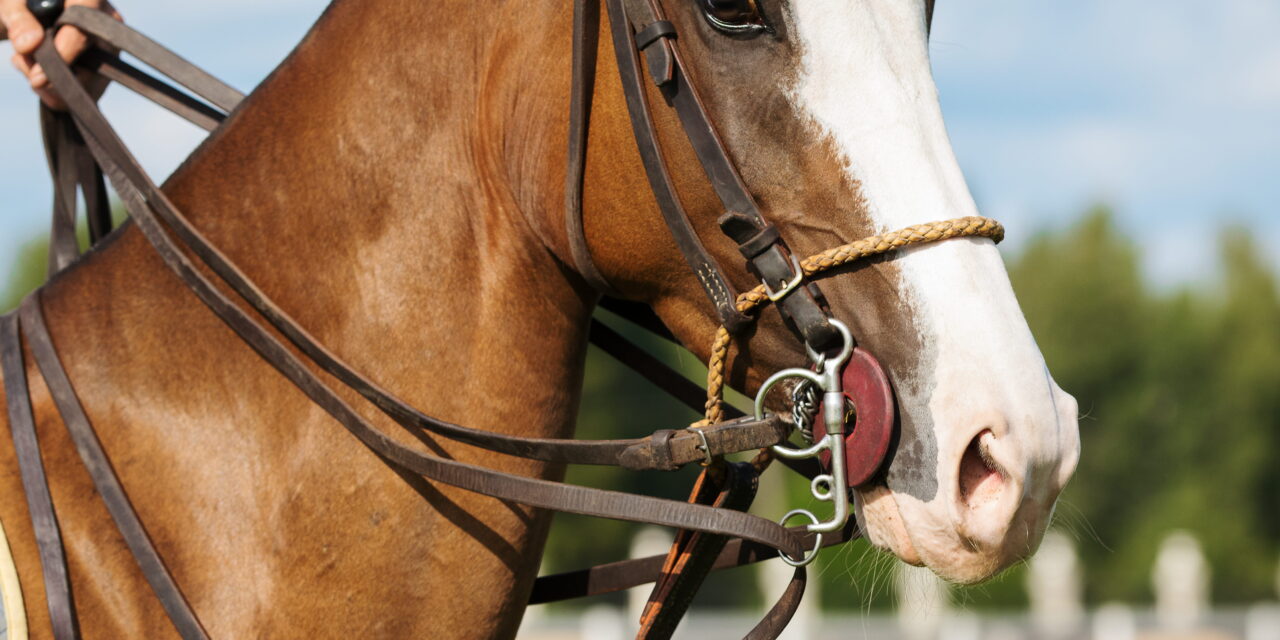
Fixed auxiliary reins that offer no possibility of adaptation ignore this natural dynamism. They force the horse into a rigid corset that allows no individual adjustment. The horse can no longer use its neck as a balancing pole, cannot reflexively raise its head when stumbling or startled, and cannot stretch freely forward and downward.
The result is a horse that moves cautiously, stiffly, and insecurely. Instead of moving with swing and relaxation, every step becomes a careful balancing act. The back cannot swing freely because the muscular chain from hindquarters through the back to the poll is interrupted. What may look “nice” from the outside—a horse in an apparently correct outline—is, biomechanically, a disaster.
Mistake No. 3: Permanent use instead of temporary application
Auxiliary reins are, as the name suggests, aids. They are meant to provide support in specific situations—not to become a permanent part of the horse’s equipment. In practice, however, one often sees horses that have not been worked without auxiliary reins for years. This is especially common in riding schools: school horses that spend their entire working lives in side reins because they are considered “too unsettled” or “prone to raising their heads.”
What happens here is serious: the horse never learns to find an appropriate posture through its own strength and motivation. It develops no self-carriage, no true balance, no carrying capacity. Instead, it becomes completely dependent on the external restriction imposed by the auxiliary rein. When this artificial framework is suddenly removed after years of continuous use, the entire construct collapses—the horse has never learned to carry itself.
Permanent use also leads to muscular imbalances. Certain muscle groups are chronically overused, while others waste away due to lack of activation. The neck musculature cannot develop naturally, and the back muscles cannot be trained correctly. Externally, the horse may still appear acceptable—but biomechanically, it is severely compromised.
The biomechanical consequences: when the body suffers
Incorrect use of auxiliary reins has concrete, measurable effects on the horse’s biomechanics:
Curling behind the vertical: When an auxiliary rein exerts excessive pressure on the poll, the horse evades downward. It curls behind the vertical, the nasal line drops behind the perpendicular, and the base of the neck is excessively loaded. In this position, the muscular chain cannot function—the hindquarters cannot step under the center of gravity, the back cannot swing, and true weight-bearing by the hindquarters becomes impossible.
Falling onto the forehand: A curled horse automatically shifts more weight onto the forehand. Instead of working uphill, it moves downhill. This overloads the forelimbs, leads to tension in the shoulder musculature, and can result in tendon problems and arthritis in the long term.
Shortened strides and a blocked back: When the neck is fixed, the back cannot swing freely. The result is shortened, stiff strides, especially in the hind legs. The horse can no longer move forward with ground-covering steps but instead shuffles cautiously. The back muscles tighten instead of developing correctly.
Incorrect muscle development: Auxiliary reins that are used incorrectly over long periods lead to the development of the wrong musculature. Instead of the desired topline (back and upper neck muscles), a dominant underline develops. The under-neck becomes bulky, while the back remains flat and weak. This faulty development is difficult to correct and often accompanies the horse for life.
The psychological consequences: when the mind resigns
At least as serious as the physical effects are the psychological consequences of incorrect auxiliary rein use. A horse that is permanently restricted in its freedom of movement and confronted with mechanical pressure whenever it attempts to move naturally learns helplessness.
Resignation: The horse gives up. It learns that it cannot change its situation, so it submits. It moves mechanically in circles, without inner engagement, without joy, without attempting to actively cooperate. This learned helplessness is often difficult for outsiders to recognize—the horse appears “well-behaved” and “calm.” In reality, it has simply resigned.
Loss of joy in movement: Horses are naturally movement-oriented animals that take pleasure in free, expressive motion. A horse that is permanently forced into a mechanical corset loses this joy. It moves only because it has to, not because it wants to. Inner motivation and natural energy fade.
Loss of trust: Working with a horse should be based on trust—the horse trusts that the human does not intend harm, that signals are clear and fair, and that cooperation is rewarded. Auxiliary reins that cause pain or discomfort destroy this trust. The horse learns that working with humans is unpleasant and that fair treatment cannot be relied upon.
Stereotypies and behavioral issues: In extreme cases, long-term incorrect use of auxiliary reins can lead to stereotypic behaviors: weaving, crib-biting, head-shaking—behaviors that arise from chronic stress and frustration. The horse attempts to cope with psychological strain and develops substitute behaviors.
Animal welfare and legal considerations: when does use become unacceptable?
Across many countries, animal welfare legislation is based on a shared core principle: animals must not be caused unnecessary pain, suffering, or harm, and must be managed in a way that respects their species-specific needs. Horses, as sentient and movement-oriented animals, are entitled to care, training, and use that allow natural behavior, physical integrity, and psychological well-being.
Auxiliary reins generally exist in a legal gray area worldwide. They are rarely explicitly prohibited, but their use may conflict with animal welfare regulations under certain conditions:
- when they cause pain or injury (for example through excessive pressure, overly tight adjustment, or resulting tissue damage)
- when they are used continuously over long periods without a clear, justified training purpose
- when they restrict freedom of movement to such an extent that natural, species-appropriate behavior is no longer possible
- when they are used to compensate for a lack of education, skill, or training on the part of the rider or handler
While official guidelines and welfare recommendations in many countries emphasize that horses must be trained and used in a manner consistent with animal welfare principles, auxiliary reins are often addressed only indirectly—or not at all. This leaves considerable room for interpretation.
In practice, enforcement is inconsistent. The burden of proof is high, and standards of what is considered “acceptable” vary between disciplines, regions, and cultures. However, the absence of a legal prohibition does not automatically make a practice ethically acceptable. Welfare-compliant training requires more than legal minimum standards—it requires informed judgment, responsibility, and respect for the horse as a sentient partner.
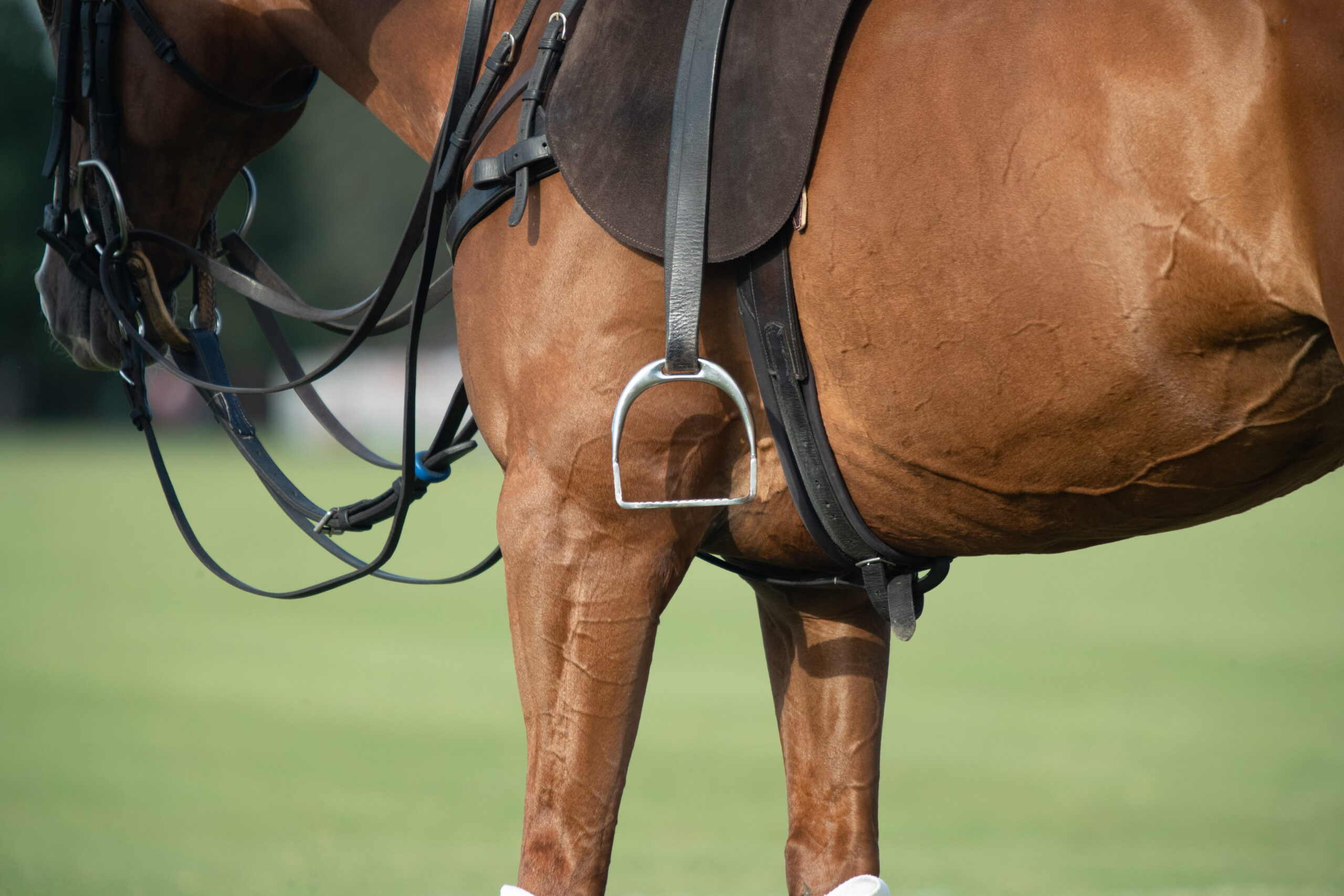
© Adobe Stock / Santiago Gomez Roca
Ethical responsibility: honesty with oneself
Beyond legal considerations lies the ethical responsibility of everyone who works with horses. The central question is: am I using this auxiliary rein because it genuinely serves the horse’s welfare—or because it makes my life easier?
Honest self-reflection is required:
- Do I need this auxiliary rein to achieve a specific training goal, or am I using it to mask my own shortcomings?
- Is its use temporary and targeted, or has it become a permanent fixture?
- Do I have the knowledge and experience to use this auxiliary rein correctly, or am I experimenting at the horse’s expense?
- Are there alternative paths to the goal that allow the horse more autonomy and self-responsibility?
The uncomfortable truth is that in most cases, auxiliary reins could be replaced by better training, more time, and greater expertise. A well-trained horse, worked by a competent rider or lunge handler, does not need mechanical aids to maintain a healthy posture.
When is an auxiliary rein justifiable?
After all this criticism, the question remains: are there situations in which auxiliary reins are ethically justifiable at all? The answer is: yes—but only under very strict conditions:
- Use is temporary and serves a clearly defined training goal
- The person using the auxiliary rein has sound knowledge and experience
- Adjustment is correct and allows sufficient freedom of movement
- The horse shows no signs of stress, pain, or resignation
- There is a clear plan for when and how the auxiliary rein will be removed
- Alternatives have been considered and found less suitable
If all these criteria are met, an auxiliary rein may be a legitimate training tool. In reality, however, these conditions are rarely fulfilled in their entirety.
Conclusion: responsibility lies with the human
Auxiliary reins are not neutral tools—they are powerful interventions into both the biomechanics and the psyche of the horse. In the wrong hands, or when used incorrectly, they cause significant harm that often becomes apparent only years later, when the horse develops chronic problems or has already mentally resigned.
Responsibility for ethical use lies entirely with the human. It is our duty to honestly question whether an auxiliary rein is truly necessary and beneficial—or whether it merely compensates for our own shortcomings. It is our duty to acquire the necessary knowledge before using such aids. And it is our duty to always see the horse as a sentient, learning being—not as an object we can force into a desired shape.
In the following articles of this series, each type of auxiliary rein will be examined in detail. One thing will become clear in every case: the effect depends not only on the tool itself, but above all on who uses it, how, and why. The question is never just “Which auxiliary rein?”—it is always also “Do I need one at all?”