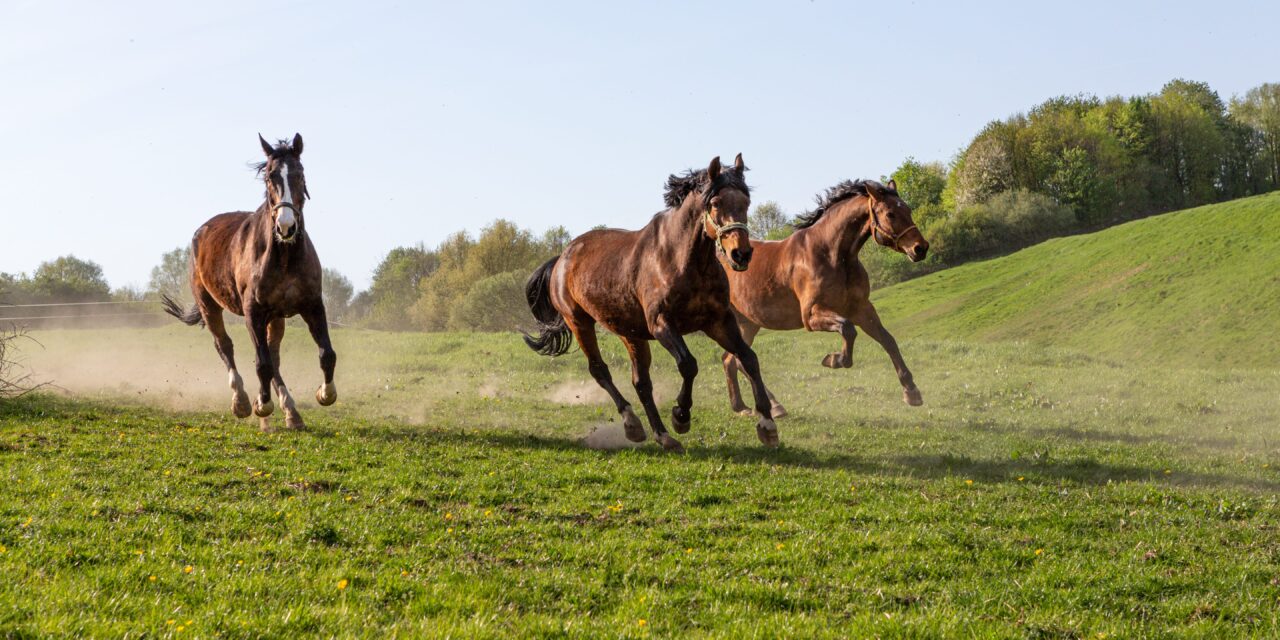
Key points at a glance:
- Every gait follows a defined movement pattern—deviations can indicate underlying problems
- In walk, the horse moves in a four-beat rhythm with four distinct hoofbeats
- Trot is a two-beat gait with diagonal limb movement and a moment of suspension
- Canter is a three-beat gait with a clear suspension phase
- Gaited horses such as Icelandic horses or Peruvian Pasos also perform tölt and pace
- Understanding physiological movement helps detect lameness and rhythm faults at an early stage
Why the biomechanics of gaits are so important
The way a horse moves reveals a great deal about its state of health and level of training. Each gait follows a specific biomechanical pattern determined by the horse’s anatomy. If a horse deviates from this pattern, shows rhythm irregularities, or becomes lame, this is a clear warning sign. Only those who understand physiological—meaning healthy—movement can recognize problems early and respond appropriately.
Biomechanics describes how the horse’s body behaves during locomotion: which muscles are active, how joints are loaded, how weight is distributed, and how individual body parts work together. This knowledge is essential not only for evaluating movement quality but also for designing training programs. A horse that moves biomechanically correctly can age healthily; a horse that consistently shows incorrect movement patterns will eventually develop wear-related issues.
Walk: energy-efficient and gentle
Walk is a four-beat gait without a suspension phase. This means that at least two hooves are always in contact with the ground, and four distinct hoofbeats can be heard. One possible sequence is: right hind, right fore, left hind, left fore. This even rhythm makes walk the most energy-efficient gait for the horse.
From a biomechanical perspective, walk is particularly interesting because the horse uses minimal muscular effort. When the horse lowers its neck, the nuchal–dorsal ligament system is stretched and the spine is stabilized. At the same time, the center of gravity shifts forward, facilitating forward motion. The long back muscles work alternately: when the right hind leg swings forward, the right back muscles contract while the left side relaxes.
A pure, relaxed walk with a clear nodding motion of the head indicates that the horse is relaxed and moving through its back. Shortened steps, a hurried or shuffling walk, on the other hand, may indicate tension, pain, or lack of relaxation.
Trot: impulsion and dynamics
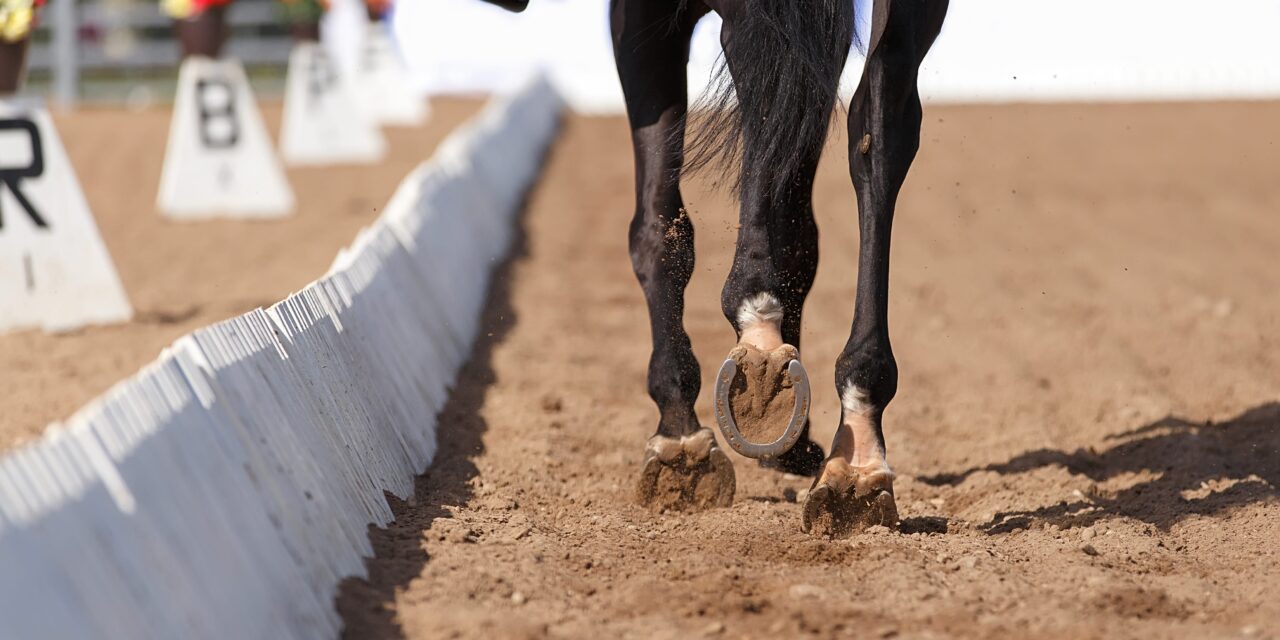
Trot is a two-beat gait in which diagonal limb pairs move simultaneously. For example, the right foreleg and left hind leg land together, followed by a brief suspension phase, before the left foreleg and right hind leg touch down. This diagonal movement provides stability and balance.
In trot, the thoracic sling musculature must work much harder than in walk to stabilize the rib cage between the shoulders. The suspension phase places additional stress on tendons, ligaments, and joints upon landing. For this reason, many lameness issues are more apparent in trot than in walk or canter. A horse moving well absorbs these forces through elastic muscles and supple joints; a horse in pain adopts a protective posture, and the gait becomes uneven.
Stride length in trot says a great deal about movement quality. A horse with good hindquarter engagement steps well under its center of gravity and shows an expressive, ground-covering trot with cadence. Frequent stumbling, dragging of the hooves, or an irregular rhythm may indicate problems in the hindquarters, back, or forelimbs.
Canter: the fastest basic gait
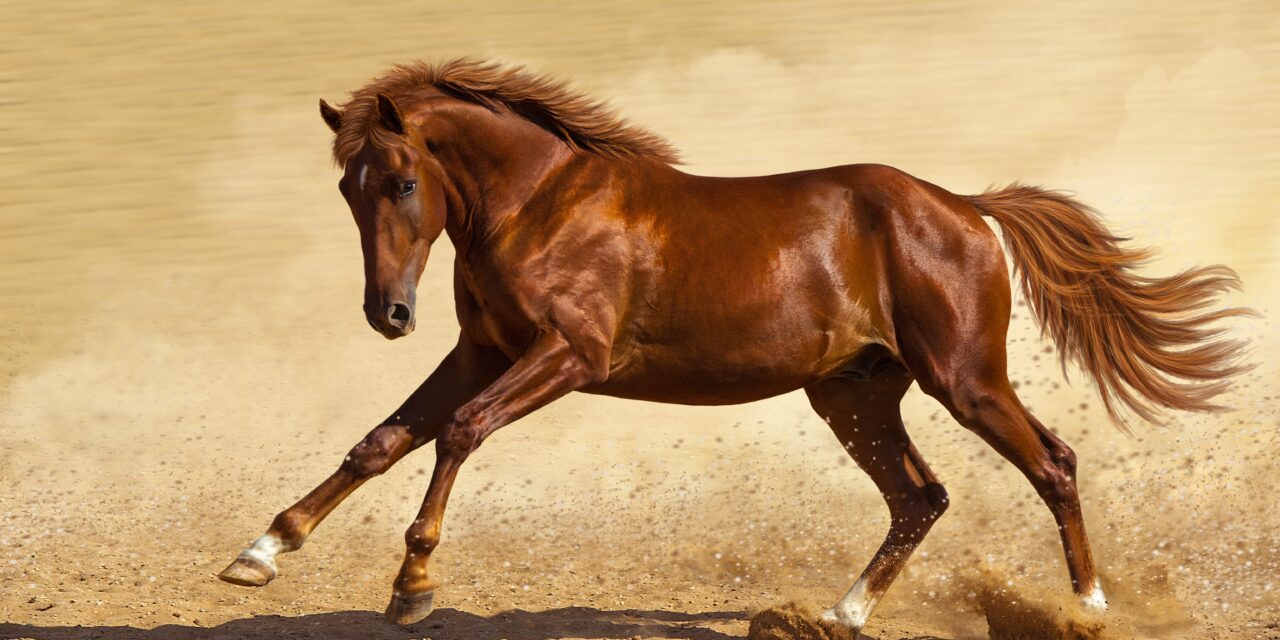
Canter is a three-beat gait with a clear suspension phase. In right lead canter, for example, the sequence is: left hind (first beat), right hind and left fore together (second beat), right fore (third beat), followed by a brief moment when all four legs are off the ground.
Canter requires significant strength from the hindquarters and good coordination. The inside hind leg must step well under the body and take on load for the horse to canter in balance. At the same time, the back must be able to swing to absorb the movement. A horse that braces its back or runs on the forehand in canter will fatigue quickly and move inefficiently.
Rhythm faults in canter are usually easy to hear and see. A four-beat canter, in which the diagonal pair no longer lands simultaneously, often indicates back problems or insufficient collection. Frequent lead changes or difficulty striking off on one lead can also point to crookedness, tension, or pain.
Tölt and pace: the special gaits
Some breeds, such as Icelandic horses, Peruvian Pasos, or American Saddlebreds, perform tölt and pace in addition to the three basic gaits. These gaits are genetically determined but must be developed and refined through training.
Tölt is a four-beat gait like walk, but much faster and often with brief moments of suspension. What makes it special is that the rider experiences very little vertical movement, as the motion flows forward rather than up and down like in trot. Biomechanically, tölt is demanding for the horse because it requires good balance and coordination. A correctly performed tölt shows a clear four-beat footfall pattern and self-carriage without falling onto the forehand.
Pace is a two-beat gait in which the lateral limb pairs—legs on the same side of the body—move together. First, right fore and right hind land simultaneously, then left fore and left hind. Pace is very fast but less stable than trot. It is ideal for long-distance riding because the horse can maintain high speed without cantering. However, pace requires considerable skill from the rider and strong lateral stability from the horse.
Many gaited horses with back problems tend to fall into pace or tölt instead of trot, as these lateral gaits involve less spinal rotation than trot. So-called “natural tölters,” who show only tölt and no trot, often become “natural trotters” once an osteopath has released the back and a saddle fitter has correctly adjusted the saddle.
What is physiological movement?
Physiological movement refers to a way of moving that corresponds to the horse’s anatomy and biomechanics. This means the horse shows a clear, regular rhythm, steps well under its center of gravity with the hind legs, allows the back to swing, and moves in balance. The head nods in time with the movement, and the muscles work elastically rather than in tension.
Physiological movement is also characterized by effortlessness. The horse does not stumble, drag its hooves, or sway behind, and it shows no evasive movements. Stride length is even, foot placement is straight rather than too narrow or too wide, and—most importantly—the horse can display this movement quality equally well on both reins.
Deviations from physiological movement can have many causes: pain, tension, restrictions, an ill-fitting saddle, incorrect riding, or congenital conformation faults. What matters is recognizing these deviations and not accepting them as normal. A horse that consistently moves in a non-physiological way will worsen its issues over time, as compensatory patterns overload other structures.
Significance for training and health
Understanding the biomechanical processes of the different gaits is the foundation of all training. Only by knowing how a horse should move in a healthy way can one assess whether training is correct or causing incorrect loading. Many chronic problems—such as tendon injuries, arthritis, or back issues—result from persistently faulty movement patterns.
It is particularly important to observe the horse’s natural movement regularly—ideally in the pasture or arena without a rider. How does the horse move freely? Does it show fluid, ground-covering movement, or is it short-strided and tense? These observations provide valuable clues as to whether the horse is healthy or already developing issues that will be amplified under saddle.