Key Points at a Glance
- A range of systems to suit every set-up: from simple paddle-operated drinkers and float-valve bowls to heated models for winter.
- Water quality is critical: all systems must be cleaned regularly, as stagnant water quickly becomes contaminated and develops algae.
- Frost protection is costly: heated systems use a lot of electricity; alternative frost-proofing measures are often cheaper but more labour-intensive.
- Consider maintenance needs: more complex systems with float valves or electronics require more frequent checks and repairs.
- Adequate flow is essential: horses drink 30–60 litres a day, so the system must provide a sufficient flow rate.
- Location matters: water lines must be protected against freezing (buried/insulated), and heated systems require a nearby power supply.
- Costs vary widely: from around £100 for simple paddle-operated drinkers to over £1,000 for heated float-valve systems.
Why the right drinker matters
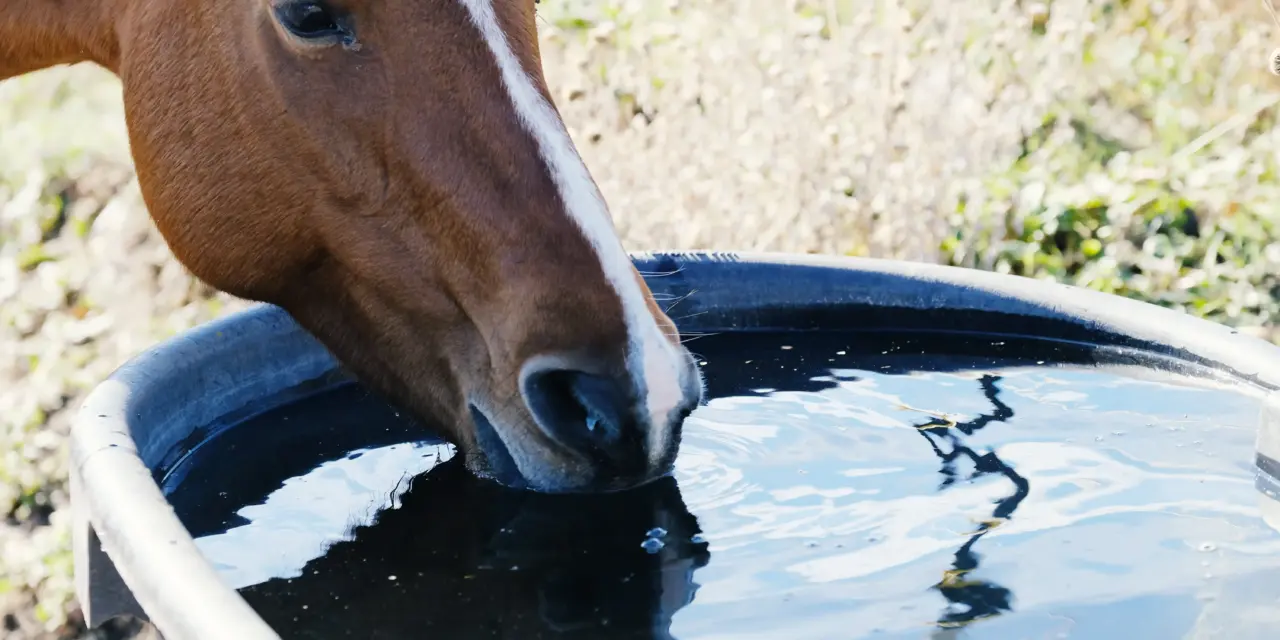
Water is the most important nutrient for horses. A 500-kg horse drinks 30–60 litres a day, and more in hot weather or during hard work. The quality and constant availability of clean drinking water are crucial for health and welfare. Anyone who has hauled water to their horses twice a day through winter knows that frost-proof automatic drinkers are worth their weight in gold.
Many horse owners underestimate what a good drinker set-up requires. Stagnant water contaminates quickly; algae can form within days in summer; and in winter the water in pipes or bowls can freeze. Every system has specific advantages and drawbacks that need to be evaluated when choosing.
The right choice depends on several factors: the number of horses, the stable layout, the available water supply, local climate, and—not least—your budget and the time you’re prepared to invest in cleaning and maintenance.
Paddle-operated automatic drinkers: the tried-and-tested classic
Paddle-operated drinkers are the simplest and most cost-effective way to supply water in the stable. The horse presses a paddle or lever with its muzzle, and fresh water flows into a small bowl; once the pressure is released, the flow stops.
The biggest advantage is that the water stays fresh. Because fresh water flows in every time the horse drinks—and none sits in the bowl—algae can’t form and bacterial contamination is minimised. The units are robust, low-maintenance, and cost £25–£150 each.
The problems start in winter. Paddle drinkers tend to freeze even in light frosts, as the supply pipes and the mechanism are very prone to freezing. Some horses also struggle to use them or dislike the typically small bowls; as they slurp, the flow often cuts out and they end up swallowing air. For sensitive horses, the sudden, intermittent noise of the water coming in can be off-putting.
Float-valve drinkers: larger volumes available
Float-valve drinkers work on the cistern principle: a float regulates the water level in a bowl, larger trough or tub. As the level drops when the horses drink, the valve opens automatically and tops up with fresh water. Once the set level is reached, the float closes the inlet.
These systems offer several advantages. Horses can drink from a larger water surface, which more closely reflects their natural drinking behaviour. With troughs, several horses can drink at the same time, and the larger volume buffers peak demand. Purchase costs range from £100 to £400, depending on size and features.
The downside is standing water. In warm months algae form quickly, and the larger surface is easily contaminated by hay, straw and other yard debris. Weekly cleaning—often daily in summer—is essential. Float systems are also prone to frost, as both the float mechanism and the larger water volume can freeze at sub-zero temperatures. For that reason, tubs/troughs with a float valve and a hose feed (the sort sold for cattle) work very well in summer out on the field/paddock, but are less suitable in winter on frozen turnout.
Heated drinkers: a winter solution with high running costs
Heated drinker systems solve the frost problem with integrated electric heating elements. These keep the water liquid even in severe sub-zero temperatures and ensure a reliable supply throughout the winter period.
Modern heated units have thermostats that switch the heater on only when needed. Even so, electricity consumption is significant: depending on size and outside temperature, heated drinkers draw between 100 and 500 watts continuously. Over a five-month heating season, that amounts to £150–£750 in electricity costs per winter, per drinker.
Purchase costs range from £300 to £1,200, plus the expense of installing frost-proof electrical cabling. The heating elements are maintenance-intensive and prone to failure—especially if horses damage the cables or moisture ingress occurs. Many systems last only two to three winters before major repairs are needed.
Ball drinkers: direct connection to the borehole pump
Ball drinkers are an interesting alternative for yards with their own borehole. The system uses a floating ball that horses push aside to access the water beneath, which sits inside an insulated box. Because it’s dark in the box, algae growth is limited; however, bacteria (biofilm) can build up, so these drinkers still need regular cleaning. The insulation, together with the ball breaking the water surface, means the water only freezes at very low temperatures. With four or more horses, ball drinkers usually remain ice-free throughout the winter.
Inside the water box there’s a float that opens a valve as the level drops. These drinkers can be connected directly to a borehole pump, delivering a continuous supply of fresh groundwater. The advantage is the direct feed from the source with short pipe runs; the water is usually cooler and fresher than from the mains. Ball drinkers are robust and work reliably even at low water pressure. Cost: about £80–£250.
Downsides: they depend on the borehole pump—and therefore on electricity. If the pump fails, there’s no water. Water quality from private wells isn’t always ideal and should be tested regularly. In severe cold, ball drinkers can still freeze, so they must be checked daily to ensure horses have water.
Cleaning and maintenance: the key factor
Regardless of the system you choose, regular cleaning is crucial for water quality. In warm weather, algae can start to form within three to four days, and biofilms and bacteria develop even faster. Stagnant water quickly becomes a health hazard.
Float-valve drinkers need the most upkeep. They should be drained, scrubbed and disinfected at least weekly (daily in summer). Long-handled brushes and specialist drinker cleaners that leave no harmful residues work well.
Paddle drinkers are lower-maintenance because water doesn’t stand in the bowl. Even so, dirt and bacteria build up in the cup, so a weekly clean is still required. With float systems, also check the float mechanism regularly and remove any limescale or debris.
Frost protection without heating: practical alternatives
Instead of installing expensive heated systems, there are practical alternatives for winter use. Non-electric drinker warmers work with special heat-storage materials or make use of ground heat by being installed at sufficient depth.
A tried-and-tested option is insulated troughs with a large water volume. The greater the volume, the longer it takes to freeze. 200-litre tubs with good insulation often cope with several days of frost without issue. Investing in a large, well-insulated tub with a small drinking opening is often cheaper than a heated unit.
Pipe routing also matters. In northern latitudes, water lines should be laid at least 80 cm deep to prevent frost damage. In critical sections, trace heating on the pipe can be more sensible than heated drinkers, as it targets only the vulnerable runs and uses less energy.
Getting the siting and installation right
Where you place the drinker largely determines how well it works and how long it lasts. In open barns/group housing, site drinkers out of the wind but easy to reach. If they’re too close to the feeding area, they’ll quickly get dirty with bits of hay. A south-facing stable wall that warms in the sun during the day can also help protect any drinker mounted there from freezing.
Ensure adequate drainage at installation. Overflow mustn’t be allowed to create mud or ice; a gravel bed or drain around the drinker solves this. For heated units, the electrics must be installed professionally and protected against moisture ingress.
Set the drinker height to suit the horses. Bowls positioned too low tend to collect debris faster; too high and they’re awkward to drink from. As a rule of thumb, the water surface should sit between the horse’s knee (carpus) and chest.
Cost–benefit comparison of the systems
Entry-level paddle drinkers cost £25–£150 and are the cheapest to buy, but they do require frost-protection measures or alternative winter arrangements. Float-valve drinkers cost £100–£400 and incur higher cleaning costs because of the extra time involved.
Heated drinkers are expensive to purchase (£300–£1,200) and add substantial electricity costs. Over a five-year period, running costs can exceed the initial outlay, and repairs are common. Against this you need to set the labour saved—otherwise you may be carrying water to the horses twice a day and hacking ice out of troughs.
For many yards, the most economical option is a mixed set-up: simple tubs with clip-on float valves and a hose for summer at grass, combined with large insulated tubs or heated options for winter. This avoids both high capital expenditure and high running costs.

Specific requirements for different housing set-ups
Stabled housing (individual boxes): Paddle drinkers or small heated float-valve bowls per box work well. You retain full control over cleaning and maintenance, and each horse has its own water point. Installation is straightforward because the pipework runs inside the stable, where it’s a few degrees warmer than outdoors.
Group housing (open barns): More robust systems are needed. Large float-valve troughs or multiple drinking points are essential because several horses share a source. Frost protection matters particularly here, as the drinkers are exposed to the weather. Ball drinkers are popular in more remote open barns that already use a borehole as their water supply.
At grass (field turnout): Mobile water tanks (e.g. an automatic drinker) or tubs with float valves fed by a hose are common. Watch for horses damaging the equipment through play and for contamination.
Monitoring and ensuring water quality
Regardless of the drinker set-up, you should check water quality regularly. Cloudiness, algal growth or an unpleasant smell are clear warning signs. For private wells/boreholes, annual water testing is advisable.
Flow rate matters too. A drinker should deliver at least 10–15 litres per minute so there is sufficient supply even at peak demand. If the flow is too low, horses may not drink enough.
Temperature also plays a part. Some horses avoid very cold water, especially in winter; water that’s too warm tastes unpleasant and can harbour bacteria. The ideal range is about 8–18 °C.
The right set-up for every yard
Choosing the right drinker depends on a range of yard-specific factors. Simple paddle-operated drinkers are often sufficient in the stable and are inexpensive to buy and run. For larger herds or open barns, float-valve systems offer more convenience but need more intensive upkeep.
Install heated drinkers only if non-electric frost protection isn’t possible or would be too labour-intensive. Their high running costs and maintenance needs often make them the most expensive—albeit the most convenient—option. In many cases, a seasonal mix of systems is the most practical approach.