More and more horse owners want to respond more specifically to the individual needs of their horses — whether dealing with (chronic) health issues such as respiratory problems, skin conditions, or digestive disturbances, or emotional challenges of all kinds.
Because even with excellent veterinary or naturopathic care, important questions often remain unanswered:
Why does one horse react so strongly to external stimuli while another stays completely calm?
Why do some ailments heal more slowly than expected?
And why does one horse respond immediately to a therapy — while another barely reacts at all?
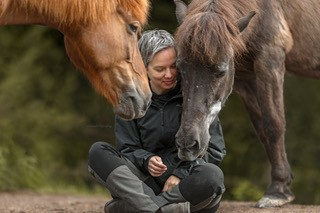
Ayurveda can offer new perspectives here: by looking at the horse as a unique individual. This approach considers housing, training, mental state, digestion, and nutrition equally — because all these factors are directly connected and influence health.
The Ayurvedic perspective aims to maintain the organism’s natural balance or — if it has been disturbed — to gently restore it.
What is Ayurveda?
Many people associate Ayurveda with wellness, yoga, or bitter herbal teas — and they are not entirely wrong. In fact, all of this belongs to the world’s oldest documented medical system, practiced in India for more than 3,000 years.
In human medicine, Ayurveda has long established itself as a complement to conventional medicine and has stepped beyond the “wellness-only” niche.
In veterinary naturopathy, however, this approach is still in its early stages in Western countries. In India, by contrast, animals have traditionally been treated according to Ayurvedic principles — using herbs, species-appropriate nutrition, and manual therapies — and often with remarkable success.
The focus is not on treating isolated symptoms, but on understanding the living being as a whole — its lifestyle, environment, and individual constitution.
For horses, this means that housing, training, feeding, and treatment should always be adjusted to the individual constitution.
Ayurveda is therefore much more than feeding herbs — it is a way of life. A mindset that understands us and our animals as part of a greater whole, in which the macrocosm is reflected in the microcosm.
Foundations of Ayurveda
Ayurveda means “the knowledge of life” (Ayus = life, Veda = knowledge).
Its teachings are based on the five elements — space (ether), air, fire, water, and earth. From these arise the three fundamental functional principles: Vata, Pitta, and Kapha — the so-called doshas.
These three doshas act as bio-energies in every organism. They influence digestion, metabolism, behavior, temperament, susceptibility to illness, and even nutrient utilization.
Every horse has its own individual dosha constitution, which must be recognized and taken into account. Anyone who has ever wondered why two horses in the same stable respond differently to the exact same feed has already — perhaps unknowingly — touched on a central Ayurvedic principle: what benefits one horse may have the opposite effect on another. While ginger may have a harmonizing effect on one horse, it may actually worsen symptoms in another. Not every horse benefits from a one-size-fits-all treatment approach — even if it is based on natural remedies. A look at the doshas explains why.
The Three Doshas — Equine Personality Types in Ayurveda and the Heart of the Ayurvedic System
The key to understanding Ayurveda lies in the doctrine of the three doshas. The term “dosha” can literally be translated as “fault,” meaning “that which causes problems.” Doshas are also described as bio-energies that govern both the physical and the mental processes of an individual.
They can be compared to musical instruments that create a harmonious sound only when they are well tuned to one another. If one instrument dominates too strongly or plays the wrong notes, the entire sound becomes discordant. (cf. Dr. med. Ernst Schrott, Ayurveda für jeden Tag, Mosaik Verlag 1994, p. 11)
Each dosha is active in all cells, tissues, and organs of the body — and equally in the psyche. An Ayurvedic practitioner will therefore always consider the mental and emotional state of the patient when planning treatment, not only the physical symptoms of disease. Every living being has its own unique nature, which also determines which illnesses it is more prone to compared to others.
The Vata Horse – Light, Sensitive, Agile

Vata horses are fine-boned, perceptive, and often naturally sensitive. They are lively, sometimes nervous or easily startled, yet at the same time very curious.
They learn quickly but are also easily distracted. Vata-type animals react very sensitively to change, weather shifts, or emotional tension in the stable. Their close bond with humans is reflected in their strong responsiveness to their handler’s body language and emotions.
From a health perspective, Vata horses are prone to irregular digestion, which may manifest as constipation, gas, watery stool, or colic. Their musculoskeletal system also often shows issues such as muscle stiffness or joint problems.
Feeding Tips for Vata Horses:
Calm, regular feeding without herd stress is essential. Vata horses digest continuously but in a rather delicate and less powerful way. For this reason, a light, nourishing, and warming diet is important — with particular emphasis on high-quality forage.
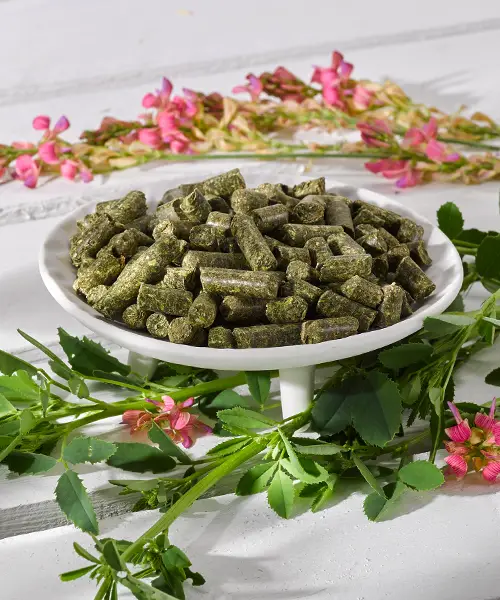
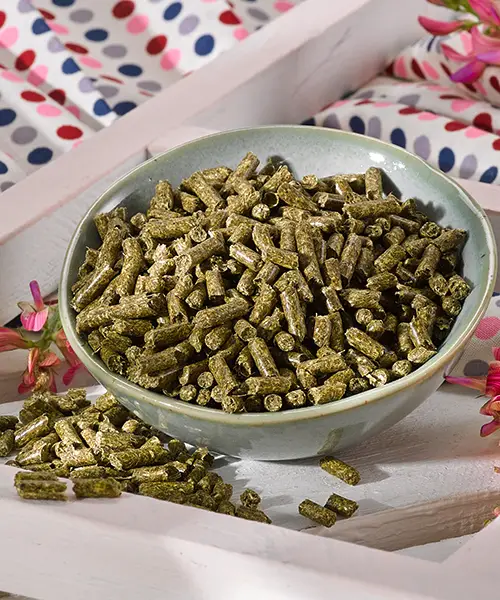
Bucket feed can have a higher moisture content, as Vata horses often struggle with overly dry food. Soaked hay or sainfoin pellets can be very suitable here.
During intensive training phases, treats should be avoided, as Vata horses may have difficulty digesting their feed well during these periods.
The Pitta Horse – Strong, Ambitious, Spirited
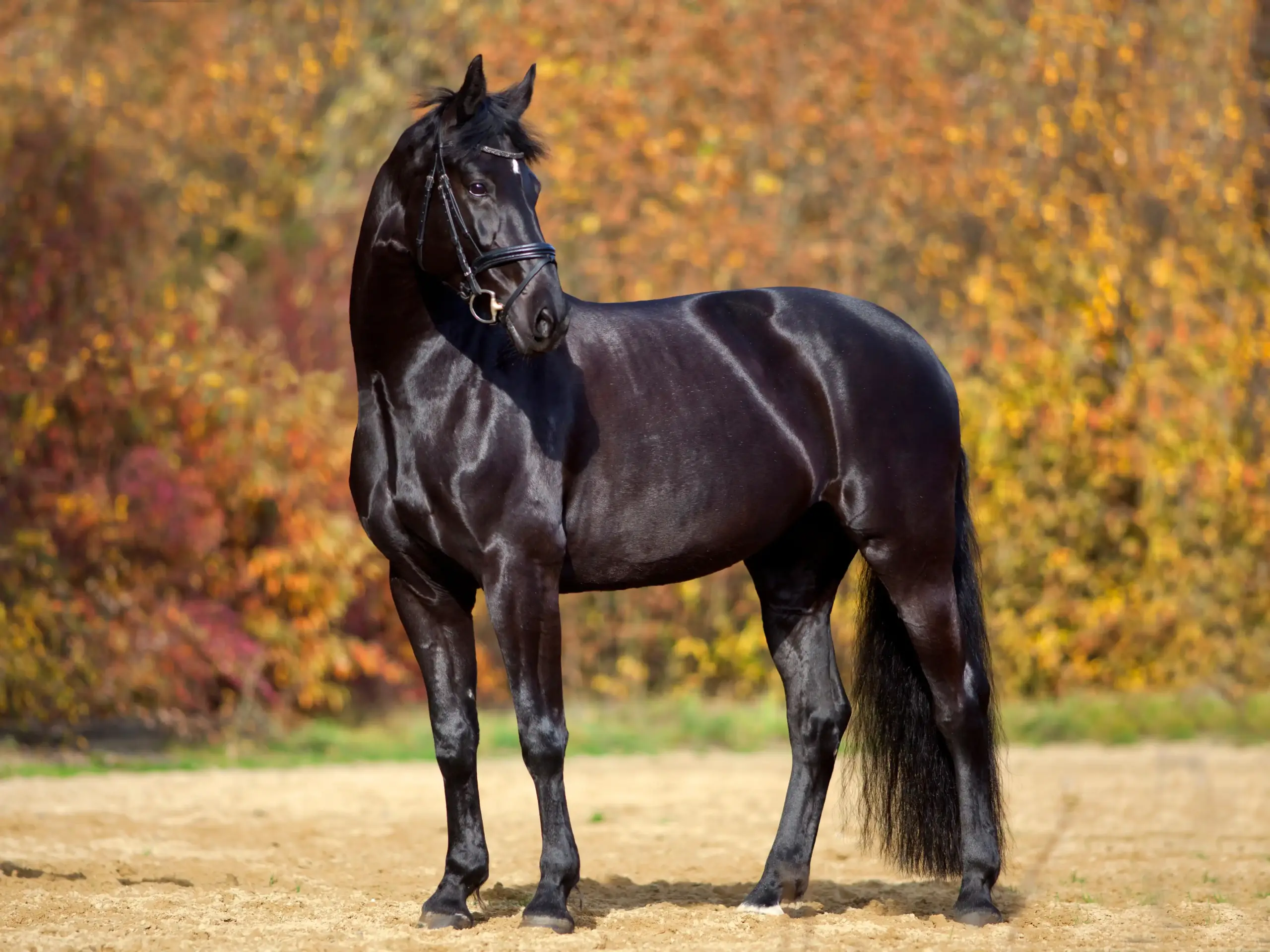
Pitta horses are athletic, motivated, and have a pronounced drive to achieve. They burn for their tasks — sometimes so intensely that they can become “burned out.” Their temperament can make them stubborn or dominant at times, as they seek clearly defined leadership and appreciate a confident, trustworthy person at their side. For their handler, they will “go through fire,” so to speak — they are loyal, intelligent, and fair in their interactions.
However, their active nature also brings certain physical challenges: Pitta horses are prone to inflammatory skin conditions and digestive issues such as diarrhea or excess acidity.
Feeding Tips for Pitta Horses
Pitta horses have a strong, “fiery” digestive system — they have a good appetite and generally tolerate larger amounts of feed, adjusted to breed and workload. Feeding gaps should be avoided, as they tend to develop acidity and gastric ulcers otherwise.
In cases of Pitta excess, cooling herbs can be helpful, while acidic components (e.g., haylage) should be strictly avoided.
The Kapha Horse – Calm, Powerful, Content

Kapha horses radiate calm and stability. They are robust, even-tempered, and grounded — but sometimes also somewhat sluggish. With their strong, sturdy build, they belong to the more frugal and peace-loving types. However, they need targeted motivation and regular exercise, as they otherwise tend toward lethargy, excess weight, and metabolic issues.
Typical Kapha characteristics also come with a tendency toward mucus formation — both in the digestive tract and in the respiratory system. Excess Kapha may show as lung congestion, edema, obesity, or itching.
Feeding Tips for Kapha Horses
Kapha horses have a relatively slow and sluggish digestive system. Their diet should therefore be easy to digest, metabolism-stimulating, and as moderate as possible.
Energy-dense feeds such as concentrates and oils should be avoided, as well as very moist feeds, since these further increase the Kapha principle. Hay pellets, mash, etc., should not be excessively soaked and only offered when needed.
Tip: Many horses show mixed types. An Ayurvedic constitution analysis helps classify the doshas and symptoms accurately and treat them individually.
Agni – the Digestive Fire
In Ayurveda, Agni — the digestive fire — is essential for health and for nourishing all bodily tissues. It ensures the transformation of feed into energy, nutrients, and stable tissue structures, as well as maintaining dosha balance.
If Agni is weakened or overwhelmed, Ama can develop — undigested residues that accumulate in the body, disturb balance, and form the foundation for chronic disease.
Symptoms such as dull coat, slimy manure, loss of appetite, or recurring infections can often be traced back to a disturbed Agni.
The goal of feeding, therefore, is to strengthen Agni — through regular, constitution-appropriate nutrition and selectively used herbs such as Guduchi, Amalaki, or Pippali.
In addition to species-appropriate and constitution-appropriate feeding, Ayurvedic massage can also be a highly valuable form of support. Experience with this type of manual therapy — tailored to the condition and constitution — is often profoundly moving.
Ayurvedic Massage – Healing Touch for Balance
Ayurvedic massages help stabilize dosha balance, strengthen the digestive fire, and resolve muscular and energetic blockages. Depending on the horse’s type, individually selected oils and herbs are used, working deeply into the tissues and nervous system — calming for Vata, cooling for Pitta, or activating for Kapha.
Especially for horses with muscular tension, metabolic issues, respiratory conditions, or general restlessness, these treatments can offer support — physically as well as emotionally.
From my practice: “A mare with elevated Vata and blocked Pitta noticeably returned to her balance after opening the Pitta-Nadi through massage: calmer, more content — and at the same time ready to perform. Her true Pitta nature could finally show itself. Even her digestive problems, which had persisted for nine years and included watery manure and diarrhea, are slowly beginning to regulate.”
Conclusion – Understanding Horses Holistically and Knowing What They Need
Ayurveda opens up a profound path to equine health.
By viewing each horse as an individual being — with its unique constitution, history, housing, training, and feeding — Ayurveda offers not only explanations but also practical approaches for daily stable management, nutrition, and therapy.
Especially for horses that are “repeatedly problematic,” difficult to regulate, or show unexplained symptoms, an Ayurvedic perspective can open up new possibilities.
Anyone who wishes to understand their horse more deeply can take the first step with a personal constitution analysis — thereby not only alleviating symptoms but supporting health in a truly holistic way.